Electric/Battery/Charger Help, Recommendations

Esoxbum

Active member
Joined
Jun 10, 2026
Messages
177
City
Perryopolis
Was going to take the boat out the other evening to discover a dead battery (I think). The 24v trolling motor/accessories circuit is fine (they’re on an onboard charger), but the cranking battery is not. I have an older Schumacher charger (digital/plastic, not the really old ones that are metal with needle gauge) that apparently stopped working, so I hooked up a BatteryTender that I bought for the camper battery. After 2 days it was still charging. Is that normal for it to take so long to charge (I’m not very familiar with the BTender). I know it’s a charger/trickle charger but I didn’t think it would take that long. I bought the batteries last summer (optima blue tops) so I was actually shocked that the cranker was so low that the motor wouldn’t turn over.
My last Terrova died (13yrs or so old) the spring that covid hit and I couldn’t get a replacement for almost 2 years because of chip shortages, so my boat ending up sitting for over 4 years. I rewired most of it last summer (drilling out/replacing dozens of rivets might be worse job ever) to get all the running lights, bilges, etc all working and upgraded the trolling motor plug circuit from 8 to 6awg, but it still has occasional glitches where things (usually lights) won’t work. I think the issue is in center console where there’s 1000 wires/fuses/circuit boards. For instance there were insect cocoons/mud in the wiring harnesses from sitting.
Boat is a G3 1860 w/ Yamaha 65hp jet drive if anyone is familiar


Once I put a charger on it, if it still won’t charge I’ll take it to get checked
I think I bought all three batteries at Advance Auto ( not 100% sure. I know that they only had 1 or maybe 2 when I was there. I don’t remember if they ordered the remainder or if I got them somewhere else) so Im hoping they’ll replace it if need be (no receipt). I’d imagine they have at least a 3 yr warranty ($120 car battery at walmart does)

Ok to pull the cranking battery out of the back and set it close enough to center console to hook up to onboard charger? Would the 12 vs 24v matter?

If batteries are fine, what would be your next step in process of elimination (please don’t say check connections/fuses). Is there anything else it even could be? Safety/kill switch that you clip onto your person is functional as well.
Recommendations for new charger?

 
Wow I can’t believe you let the boat sit for 4 years because your trolling motor died. I keep wanting to upgrade my trolling motor but I never use it so why upgrade it. My guess is your battery is deader than a door nail. You can check the volts in it but it’s the Amps that will tell you if it’s dead or not. You would have to take it to a battery shop and have them load test it for you. Some will tell you to just check the volts but that doesn’t answer the question. Or you can leave it on a charger, not a tender, for a week or two and see if it charges. Remember warranties are for manufacturer defects not for owner neglect.

You can’t let them sit and discharge. A discharging battery does more harm to a battery than a charging battery. A battery tender is made to maintain a fully charged battery not to actually charge the battery. A tender probably charges at around 800 Ma’s (milliamperes) so it would take about a month to charge a completely dead battery.

Do not hook it up to your existing on board charger which is probably a 2 bank 12v charger with one bank going to each of your two 12v batteries, assuming of course that you have two 12v batteries wired in series to make the 24 volts. You need to have your starting battery on an on board charger as well. Every battery should have its own charging bank. Your trolling motor batteries need to be charged at the same level or you run the risk of damaging them or your trolling motor which is why you shouldn’t unhook one bank to temporarily throw your starting battery on it. You’re gonna need another charger anyway so might as well do it right. You can buy another one bank charger for your starting battery or get a new 3 bank charger for all of the batteries. Noco makes a good on board charger. A one bank Noco charger will cost you $80 for a 5 amp (5x1) charger or $125 for 10 amp (10x1) charger. A three bank Noco will cost $200 for a 5 amp (5x3) charger or $325 for a 10 amp (10x3) charger. If you have lithium batteries be sure to get a lithium rated charger for any lithium batteries you may have. If you’re fishing every day or other day you would want the 10 amp charger. If you go out once a week or once a month than the 5 amp charger is fine. A 5 amp is what most guys have. With a 5 amp charger it would take almost a week to charge a completely discharged battery.

You should have your batteries on a charger at all times when not fishing. New chargers are on auto pilot and they will shut off when fully charged. They will come back on as the charges goes below full. This does no harm to a battery unlike a battery that just sits and discharges.

With wonky lights and weird electrical issues I always start with the grounds. Weak grounds make lights do crazy things.
 
I just got the batteries last summer. However, the optima cranker that sat for 4 years still had juice in it. That’s why i don’t think it’s the battery. Possible but unlikely. Yes, you are correct about the trolling motor being wired in a 24v series.
As far as upgrading your trolling motor, the GPS/spot lock is sooo nice. If it’s worth almost 3grand is a whole ‘nother thing….
 
I just got the batteries last summer. However, the optima cranker that sat for 4 years still had juice in it. That’s why i don’t think it’s the battery. Possible but unlikely. Yes, you are correct about the trolling motor being wired in a 24v series.
As far as upgrading your trolling motor, the GPS/spot lock is sooo nice. If it’s worth almost 3grand is a whole ‘nother thing….
Not sure of the size of the old schumacher i had. It went in the garbage truck this AM. But it would charge the 24v series overnight (before I installed the onboard charger). As far as the cranking battery. I think I charged it maybe 1x a year for a decade. They are AGM batteries. I considered switching to lithium, but I didn’t want batteries that just die suddenly. With the AGMs you start to lose power which basically gives you an advance warning That you’re running out of time
 
Wow I can’t believe you let the boat sit for 4 years because your trolling motor died. I keep wanting to upgrade my trolling motor but I never use it so why upgrade it. My guess is your battery is deader than a door nail. You can check the volts in it but it’s the Amps that will tell you if it’s dead or not. You would have to take it to a battery shop and have them load test it for you. Some will tell you to just check the volts but that doesn’t answer the question. Or you can leave it on a charger, not a tender, for a week or two and see if it charges. Remember warranties are for manufacturer defects not for owner neglect.

You can’t let them sit and discharge. A discharging battery does more harm to a battery than a charging battery. A battery tender is made to maintain a fully charged battery not to actually charge the battery. A tender probably charges at around 800 Ma’s (milliamperes) so it would take about a month to charge a completely dead battery.

Do not hook it up to your existing on board charger which is probably a 2 bank 12v charger with one bank going to each of your two 12v batteries, assuming of course that you have two 12v batteries wired in series to make the 24 volts. You need to have your starting battery on an on board charger as well. Every battery should have its own charging bank. Your trolling motor batteries need to be charged at the same level or you run the risk of damaging them or your trolling motor which is why you shouldn’t unhook one bank to temporarily throw your starting battery on it. You’re gonna need another charger anyway so might as well do it right. You can buy another one bank charger for your starting battery or get a new 3 bank charger for all of the batteries. Noco makes a good on board charger. A one bank Noco charger will cost you $80 for a 5 amp (5x1) charger or $125 for 10 amp (10x1) charger. A three bank Noco will cost $200 for a 5 amp (5x3) charger or $325 for a 10 amp (10x3) charger. If you have lithium batteries be sure to get a lithium rated charger for any lithium batteries you may have. If you’re fishing every day or other day you would want the 10 amp charger. If you go out once a week or once a month than the 5 amp charger is fine. A 5 amp is what most guys have. With a 5 amp charger it would take almost a week to charge a completely discharged battery.

You should have your batteries on a charger at all times when not fishing. New chargers are on auto pilot and they will shut off when fully charged. They will come back on as the charges goes below full. This does no harm to a battery unlike a battery that just sits and discharges.

With wonky lights and weird electrical issues I always start with the grounds. Weak grounds make lights do crazy things.
I never checked any of the grounds. Good advice
 
And you definitely answered my question in regards to the battery tender. I know it’s more for maintaining a charge while in storage than charging batteries, but I didn’t know it would take that long to charge a depleted one
 
What is diffetence b/w the 5x1 and 10x1 chargers? Just the amount of time it takes to charge? I fish when I have time, which is usually on short notice so being able to plug charger in the night-/day before is a ‘must have’
 
Check with your local Advance Auto to see if they'll test a battery (for a dead cell, etc.) that you carry into the store. They'll do a quick (and free) test on a vehicle charging system, but I doubt they can for your boat. If the battery is found "unchangeable" you'd know the battery is the problem.
 
And you definitely answered my question in regards to the battery tender. I know it’s more for maintaining a charge while in storage than charging batteries, but I didn’t know it would take that long to charge a depleted one
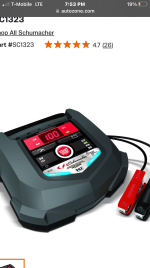
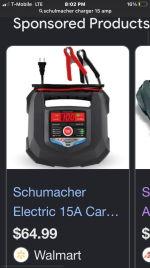
You might want to check out this charger. Its a Schumacher charger. Works well, I use it for batt, sizes 24 -31 deep cycle, wet cells. Has multiple settings. It has a 15 amp setting and charges pretty quick.
 

Attachments

  • IMG_6582.png
    IMG_6582.png
    479.3 KB · Views: 7
You might want to check out this charger. Its a Schumacher charger. Works well, I use it for batt, sizes 24 -31 deep cycle, wet cells. Has multiple settings. It has a 15 amp setting and charges pretty quick.
Sorry posted wrong pic. of charger. I have this one. Some are slightly different
 

Attachments

  • IMG_6584.png
    IMG_6584.png
    379.3 KB · Views: 8
I just got the batteries last summer. However, the optima cranker that sat for 4 years still had juice in it. That’s why i don’t think it’s the battery. Possible but unlikely. Yes, you are correct about the trolling motor being wired in a 24v series.
As far as upgrading your trolling motor, the GPS/spot lock is sooo nice. If it’s worth almost 3grand is a whole ‘nother thing….

If the battery sat for 4 years, it’s the battery. No doubt in my mind. The spot lock is the only reason I think about it but I would go 36V which would be closer to 4 grand. Pulling a 25 lb river anchor up out of rocks is a job for a young man.

What is diffetence b/w the 5x1 and 10x1 chargers? Just the amount of time it takes to charge? I fish when I have time, which is usually on short notice so being able to plug charger in the night-/day before is a ‘must have’

A Noco 5x1 is a five amp one bank charger so you can only charge one battery with it. The 10x1 is a ten amp one bank charger so it will charge twice as fast as the 5x1. When charging batteries charging slower at lower Amps is better than a high amp rapid charge. If you have an onboard charger for a 24 volt system comprised of two 12 volt batteries wired in series then you have a two bank charger which is basically two chargers in one package with each battery having it’s very own bank.

Again, for optimum battery care you should have onboard chargers and you should plug the chargers in as soon as you return from your fishing trip. You should leave it plugged in on charge until you pull out of your driveway for the next trip. Even if your not going on another trip for a year, there is no reason to take your batteries off charge, Letting your batteries discharge and then throwing them on an overnight charge is not doing your batteries any favors.

Not sure of the size of the old schumacher i had. It went in the garbage truck this AM. But it would charge the 24v series overnight (before I installed the onboard charger).

A 12 volt charger will not charge a two battery 24 volt system wired in series unless you disconnected the batteries and charge them separately. If you were able to charge a 24 volt system overnight with the Schumacher then it was a 24 volt charger. If you connected a 24 volt charger to a single 12 volt battery you would fry that battery. Is that what happened?
 
Even to
What is diffetence b/w the 5x1 and 10x1 chargers? Just the amount of time it takes to charge? I fish when I have time, which is usually on short notice so being able to plug charger in the night-/day before is a ‘must have’

If the battery sat for 4 years, it’s the battery. No doubt in my mind. The spot lock is the only reason I think about it but I would go 36V which would be closer to 4 grand. Pulling a 25 lb river anchor up out of rocks is a job for a young man.


A Noco 5x1 is a five amp one bank charger so you can only charge one battery with it. The 10x1 is a ten amp one bank charger so it will charge twice as fast as the 5x1. When charging batteries charging slower at lower Amps is better than a high amp rapid charge. If you have an onboard charger for a 24 volt system comprised of two 12 volt batteries wired in series then you have a two bank charger which is basically two chargers in one package with each battery having it’s very own bank.

Again, for optimum battery care you should have onboard chargers and you should plug the chargers in as soon as you return from your fishing trip. You should leave it plugged in on charge until you pull out of your driveway for the next trip. Even if your not going on another trip for a year, there is no reason to take your batteries off charge, Letting your batteries discharge and then throwing them on an overnight charge is not doing your batteries any favors.


A 12 volt charger will not charge a two battery 24 volt system wired in series unless you disconnected the batteries and charge them separately. If you were able to charge a 24 volt system overnight with the Schumacher then it was a 24 volt charger. If you connected a 24 volt charger to a single 12 volt battery you would fry that battery. Is that what happened?ery
No. The battery that sat for 4 yrs was replaced last year. I have all new batteries. I just need a charger for a 12v battery (the cranking battery that is seperate). I have had this boat for going on 20yrs and this is only my 3rd set of batteries so I’m getting like 9yrs out of each set of 3. I could probably make them last even longer by following your suggestions but … the charger I threw out was only 2/6/12 volt i believe. Definitely not 24. I used to charge the 24v series for the trolling motor w/ it before I installed the onboard charger like 8-9 years ago
 
Even to


No. The battery that sat for 4 yrs was replaced last year. I have all new batteries. I just need a charger for a 12v battery (the cranking battery that is seperate). I have had this boat for going on 20yrs and this is only my 3rd set of batteries so I’m getting like 9yrs out of each set of 3. I could probably make them last even longer by following your suggestions but … the charger I threw out was only 2/6/12 volt i believe. Definitely not 24. I used to charge the 24v series for the trolling motor w/ it before I installed the onboard charger like 8-9 years ago
 
Agree wholeheartedly about the anchor. Especially when it gets jammed up and you gotta pull a 19’ boat w/ a giant outboard on it upstream to get it out when by myself. What do you need 36v series for? Bigger boat/motor? Or just longer running time? I fish 10-12 hour days all the time and it’s never died when fully charged and I run spot lock 90% of time. I have the 95lb ? terrova. Only complaint is that you have to pay extra for the nice remote that came with old one. New one doesn’t have a screen or can’t store saved gps routes
 
I have an 18’ Wooldridge XP with a full pass thru windshield with a 115 jet. The hull thickness is almost twice as thick as the G3 so it’s a very heavy boat. My buddy has a Lowe Roughneck 1860 with a 90/65 and a 24V which is very similar to your G3. His trolling motor doesn’t cut it in the spring flows/tides that we striper fish in. Frankly, a 36v will not cut it at times but it should do better than a 24. I would want the spot lock to hold more times than not. Plus, when you get up into that kind of money for a trolling motor what’s another 800 bucks.
 
I have an 18’ Wooldridge XP with a full pass thru windshield with a 115 jet. The hull thickness is almost twice as thick as the G3 so it’s a very heavy boat. My buddy has a Lowe Roughneck 1860 with a 90/65 and a 24V which is very similar to your G3. His trolling motor doesn’t cut it in the spring flows/tides that we striper fish in. Frankly, a 36v will not cut it at times but it should do better than a 24. I would want the spot lock to hold more times than not. Plus, when you get up into that kind of money for a trolling motor what’s another 800 bucks.
So more power/bigger boat. Makes sense. Wish it would stop raining so I can get this battery issue solved. Appreciate the input
 
Back
Top