
Fly Fishing the PA Wilds: NorthCentral Pennsylvania Trout Streams
North Central Pennsylvania covers a lot of ground. You can spend one day on a small brook-trout stream, the next on Pine Creek or Kettle Creek, and finish the trip on limestone water closer to State College. That is the appeal of the PA Wilds. There is no single way to fish it.
Penns Creek, Spring Creek, and Kettle Creek are the names many anglers know. There are more offerings in this region than any other part of the state for fly fishing. This is an area where a good day may mean covering a well-known river or taking some time to break out a map and a little curiosity in a mountain valley for some wild brook trout.
What makes the PA Wilds different
The PA Wilds is big enough that it helps to have a primary plan—and a backup plan. The region still offers stocked and special-regulation streams, but what really stands out is the number of fishing opportunities and the abundance of wild trout water. That ranges from delicate, exclusively native brook trout streams to larger waters with naturally reproducing brown trout.
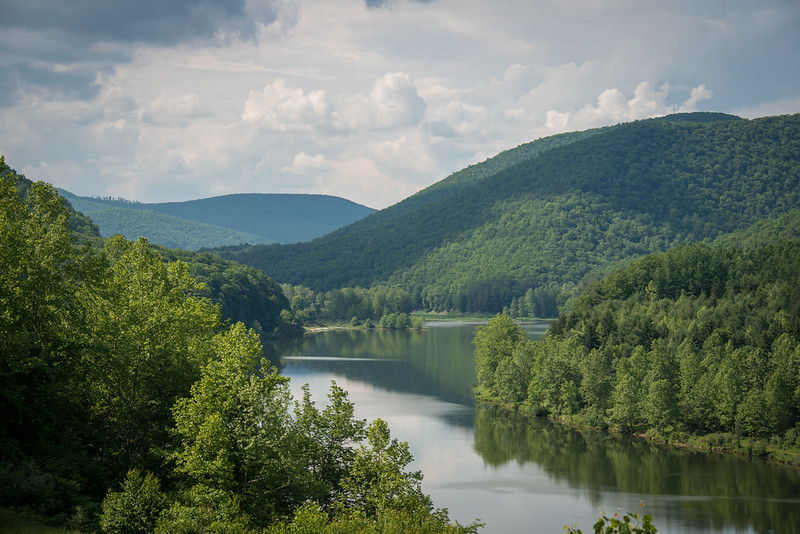
The northern part of the region is defined by forested mountains, state parks, and state forests. Larger, scenic freestone streams such as First Fork Sinnemahoning Creek, Kettle Creek, and Pine Creek run through the valleys. These waters are stocked in places and include special-regulation sections. Many of their tributaries are where you will find native brook trout and other naturally reproducing wild trout streams. A good map, GPS, a capable vehicle, and a plan for no cell coverage are all part of fishing this country. Each valley seems more impressive than the last, so give yourself a few days to enjoy the experience.
South of Interstate 80, folded mountain ridges and valleys give way to several limestone-influenced streams. Limestone water generally stays cooler and produces a lot of aquatic insects. The bugs are as much of the story as the trout here, so understanding hatch timing is non-negotiable. Penns Creek and Spring Creek are the obvious names and get much of the attention. Both support naturally reproducing brown trout, and Penns is stocked in a few sections. But do not get stuck on the famous water. There are plenty of stocked streams and smaller wild trout waters mixed in among the better-known names. Finding a few of those lesser-known alternatives should be part of the plan.
This is some of Pennsylvania’s best fly-fishing country. Most locals wade these waters, but a guide or a float on one of the larger streams can be a great way to get started and better understand the region and its hatches. This is a region best covered with a good plan, rather than simply running out for a day on the water.
Geography of the PA Wilds
North of Interstate 80, this is big forest country. The plateaus and deep valleys can make it feel remote in a hurry. The streams run through steep hollows and broad uplands, and you will still come across old roads and rail grades from the lumber days. Much of this ground was cut hard during the timber boom, then slowly grew back into the state forests that make this part of Pennsylvania what it is today. Wildlife is part of the experience too, with black bear, deer, wild turkey, elk, eagles, and mink all part of the landscape.
South of I-80, the landscape changes into folded ridges and valleys. There are sandstone ridges, shale valleys, and limestone country, so the water can change a lot from one valley to the next. The more fertile limestone valleys became farm country and many still are, including areas with Amish and Mennonite farms. That mix of working valleys, limestone creeks, and forested ridges is a big part of why this region has so much variety—from small mountain brook-trout streams to larger limestone creeks and freestone rivers.
Explore North Central trout water
The map is here to help you get oriented, not to replace common sense. Use it to look at Class A Wild Trout streams, stocked water, special-regulation water, wilderness streams, and county boundaries across North Central Pennsylvania.
Turn layers on and off to see how the water fits together. Then check regulations, current conditions, and access information before you make a trip of it.
The interactive map is loading. If it does not appear, use the Stream Conditions page instead.
Hatches worth watching
Hatch timing can vary by a few days or even a week. Weather, water temperature, and where you are in the region all matter. Still, spring is when many anglers start watching the water a little harder, especially on the larger freestones and limestone streams.
Grannom Caddis gets attention early in April on larger freestones, spring-influenced streams, and tributaries. As spring moves along, anglers watch for Hendricksons in April, followed by March Browns, Sulphurs starting in early May, and then Green Drakes. On water such as Penns Creek, the Green Drake hatch is always a highly anticipated part of the conversation. Evenings can sometimes bring a challenging explosion of different insects all at once.
Spring gets most of the headlines, but fall can be plenty interesting too. Terrestrials, Blue-Winged Olives, Slate Drakes (Isonychia), and fall caddis are all worth keeping an eye on. Pay attention to what is actually on the water that day instead of fishing the calendar.
For a broader look at seasonal timing around Pennsylvania, start here: Pennsylvania Hatch Chart — Complete Fly Fishing Guide by Month
Stream conditions right now
These gauges are a good place to start when you are trying to decide whether to go, where to go, or just stay home and tie some more flies. They are a limited reference point; a more complete listing can be found on the USGS Real-Time Water Conditions for Pennsylvania page.
| Station Name | Gage Ht (ft) | Discharge (cfs) | Trend (2hr) |
|---|
After the fishing
A long day on the water usually ends the same way: wet waders in the truck and somebody looking for food or a cold drink. The PA Wilds has plenty of places where a few trout stories are likely to show up before the check does.
Around Penns Creek, Boomerang’s in Millmont is a familiar stop after fishing. Nearby, Elk Creek Café + Aleworks in Millheim and the Millheim Hotel give anglers a few more options for lunch, dinner, or a beer after the waders come off.
Farther into the mountains, anglers fishing Kettle Creek and First Fork often end up at Deb’s in Cross Fork or the Wharton Inn in Wharton. That is part of fishing this country: a good place to eat can be as welcome as a good run.
Near State College, Axemann Brewery in Bellefonte is another option after time on Spring Creek and nearby water. No grand plan required. Just a place to settle in after the day.
Make a weekend of it
Fishing may be the reason you came, but the PA Wilds is easy to turn into a longer trip. The roads run through mountain valleys, elk country around Benezette and Sinnemahoning draws plenty of visitors, and the night sky can be the show after the rods are put away. Cherry Springs State Park is a useful place to start if dark-sky viewing is part of the plan.
There is more to do if fishing is only part of the plan. The Kinzua Bridge Skywalk and the Pine Creek Rail Trail both give a trip a little more range. The rail trail follows Pine Creek through the Pennsylvania Grand Canyon for about 60 miles.
Camping can make a simple base camp for fishing, hiking, and exploring. Sinnemahoning State Park, Poe Paddy State Park, and Kettle Creek State Park are all worth considering when you are putting a trip together. Check current park details before you go.