
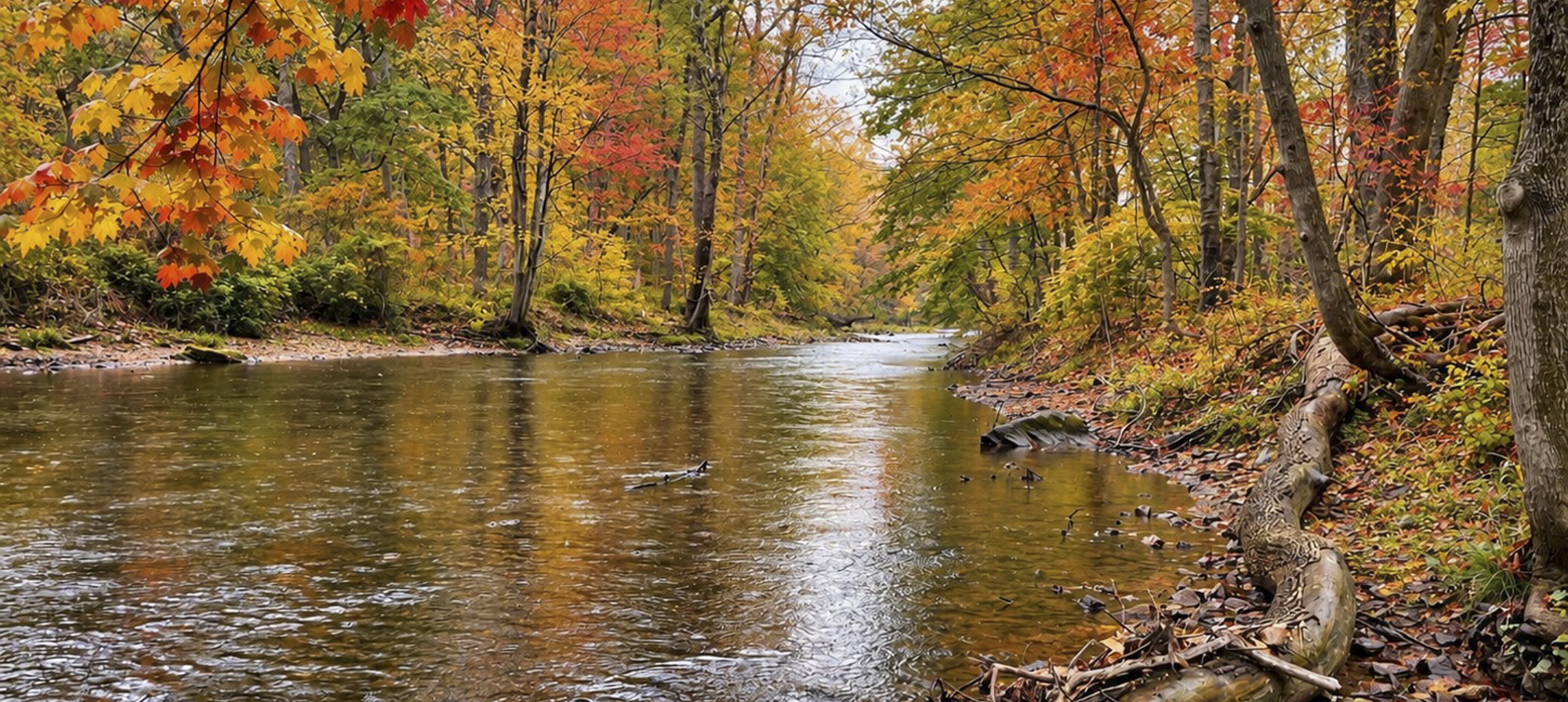
Fly Fishing Southeast Pennsylvania:The Delaware Valley Trout Streams
A practical guide to trout streams, hatches, live conditions, and places to start across the Delaware Valley.
Southeastern Pennsylvania can make you work for it. There can be traffic, development, and private access. But there is also more good trout fishing here than many anglers expect.
The local stocked streams and special-regulation waters around the urban and suburban areas are easy places to start. A little local knowledge—and a willingness to look beyond the obvious spots—goes a long way toward finding the more unique, wild, and quieter water farther afield.
What makes the Delaware Valley Trout Streams different
Southeastern Pennsylvania is not a one-water region. Yes, plenty of trout fishing starts on freestone water, but the Delaware Valley also has some limited limestone spring creeks, tailwater, and small stocked streams running through developed country. Development is part of the picture here. It puts pressure on water temperature, runoff, habitat, and access, and it leaves less room for error when summer gets hot.
That does not mean wild trout are gone. The Pennsylvania Fish and Boat Commission identifies naturally reproducing trout on many stream sections across the region, especially beyond the densest suburban areas. But the fishing is not evenly spread around. Many familiar urban and suburban waters are stocked and can fish well through the spring. For more consistent wild-trout water, anglers usually need to look harder at the quieter tributaries, headwaters, and more rural parts of the region. That is part of the fun. There are still a few gems here if you are willing to explore.
Valley Creek supports naturally reproducing brown trout, yet it also carries the long-term pressures that come with a heavily developed watershed. The special-regulation reaches on East Branch Brandywine Creek, French Creek, and West Branch Octoraro Creek give anglers options beyond the usual stocking-day schedule. Berks County and the Lehigh Valley add more variety, with waters such as Little Lehigh Creek and Monocacy Creek. The Tulpehocken, near Reading, is bigger water with a long history and plenty of anglers who remember it differently. It still deserves a look.
When the traditional trout season starts to wind down, Lancaster County brings warmwater fishing into the picture. The Susquehanna River and tributaries offer smallmouth bass opportunities in the western part of the region.
Geography of the Delaware Valley
Southeastern Pennsylvania and the Delaware Valley offer a varied landscape of rolling hills, wooded ridges, and winding rivers. The Delaware and Schuylkill rivers and their many tributaries have played an important role in the region's history and development. Philadelphia is the region's largest urban center, while Allentown and Bethlehem to the north have their own industrial histories, particularly in steel manufacturing. Beyond these cities, much of Chester, Montgomery, Bucks, and Delaware counties is characterized by suburban communities, with the landscape becoming increasingly rural farther from the major population centers.
Although urban and suburban development has transformed much of the region, agriculture remains an important part of southeastern Pennsylvania's landscape, especially in Lancaster County, western Chester County, and portions of Berks and Bucks counties. Rolling farmland, historic stone farmhouses, old barns, and small villages are reminders of the area's long agricultural history. Many of these communities date back to colonial times, when farming was central to everyday life. By the early 19th century, the region was also becoming an important center of Pennsylvania's growing industrial economy, with hundreds of mills and dams harnessing the power of local streams and rivers. Today, suburban development continues to spread into what were once rural communities, while efforts to preserve farmland and open space help maintain the region's agricultural heritage. This mix of historic cities, established suburbs, small towns, and rural countryside is what makes southeastern Pennsylvania such a distinctive and active part of the state.
Explore the Delaware Valley Trout Streams
This map is a good place to start, not a shortcut. Use the layers to see stocked waters, Class A wild trout streams, wilderness streams, special-regulation waters, and county boundaries across the region.
Zoom in on water that interests you, then check the current regulations, access, and conditions before heading out. A line on a map does not guarantee public access—or good fishing that day.
The interactive map is loading. If it does not appear, use the Stream Conditions page instead.
Hatches worth watching
Caddis and Blue-Winged Olives (BWOs) are two of the main spring hatches to watch across southeastern Pennsylvania. Caddis usually begin showing up by mid-April, with black and tan varieties carrying on well into late summer. They are a regular part of the fishing on waters such as Tulpehocken Creek, Little Lehigh Creek, French Creek, Saucon Creek, and Bushkill Creek.
BWOs can be some of the first dependable bugs of spring. They return in late fall and show again on those cool rainy afternoons. Valley Creek, Little Lehigh Creek, Ridley Creek, and Tulpehocken Creek are all waters where BWOs can keep an angler looking up.
As spring gives way to summer, Sulphurs and Tricos take over on many of the region’s freestone and spring creeks. Sulphurs generally begin in mid-May and continue into June, with the best dry-fly fishing often coming late in the afternoon and into the evening. Little Lehigh Creek, Monocacy Creek, Saucon Creek, Tulpehocken Creek, and French Creek all show up in the reports when the Sulphurs are on.
Tricos follow in early July and can last into September. Their hatches and spinner falls are usually a morning game, often somewhere between 7:00 and 11:00 a.m., depending on the weather and the water. Flatwater sections of Little Lehigh Creek, Tulpehocken Creek, and East Branch Brandywine Creek are good places to pay attention.
Midges are the dependable year-round fallback. They matter most from late fall through early spring, when there are fewer obvious hatches and trout are still feeding. Valley Creek, Little Lehigh Creek, and Tulpehocken Creek are some of the waters where small midge patterns can keep the day going.
The basic progression is simple enough: look for Caddis and BWOs in April, Sulphurs in May and June, Tricos in summer mornings, and Midges whenever the rest of the bug life seems to have taken the day off.
Based on reports from the Paflyfish Stream Reports Forum.
Stream conditions right now
These gauges are a good place to start when you are trying to decide whether to go, where to go, or just stay home and tie some more flies. They are a limited reference point; a more complete listing can be found on the USGS Real-Time Water Conditions for Pennsylvania page.
| Station Name | Gage Ht (ft) | Discharge (cfs) | Trend (2hr) |
|---|