You are using an out of date browser. It may not display this or other websites correctly.
You should upgrade or use an alternative browser.
You should upgrade or use an alternative browser.
Fly Fishing Elitists - Enough Already by Troutbitten
Oct 10
- 1,661
- 34
Troutbitten recently offered an honest take on an old issue: fly fishing has suffered under the weight of its own elitism for far too long. That baggage touches nearly every corner of how people approach the water—from tackle choices down to internal debates over flies and tactics.
As Domenick put it:
"How is fly fishing any better than fishing with gear? It's just not... So fish what you like, and if you don't like how somebody else does, I'd say keep it to yourself."
He also pointed out how arbitrary the boundaries become once anglers start picking sides:
"That elitism—that 'I'm better than you because I have a fly rod in my hand' crap—has sadly carried over and infested every microcosm of the sport... It's ridiculous, because we're all just anglers."
I’d take that a step further: species carries the exact same baggage. You see the same tribal camps, some way too passionate for me, that form around warmwater bass and panfish, stocked rainbows, wild browns, or wild brook trout—often with some groups even claiming their pursuit is somehow purer, tougher, or more legitimate than the next. At the end of the day, it's just fishing. Go have fun.
𝗩𝗜𝗦𝗜𝗧 𝗧𝗛𝗘 𝗧𝗥𝗢𝗨𝗧𝗕𝗜𝗧𝗧𝗘𝗡 𝗪𝗘𝗕𝗦𝗜𝗧𝗘
1500+ articles about fly fishing for wild trout in wild places.
https://troutbitten.com/
𝗟𝗜𝗦𝗧𝗘𝗡 𝗧𝗢 𝗧𝗛𝗘 𝗧𝗥𝗢𝗨𝗧𝗕𝗜𝗧𝗧𝗘𝗡 𝗣𝗢𝗗𝗖𝗔𝗦𝗧...
Dress Smart for Winter Fly Fishing: Head-to-Toe Gear Tips
Nov 09
- 1,742
- 20
Gearing up for cold weather fly fishing is more than just throwing on a jacket. With temperatures, wind, and water conditions constantly changing, dressing properly is half the battle. Even on a 55-degree day, standing in 45-degree water for hours can drain your energy and end your trip early. That’s why the key to comfort (and longer fishing days) is layering—smart, intentional layering.
Best Cold Weather Headwear for Fly Fishing
I usually start with a ball cap—the visor helps cut the glare on the water. But I always keep a wool beanie in my pack. One of the fastest ways to lose or gain body heat is through your head, and having the right headwear can make or break a winter trip. I recently picked up a billed cap with fold-down ear flaps. It’s not exactly runway fashion—more Elmer Fudd chic—but it gets the job done. When you’re deciding what to wear fly fishing in winter, don’t overlook your noggin.How to Keep Your Feet Warm While Fly Fishing
Let’s be clear: cotton socks are your enemy. The best approach is a two-layer sock system. Start with a thin polyester wicking sock, then add a ragg merino wool sock over it. Not too thick—you still need your boots to fit comfortably. If your boots feel like a vise, your circulation will tank, and cold feet won’t be far behind...Review of Brook by Brook: Chasing Our State Fish with a Fly Rod by Noah Donten
Sep 22
- 1,827
- 19
Some books immediately reveal the care behind them, and Brook by Brook is one of those — a patient work that reflects the author’s reverence for brook trout and his determination to understand them. Noah Donten approaches the sport with the humility of a beginner but the work ethic of someone determined to master a challenging part of fly fishing. His book doesn’t just show you where to fish or what to tie on; it captures what it feels like to chase Pennsylvania’s state fish with fresh eyes and the enthusiasm that defines those first few years of fly fishing.

Photo by Noah Donten
The book begins with Noah’s early days chasing brook trout, where every mistake becomes part of the learning curve. He goes deep into sharing details about brook trout themselves, building a foundation for why they matter. From there, he moves into scouting, showing how to use guidebooks, maps, and apps to find small wild streams. He’s careful not to “spot burn” by naming waters, instead teaching readers how to do their own research.
Next, Noah focuses on gear — rods, reels, lines, and flies — with a mix of practical advice and personal touch. He even includes original fly patterns, like his “Noah’s A.R.C.” caddis. As he explains, “The buggy profile of a caddis pattern is suggestive of many other bugs. This is often my go-to prospecting pattern.”
Later chapters widen the scope to conservation challenges such as habitat loss, competition from non-native trout, and the effects of angling pressure. The book closes with personal tales from the stream, where his lessons come alive in stories of friendship, close calls, and unforgettable fish.
What I admired most was Noah’s perspective. He doesn’t write as a veteran, but as someone still close to those first humbling and exciting days of taking it all in...
Photo by Noah Donten
Next, Noah focuses on gear — rods, reels, lines, and flies — with a mix of practical advice and personal touch. He even includes original fly patterns, like his “Noah’s A.R.C.” caddis. As he explains, “The buggy profile of a caddis pattern is suggestive of many other bugs. This is often my go-to prospecting pattern.”
Later chapters widen the scope to conservation challenges such as habitat loss, competition from non-native trout, and the effects of angling pressure. The book closes with personal tales from the stream, where his lessons come alive in stories of friendship, close calls, and unforgettable fish.
What I admired most was Noah’s perspective. He doesn’t write as a veteran, but as someone still close to those first humbling and exciting days of taking it all in...
Paflyfish Call to Action: Join the Fight for Wild Trout
Sep 18
- 3,634
- 56
The Pennsylvania Fish and Boat Commission (PFBC) will soon vote on a proposal to resume stocking hatchery-raised trout over naturally reproducing wild trout in a section of Freeman Run in Potter County. This proposal is unnecessary and undermines decades of conservation efforts. Read the details below and take action today to make your voice heard by the commissioners.
What’s at Stake
Freeman Run is a 12-mile tributary of the First Fork Sinnemahoning Creek in Potter County. It’s a small mountain stream divided into four management sections:
The PFBC proposes reinstating stocking of rainbow trout in Freeman Run Section 04 (a designated Class A wild trout stream) beginning in 2026—at prior stocking levels, including cooperative nursery stockings.
The agency plans to monitor Section 04 through 2030 for biological and social impacts. Stocking will be halted early if wild trout populations decline significantly or if angler usage does not justify the program. Otherwise, the commission will decide whether to continue or discontinue stocking after the evaluation period.
Why This Matters
Because Class A streams typically receive High Quality protection and are not stocked (with very few exceptions), this project would proceed as a policy exception to test whether protective regulations can coexist with stocking efforts...
What’s at Stake
Freeman Run is a 12-mile tributary of the First Fork Sinnemahoning Creek in Potter County. It’s a small mountain stream divided into four management sections:
- Sections 01 and 02: Managed as wild-only, which support predominantly wild brook trout.
- Sections 03 and 04: Historically stocked but redesignated in 2021 as Class A wild brown trout waters, after surveys confirmed the presence of a strong, naturally reproducing trout population.
The PFBC proposes reinstating stocking of rainbow trout in Freeman Run Section 04 (a designated Class A wild trout stream) beginning in 2026—at prior stocking levels, including cooperative nursery stockings.
The agency plans to monitor Section 04 through 2030 for biological and social impacts. Stocking will be halted early if wild trout populations decline significantly or if angler usage does not justify the program. Otherwise, the commission will decide whether to continue or discontinue stocking after the evaluation period.
Why This Matters
Because Class A streams typically receive High Quality protection and are not stocked (with very few exceptions), this project would proceed as a policy exception to test whether protective regulations can coexist with stocking efforts...
Colorado Trip Recap
Sep 08
- 3,742
- 28
I was lucky enough to spend the week before Labor Day visiting some buddies in Colorado and fishing for a week straight. Thought some on here might enjoy a recap. Photo credits go to my friends Andrew and Keir, who lugged their digital cameras around to capture some great moments for us.
Day 1: Front Range Side Quest
The primary goal of this trip was to check off a new subspecies, the Rio Grande cutthroat. Before driving south to that drainage, we were spending a couple days near Denver to visit friends and allow those of us who live at sea level a chance to acclimate to the altitude.
When deciding where to fish our first day, I did some quick research online and was intrigued to discover that we may be able to capture some bona fide Greenback Cutthroat trout nearby. The recent history of this species really fascinated me - seems like the wrong strain was stocked for several years, then at the brink of extinction, a genetically pure population was discovered outside of the native range, which was used to support subsequent reintroductions. Some of these reintroduced populations are now naturally reproducing in the native range.
We drove to a trailhead and began working up the very small stream, slowly navigating the steep gradient. Ultimately, four small cutthroat were landed - success! After a couple hours, we headed closer to Breckenridge to get some food and fish another local stream. This water supplied ample Colorado cutthroat and brookies. The fish were small but willing to rise to any small dry fly pattern. Storms chased us off the stream in the late afternoon.


Day 2: Off to Boulder
This was to be a short fishing day, to allow us time to pack and plan for our journey south the following day. We drove over to Boulder and fished a roadside stream for a few hours...
Day 1: Front Range Side Quest
The primary goal of this trip was to check off a new subspecies, the Rio Grande cutthroat. Before driving south to that drainage, we were spending a couple days near Denver to visit friends and allow those of us who live at sea level a chance to acclimate to the altitude.
When deciding where to fish our first day, I did some quick research online and was intrigued to discover that we may be able to capture some bona fide Greenback Cutthroat trout nearby. The recent history of this species really fascinated me - seems like the wrong strain was stocked for several years, then at the brink of extinction, a genetically pure population was discovered outside of the native range, which was used to support subsequent reintroductions. Some of these reintroduced populations are now naturally reproducing in the native range.
We drove to a trailhead and began working up the very small stream, slowly navigating the steep gradient. Ultimately, four small cutthroat were landed - success! After a couple hours, we headed closer to Breckenridge to get some food and fish another local stream. This water supplied ample Colorado cutthroat and brookies. The fish were small but willing to rise to any small dry fly pattern. Storms chased us off the stream in the late afternoon.
Day 2: Off to Boulder
This was to be a short fishing day, to allow us time to pack and plan for our journey south the following day. We drove over to Boulder and fished a roadside stream for a few hours...
Class A Wild Trout Streams Explained: What Every Fly Fisher in PA Should Know
Aug 27
- 7,903
- 0
Wild Trout Steam in Pennsylvania ©Dave Kile
Origins & Purpose: Pennsylvania’s Class A Wild Trout Program
If you’re new to trout fishing in Pennsylvania, you might hear seasoned anglers talking about "Class A Wild Trout Streams." These streams are considered by many to be some of the best places in the state to find naturally reproducing trout. But what exactly does "Class A" mean, and why are these waters so important?
A Turning Point in 1983: Operation Future
Back in the early 1980s, the Pennsylvania Fish & Boat Commission (PFBC) was looking for a better way to manage trout fishing. At the time, most trout fishing relied on stocking hatchery-raised fish. But biologists noticed that some streams had wild trout populations strong enough to support fishing without any stocking.The PFBC introduced the Resource First concept in 1981, marking a major shift in how the state manages its aquatic resources. Instead of prioritizing recreational fishing alone, this philosophy placed the protection, conservation, and long-term sustainability of fish populations and aquatic habitats at the center of decision-making. It recognized wild, self-sustaining fish populations as renewable natural assets and supported stocking only where natural reproduction could not meet angling demand.
In 1983, PFBC launched Operation Future, a program designed to manage trout fisheries based on science and sustainability. Rather than focusing only on stocking, the new goal was to protect streams where trout could reproduce naturally and survive on their own. These high-quality waters were given the official label: "Class A Wild Trout Streams."
Operation Future wasn’t just an operational shift—it was a cultural transformation for fisheries management in Pennsylvania. It elevated wild trout conservation from an ideal to a structured...
When to Hire a Fly Fishing Guide: Lessons from 40 Years on the Water
Aug 17
- 4,938
- 12
Dave on the Missouri River in Montana
Why Hire a Fly Fishing Guide?
Whether you’re chasing trout in Pennsylvania or planning a trip out west, knowing when to use a fly fishing guide can save time and open new opportunities. I’ve been fly fishing for over 40 years, and I still fish with a guide at times. Fly fishing is never just about knowing which fly to use—it’s about the water, the season, the type of fish, and the geography. And each trip is different. Guides aren’t just for beginners. I know many experienced anglers who dismiss them—thinking they’re too advanced to need help. A great guide doesn’t just help you catch more fish—they are teachers who help you learn, explore, and enjoy the sport in ways you can’t always do alone. Some of my best days on the water happened because I had the right guide at the right time. So when should you consider hiring one?Fly Fishing Guides Out West: Green River and Beyond
When I head out west, I always book a guide for at least one day. It’s not just about catching fish—it’s about understanding the water. A local guide knows the river, the flows, the insects, and the hidden spots you’ll never find on a blog or a map. They’ll put you in a drift boat and get you access you can’t reach by wading. They’ll also be able to provide backup plans if conditions change. I remember a vacation to the Tetons with my family. I had one day—just one—to sneak away and fish. I booked a guide and hit the Upper Green River. That day turned into one of my top five ever. I caught dozens of trout, including a brown, brook, rainbow, and cutthroat. That kind of grand slam doesn’t happen by accident. Whether it’s a different species, a new season, or an unfamiliar stretch of water, a guide shortens the learning curve. You’ll learn what flies are working, how to read the local water, and how the fish are...Fishing Direction - Should You Work Upstream or Downstream?
Jul 27
- 6,001
- 11
The way you approach the river — your angle and direction — shapes everything about how that fly’s presented. Direction matters. And in a river, where everything’s always changing, there’s rarely one right way to do anything. Lots of stuff works — sometimes. But what works most of the time? That comes down to your tactics.
In this video, Troutbitten (Domenick Swentosky) makes the case for fishing upstream. He fishes dries, nymphs, and streamers all in an upstream direction. The exception? Swinging wets or streamers, usually after dark. That’s about five percent of his fishing. He know a lot of anglers fish downstream and catch plenty of trout — no doubt about it. But I’ve got solid reasons for heading upstream, and they’re worth thinking about. Some are based on trout behavior, some on how the fly lands and drifts. This video borrows from an article he wrote a while back that digs into all of it.
More good stuff can be found at Troutbitten.
Two PAFFers head to Colorado
Jul 09
- 10,214
- 42
Over the winter while we were fighting cabin fever and stuck in the winter doldrums, HopBack (Brian) said to me that we should book a trip to Colorado fishing. Basically, he said that we might as well book it then and now or else we might never get to actually doing it. That's a sentiment I agree with, so we booked the trip with a flight to leave BWI on June 21 and to return to BWI on June 28. He had been out there once before on a fishing trip roughly three years prior, and I had never stepped foot into Colorado. He booked the flights; I booked the rental car. We were ready.
SATURDAY - 21
June 21 arrived, and we left Brian's house at roughly 4:45 am. We had an uneventful flight, and we touched down in Denver, secured our rental car, which was a Jeep Grand Cherokee, went to Wal-Mart to get provisions, and then we left the Denver metro area as quickly as we possibly could. Roughly 60 miles west of Denver lies the town of Winter Park, and just outside of Winter Park is Arapaho National Forest On this trip, National Forest lands were extremely important because the plan was to be wandering, nomadic, dirty fly fishermen who would camp in a different spot each night. Brian, who served as the chief navigator and trip organizer, chose this spot due to its relative close proximity to Denver since it would be a long and tiring travel day. My chief role on this trip was to drive wherever Brian directed me, which would total roughly 850 miles through Colorado in a week. Anyways, the stream that he had chosen to eat up some of our time on that first evening was Vasquez Creek. We arrived along the shores of Vasquez at roughly 5:00 pm, and we found a multitude of others camping in the National Forest. We pitched our tents, and we decided to fish the waters of Vasquez. I was exhausted, and nothing was going right for me this first night. The water was so cold that I was miserable. It actually hurt. And the little stream was raging so hard that it was hard to get your...
SATURDAY - 21
June 21 arrived, and we left Brian's house at roughly 4:45 am. We had an uneventful flight, and we touched down in Denver, secured our rental car, which was a Jeep Grand Cherokee, went to Wal-Mart to get provisions, and then we left the Denver metro area as quickly as we possibly could. Roughly 60 miles west of Denver lies the town of Winter Park, and just outside of Winter Park is Arapaho National Forest On this trip, National Forest lands were extremely important because the plan was to be wandering, nomadic, dirty fly fishermen who would camp in a different spot each night. Brian, who served as the chief navigator and trip organizer, chose this spot due to its relative close proximity to Denver since it would be a long and tiring travel day. My chief role on this trip was to drive wherever Brian directed me, which would total roughly 850 miles through Colorado in a week. Anyways, the stream that he had chosen to eat up some of our time on that first evening was Vasquez Creek. We arrived along the shores of Vasquez at roughly 5:00 pm, and we found a multitude of others camping in the National Forest. We pitched our tents, and we decided to fish the waters of Vasquez. I was exhausted, and nothing was going right for me this first night. The water was so cold that I was miserable. It actually hurt. And the little stream was raging so hard that it was hard to get your...
Dry Dropper Techniques in Montana
Jun 30
- 3,970
- 0
Whether you've been fly fishing in Montana your entire life or just fished your first day of fly fishing in Montana, chances are very good that you experienced fishing a dry-dropper rig. Naturally, fishing two flies increases your chances of catching more fish and many of us like to see a trout rise to a dry fly. Fishing a dry fly with a nymph tied to it is the standard dry-dropper rig and is now a proven tactic to catch more fish. But, like many things in fly fishing there are optimal times to use a dry-dropper rig and times when not to fish a dry-dropper rig.
One of the most common techniques in trout fishing is the dry dropper technique. Also, known as a "Dry-Dropper" set up. This technique is effective because it enables the angler to ‘fish’ flies in two feeding zones: one fly on the surface river, and one fly below the surface. This sounds very simple, but there are a few tips for increasing the effectiveness of the dry-dropper technique. Here is some advice learned from our Montana fly fishing guides.
When to Fish a Dry-Dropper Rig
Fishing a dry-dropper rig can be very effective any day of the angling year. Most fly fishing guides opt for a dry-dropper rig before or during a hatch or when prospecting for trout during non-hatch times. Before a hatch a dry-dropper rig is very effective because the dropper fly can imitate the emerging insects or the active nymphs. The dry fly, also called the top fly, imitates the hatched insect on the surface of the water. When a hatch isn't prevalent due to time of day or time of year, many local guides prospect with a dry-dropper...
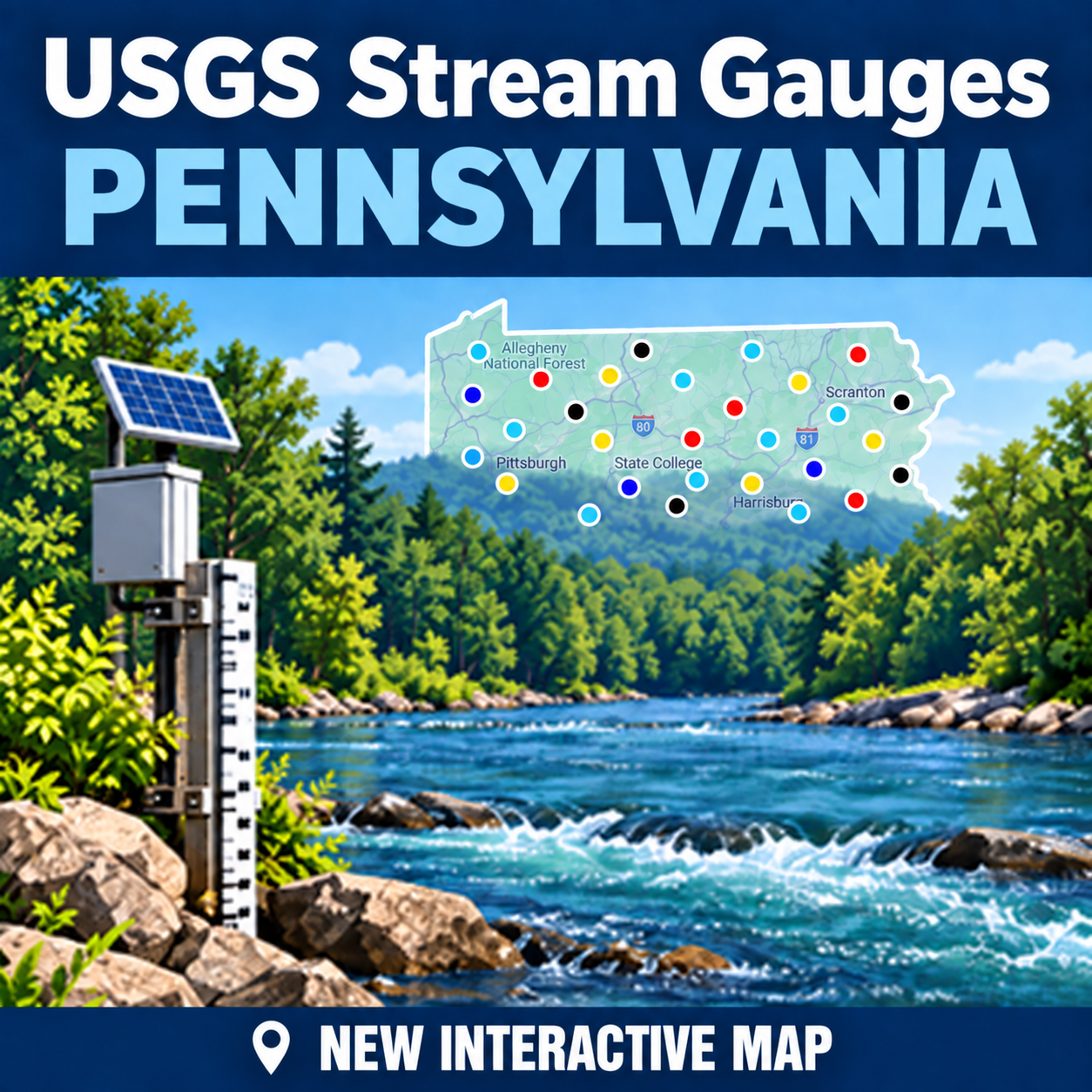
Blue Liner Flows Review | USGS Stream Gauges
Jun 18
- 4,907
- 9
All water level data originates from the United States Geological Survey (USGS) Surface-Water Data, which monitors over 13,000 stream gauges across the U.S. and more than 350 in Pennsylvania. The USGS has been transitioning to a new online interface over the past five-plus years. The updated look and feel have left some old features behind while adding new ones. I hate it.
So, I’ve been on the hunt for a desktop and mobile app that delivers USGS backend data through a clean, easy-to-use interface. Blue Liner Flows offers a solid solution for iPhone, iPad and Mac users, with apps built for both platforms. Most importantly, favorites and preferences sync across devices. There’s a free version, but I’ll be reviewing the $6.99 annual paid version.
Key features include: favorites, state selection, map view, latest data overview, discharge in CFS, discharge in feet, average annual discharge, various time views, weather forecasts, alerts, temperatures (station-dependent), turbidity (station-dependent), and other data specific to each gauge.
I found the app very easy to set up on my Mac. Once configured, all my favorites and alerts synced automatically to my iPhone. You don’t need both devices—an iPhone alone works just fine. I especially liked navigating between the state, favorites, and map views. It’s fast and intuitive. Most views display the key information I’m looking for, including directional arrows indicating whether water levels are rising or falling.
[ATTACH type="full" width="720px"...
Streams Were Up, Spirits Were Higher: A Look Back at the Annual Spring Jamboree 2025
May 22
- 5,317
- 5
Another Great Weekend at the Annual Paflyfish Spring Jamboree
Another fun year catching up with both longtime and newer members of the site at the Annual Paflyfish Spring Jamboree. The weekend was largely marked by high water and off-color streams, making fly fishing a bit more challenging than usual. But despite the conditions, the crew had a great time—and while the water was high, we mostly stayed dry.
Most folks rolled in Friday afternoon and hit some of the local waters. Spring Creek was a popular choice, and a few brave souls even ventured out to the Little Juniata for some wading. Friday night had a good mix of people still arriving, hanging out by the cabin, and catching up around one fire—or maybe two. I’m probably missing a few names, but among the crew were TimMurphy, Jackm, Bikerfish, dudemanspecial, Trapshooter, Tomgamber, Alby, Csoult, pcray1231, wgmiller, KMS and many more.
On Saturday, I teamed up with Afishinado, Dave Weaver, Swattie87, and Jifigz to search for some fishable water. Options were limited, but we made our way to a fly fishing-only project about an hour away. One of the best parts of these weekends is the streamside tailgating, and Swattie took the lead with his camp stove, cooking up brats, hot dogs, and some fried peppers and onions. Jiffy brought his famous cucumber salad and a special seasoning mix that hit the spot. The weather was nice—and the food was even better.
We fished the project water for a few hours...
Orvis Pro BOA Wading Boots Review: A Game-Changer for Serious Fly Fishing
May 08
- 11,995
- 30
After five years of heavy use, my last pair of boots were starting to show their age—especially with all the extra time I’ve spent fishing since retiring. I needed a new pair that could offer better traction on rugged streams like Penns Creek, while also being easier to take on and off multiple times a day. After a week of intensive use, I’m confident I’ve found the best boots I’ve ever worn: the Orvis Pro BOA Wading Boots.
Putting the Orvis Pro BOA Boots to the Test on Pennsylvania Streams
I picked up the boots just before heading to Penns Creek in May. I put them through their paces—using them about ten times over six days, from large rivers to remote brookie streams. Conditions were challenging, with all types of terrain and flow, and the boots performed exceptionally well.
This was my first time using Orvis wading gear, although I’ve followed the brand for years and trust what they bring to the angling community. The Pro BOA Wading Boots have been around for a few years, but this latest version is a refresh introduced within the last year or two.
What Makes the BOA Fit System Ideal for Fly Fishing Boots?
The BOA Fit System, not exclusive to Orvis gear, replaces traditional laces with a precision closure mechanism. It features a dial, steel wire laces, and low-friction guides that deliver a secure, adjustable fit. I first saw BOA on ski boots decades ago, but it has since become popular in everything from cycling shoes to wading gear.
The key benefit is how effortlessly you can tighten or loosen the boots. I didn’t fully appreciate how easy and fast the system was until I tried it in the Orvis store. The wide opening makes it simple to slide your foot in, then a few clicks of the dial ratchet everything down for a...