You are using an out of date browser. It may not display this or other websites correctly.
You should upgrade or use an alternative browser.
You should upgrade or use an alternative browser.
Fly Fishing Elitists - Enough Already by Troutbitten
Oct 10
- 1,661
- 34
Troutbitten recently offered an honest take on an old issue: fly fishing has suffered under the weight of its own elitism for far too long. That baggage touches nearly every corner of how people approach the water—from tackle choices down to internal debates over flies and tactics.
As Domenick put it:
"How is fly fishing any better than fishing with gear? It's just not... So fish what you like, and if you don't like how somebody else does, I'd say keep it to yourself."
He also pointed out how arbitrary the boundaries become once anglers start picking sides:
"That elitism—that 'I'm better than you because I have a fly rod in my hand' crap—has sadly carried over and infested every microcosm of the sport... It's ridiculous, because we're all just anglers."
I’d take that a step further: species carries the exact same baggage. You see the same tribal camps, some way too passionate for me, that form around warmwater bass and panfish, stocked rainbows, wild browns, or wild brook trout—often with some groups even claiming their pursuit is somehow purer, tougher, or more legitimate than the next. At the end of the day, it's just fishing. Go have fun.
𝗩𝗜𝗦𝗜𝗧 𝗧𝗛𝗘 𝗧𝗥𝗢𝗨𝗧𝗕𝗜𝗧𝗧𝗘𝗡 𝗪𝗘𝗕𝗦𝗜𝗧𝗘
1500+ articles about fly fishing for wild trout in wild places.
https://troutbitten.com/
𝗟𝗜𝗦𝗧𝗘𝗡 𝗧𝗢 𝗧𝗛𝗘 𝗧𝗥𝗢𝗨𝗧𝗕𝗜𝗧𝗧𝗘𝗡 𝗣𝗢𝗗𝗖𝗔𝗦𝗧...
Stanley Cooper TU Chapter Meeting - Stream Hunting Pennsylvania with Dave Kile
May 06
- 1,169
- 21
Please join Stanley Cooper Chapter of Trout Unlimited in welcoming Dave Kile to our monthly meeting to be held Wednesday, May 13, 2026 at 7:00 PM at Sabatini’s Bottle Shop, 1901 Wyoming Ave., Exeter, PA
Presentation Topic: Stream Hunting Pennsylvania with Dave Kile
Pennsylvania offers an extraordinary range of trout water—from well-known classics to hidden blue liners—yet discovering new water can feel challenging. This presentation shows how fly fishing anglers can use today’s online tools to make stream exploration more efficient, organized, and rewarding. Drawing on decades of fly fishing experience and years spent researching Pennsylvania waters, Dave Kile presents a practical approach to “stream hunting” using digital resources. The talk covers a process to identify promising trout streams, locate public access and parking, and combine readily available tools to build a personal playbook for confidently exploring new water.
Dave Kile has been an avid fly fisherman for more than 45 years, later combining that passion with a background in digital cartography. In 1995, he founded Paflyfish, the Pennsylvania Fly Fishing site that has grown into the region’s leading online communities for fly fishing anglers.
What will be covered:
Online resources for new streams
How to uncover new trout steams opportunities
Finding parking and access
A process to track and managing of your locations
When: Wednesday, May 13 at 7:00 PM
Where: Sabatini’s Bottle Shop, 1901 Wyoming Ave., Exeter, PA

Stanley Cooper Chapter Trout Unlimited | Please join Stanley Cooper Chapter of Trout Unlimited in welcoming Dave Kile to our monthly meeting to be held Wednesday, May 13 ,at 7:00 PM at Sabati... | Facebook
Please join Stanley Cooper Chapter of Trout Unlimited in welcoming Dave Kile to our monthly meeting to be held Wednesday, May 13 ,at 7:00 PM at Sabatini’s Bottle Shop, 1901 Wyoming Ave., Exeter. ...
 www.facebook.com

Join our Cloud HD Video Meeting
Zoom is the leader in modern enterprise cloud communications.
Paflyfish Spring Jamboree Weekend May 15-17, 2026
Apr 18
- 4,785
- 91
Mark your calendars for Friday, May 15–Sunday, May 17, as we enjoy the Annual Paflyfish Spring Jamboree Weekend at the Seven Mountains Campground. It’s that time of year again when members of our site gather for a fantastic blend of fly fishing, fly tying, camping, and camaraderie. Set against the backdrop of north-central Pennsylvania streams—including locations like the Little J, Penns Creek, Spring Creek, Fishing Creek, and more—it always offers a fun weekend.
The heart of our Jamboree is the pavilion at Seven Mountains Campground, rented by Paflyfish and serving as our central hub for meet-ups, impromptu conversations, and fly-tying sessions.

New this year will be our Saturday morning meetup. We will be offering a Fly Fishing Casting Clinic led by Derek Eberly (@FinFurFeather), a state-level competitive casting champion. Derek will offer a demonstration of casting techniques from 10:00 AM to 11:00 AM on the central Seven Mountains lawn—a great opportunity for new and experienced anglers to sharpen their casting skills.
Another addition this year will be a Fly and Gear Swap on Saturday morning at the pavilion from 10:00 AM–12:00 PM. Attendees are encouraged to bring their old or unwanted fly fishing gear—such as rods, reels, waders, books, and packs—to trade or barter. Fly tyers are welcome to bring their flies to sell or swap at the event. (Please keep it to fly fishing gear only—no weapons and no businesses. Paflyfish has the right to ask a participant to leave for any reason.)

There’s no shortage of spontaneous fly tying, casting pointers, and friendly guidance on where to cast your line. Whether you’re a seasoned angler or new to the area, our community members are here to ensure...
The heart of our Jamboree is the pavilion at Seven Mountains Campground, rented by Paflyfish and serving as our central hub for meet-ups, impromptu conversations, and fly-tying sessions.
New this year will be our Saturday morning meetup. We will be offering a Fly Fishing Casting Clinic led by Derek Eberly (@FinFurFeather), a state-level competitive casting champion. Derek will offer a demonstration of casting techniques from 10:00 AM to 11:00 AM on the central Seven Mountains lawn—a great opportunity for new and experienced anglers to sharpen their casting skills.
Another addition this year will be a Fly and Gear Swap on Saturday morning at the pavilion from 10:00 AM–12:00 PM. Attendees are encouraged to bring their old or unwanted fly fishing gear—such as rods, reels, waders, books, and packs—to trade or barter. Fly tyers are welcome to bring their flies to sell or swap at the event. (Please keep it to fly fishing gear only—no weapons and no businesses. Paflyfish has the right to ask a participant to leave for any reason.)
There’s no shortage of spontaneous fly tying, casting pointers, and friendly guidance on where to cast your line. Whether you’re a seasoned angler or new to the area, our community members are here to ensure...
Fly Fishing Pennsylvania’s Grannom Caddis Hatch
Mar 30
- 1,490
- 10
Grannom caddis (Brachycentrus numerosus)
For anglers in Pennsylvania, the appearance of the Grannom caddis (Brachycentrus numerosus) is the true sign of spring. The hatch frequents the region in mid-April; this event transforms quiet streams into scenes of chaotic activity. Unlike the delicate emergence of mayflies, the Grannom can be a "blizzard hatch" of dark-bodied insects that seem to materialize all at once, flooding the air and coating the riverside foliage in a vibrating blanket of wings. At times they can seem like a river of insects flying upstream above the water in one motion together.
Grannom Caddis (Brachycentrus numerosus)
Size: 12-14Location: Western, central, and some southeastern parts of Pennsylvania
Start Date: April 9th Timing: Late morning to early afternoon
(Start dates and timing can vary annually)
The oldest "true" caddisfly body fossils (the winged adults) date back to the Early Triassic, roughly 230 million years ago. They originated in the Permian Period, which predates the Triassic Period (when the first dinosaurs appeared) by tens of millions of years.
The Grannom Caddis activity usually kicks off during the warmest part of the day, typically between 11:00 AM and 2:00 PM. On legendary waters like the Little Juniata, Kettle Creek, and Oil Creek, the trout quickly dial into the heavy drift of pupae rising to the surface. If you arrive too late in the day, you might see the bugs, but the "feeding frenzy" has often already subsided, leaving the trout slowing down after their heavy feeding earlier in the day.
To find the fish, you have to understand the Grannom’s life cycle. Before the winged adults take flight, the trout focus heavily on the...
Hardman Fishing Adventures Takes On Some Insane Fly Fishing
Mar 14
- 1,857
- 36
If you’ve ever wondered what it looks like when fly fishing crosses the line into a full-blown survival mission, this latest video from Hardman Fishing Adventures is a good one to check out.
The guys head into some of the most rugged, vertical terrain in Southern Appalachia, chasing wild brown trout in water that looks as fishy as it is dangerous. We’re talking "lock in or end up on the news" kind of hiking. Between bushwhacking through impenetrable rhododendron thickets and navigating "unpassable" waterfalls, it’s a masterclass in why we love (and sometimes question) this sport.
The Hardman channel features a wide variety of fly fishing destinations across the United States, often focusing on remote, high-altitude, or "underrated" waters. You can find other videos that cover West Virginia, New York, Georgia, Tennessee and more.
Fly Fishing Getting Started: Stream Structure and Trout
Feb 19
- 1,514
- 8
A Penns Creek surprise hidden behind a lowly exposed rock
Most anglers quickly learn that the easiest places to find trout are the runs immediately following a healthy riffle. These locations are the "bread and butter" of any creek, and they are widely known by every fisherman hitting your local water. However, real success doesn't come from running to these popular holes, but rather from seeking out the hidden treasures buried throughout the stream. Recognizing a creek's structure is the essential gold every angler needs when mining any stream.
A trout’s basic instincts revolve around two things: staying safe and finding easy food. Looking back, all of my most memorable fish can be traced to a specific piece of differentiating habitat that offered them that perfect blend of security and sustenance.
The Mechanics of a Run
The transition from riffles to pools creates the most obvious holding water in any stream. These deeper runs offer a perfect ****tail for trout: highly oxygenated water, a steady conveyor belt of bubbles, and protection from overhead predators with the turn of the water. Because aquatic insects often emerge in these transitional zones, they are at their most vulnerable here. Trout are quick to adapt to these larger structural areas, positioning themselves where the riffle’s energy begins to dissipate into the steady depth of the run.
A Forest of Rocks
Generally, finding a rock in a stream isn't hard—it’s like finding a tree in a forest. It’s the significant rocks that matter, usually the ones that stand out from the rest of the bottom. Trout utilize these breaks in the current to create food lanes while mitigating their energy consumption. As the current wraps around a rock, it consolidates the flow of debris and drift, creating a conveyor belt of food both on the surface and along the bottom. A...
How to Create Custom Fly Fishing Maps Using Google My Maps
Feb 02
- 1,637
- 21
Google My Maps for custom fly fishing maps
Thirty years ago, Paflyfish began with the idea of providing fly fishing location maps for the Special Stream Regulations throughout the state. It was likely the first site on the internet to "spot burn"—even before the Pennsylvania Fish and Boat Commission (PFBC) had a website. A lot has changed since 1995, and there are now plenty of ways to discover fly fishing stream locations and manage your personal favorites. My go-to tool for keeping track of fly fishing spots is Google My Maps. It’s an easy way to research, record, and retrieve my personal fly fishing hotspots.
Google My Maps
Google My Maps is part of the Google Drive suite of tools, alongside other programs like Sheets, Docs, Folders, and Drawings. I use My Maps to record my favorite stream locations, parking spots, and access notes for the fly fishing streams I frequent. Simple markers can be dropped onto the map, saved, customized, and accessed across desktops, tablets, and smartphones.
Along with Markers, I use the Layers feature to differentiate categories by regions or non-stream features. A non-stream layer might include breweries, Airbnbs, campgrounds, grocery stores, gas stations, restaurants, bars, fly shops, and points of interest. Markers and layers are the two core components that make up the functionality of My Maps.
Getting Started
Google My Maps is different from Google Maps and can be accessed via Google Drive for those with a Google account. Click Google Drive >New > More > Create to start a new map with a default view of the United States. It has the standard user interface of most mapping tools, allowing you to zoom in and out and pan around the map.
[ATTACH type="full" width="637px" alt="Screenshot 2026-02-02 at...
Where to Fly Fish in Pennsylvania: Wild, Stocked, and Special Reg Waters
Jan 31
- 1,437
- 0
With nearly 18,000 miles of wild trout streams and almost 5,000 miles of stocked trout streams, Pennsylvania offers something for every angler. These waters are home to stocked, naturally reproducing, and native trout populations. The Pennsylvania Fish and Boat Commission (PFBC) establishes a variety of regulations based on the stream, season, and type of fishery.
Take some time to discover where you can enjoy fly fishing in the region. The maps below highlight many of the trout-managed streams across the state. You’ll uncover your own favorite locations through a bit of research and personal exploration.
The Paflyfish Forum features countless posts about fishing spots and is another excellent resource to consult before heading out on the water. There’s no “Easy Button” for finding the perfect fly fishing spot—but that’s part of the fun.
The PFBC provides and overall mapping site with layers of these different types of streams for some stream hunting fun.
Take some time to discover where you can enjoy fly fishing in the region. The maps below highlight many of the trout-managed streams across the state. You’ll uncover your own favorite locations through a bit of research and personal exploration.
The Paflyfish Forum features countless posts about fishing spots and is another excellent resource to consult before heading out on the water. There’s no “Easy Button” for finding the perfect fly fishing spot—but that’s part of the fun.
The PFBC provides and overall mapping site with layers of these different types of streams for some stream hunting fun.
Stocked Trout Waters
These waters have significant portions that are open to public fishing and are stocked with trout by the Commission (PFBC). About streams and stocking schedules can be viewed on the PFBC Stocked Trout Waters page.
Special Regulation Areas
Waters that have tackle, harvest or other restrictions. There are a number of different regulation categories. Many of these waters can be fished year-round. See the map below for more details.
Class A Wild Trout Streams
Streams that support a population of wild (natural reproduction) trout of sufficient...USGS Stream Gauge Updates 2026: A Guide for Anglers
Jan 18
- 3,116
- 11
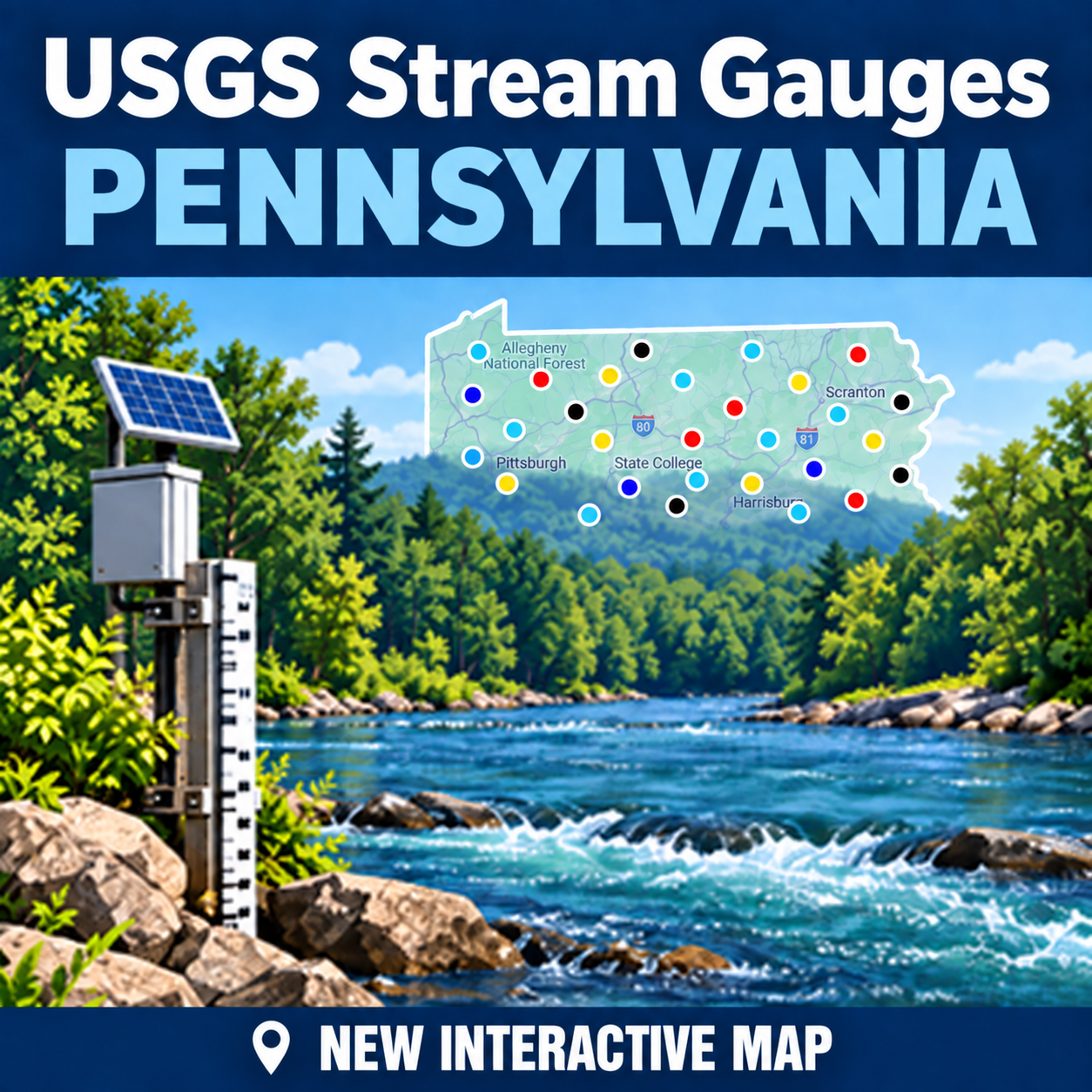
The USGS has had this online system in place since before 2000 with very few changes over the years. Updates to the interface have been due for quite some time, and this year, there will be many changes.
The USGS is making the final push to update the interface we see when accessing stream surface data on their website. This is the data you use to check stream levels (CFS and gauge heights) and other metrics. Some smaller page updates have been occurring in "dribs and drab," and in some cases, they are running new and old pages in parallel. That will end over the coming weeks and months with the final cutover.
These changes have been a long time coming. Over the years, I have attended several webinars and monitored emails and blog posts, paying close attention to announcements as they have been released. I have wanted to write this post for years, but changes to rollout schedules stalled so often that it was difficult to create a cohesive message about what was actually happening.
Why is this being done?
The USGS is modernizing its web-based offerings for the public and partners. I am not sure how old the previous code was, but I am certain that for technical reasons, they had to make serious changes to the databases. This gave them an opportunity to update the 1990s-style web interface we currently use to access stream gauges.
So, what is changing for anglers?
The main USGS web interface is changing across all...
Florida Keys Primer
Jan 01
- 1,480
- 13
By Dave WeaverAll flies and artwork by Dave
We are focused on fly fishing in Pennsylvania here on PAFF, but we all enjoy travel. The Florida Keys often come up as a popular destination or as a bucket list for the future. I’m going to cover some planning and fly tying suggestions for a newbie Keys fly fisher, especially if you hope to DIY. Feel free to join the conversation or ask questions in the comment section below, or send me a PM.
The first thing a new Keys angler should do is disabuse themselves of the images of a wading angler on a shallow sand flat chasing hooked bonefish. These images and videos are typically from the Bahamas or elsewhere in the Caribbean. While a first time Keys visitor will be stunned at the beautiful green flats everywhere in view when driving RT 1 when the sun is high, unfortunately, most Keys flats are too soft to wade and access is spotty. This is mainly a boat fishery. Tone down your expectations of a tropical paradise. There are certainly some well known public access sites where the bottom is firm enough to wade and I have visited some of these for many years. A good example is Bahia Honda State Park, especially if you get out early in the morning before the crowds are out at this popular location. These locations get pounded by anglers and the fish are challenging, much like the destination special regulation waters here in Pennsylvania. If you have a kayak in which you can stand up, many more fishing opportunities will open up for you. Many of the Keys bridges have public access and although these bridges are mostly too high for a fly rod (I highly recommend fishing them with spin gear, you can have a blast), sometimes you can get down to the water and drift a fly around the pilings. Wear sturdy footwear around Keys bridges as much of it is coral cement over rip-rap and edges are sharp.
Fishing in the Keys is...
What To Consider When Planning A Fly Fishing Trip To Montana
Dec 19
- 1,210
- 1
by Brian McGeehan
Planning a fly fishing trip should be an enjoyable experience. Whether you are looking at going on a fishing trip to Montana or wanting to fish a global fly fishing travel destination, it is important to carefully plan your trip. The success of catching fish on a fly fishing trip depends on many factors that you can, and cannot, control. When planning a fly fishing trip to Montana or beyond, there are several things to consider. Here are Seven Tips to Planning a Montana Fly Fishing Trip.
What Type of Fishing to Expect?

Montana is home to a massive variety of waters to fish. Montana also has one of the longest seasons of trout fishing destinations on the planet, so evaluating the type of fishing that is desired is an important step in planning the best possible fly fishing trip. If fishing dry flies to rising trout is more important than catching a lot of fish, then consider a spring or summer trip and plan to fish waters known for prolific hatches like the Paradise Valley Spring Creeks or the Missouri River. If you care more about bringing fish to the net regardless of using dry flies, streamers, or tandem nymph rigs, then consider late spring, early summer, and fall and target a consistent tailwater fishery like the Madison River. Are streamers your passion? Then come in late spring or fall and expect less fish in the net, but possibly some of the biggest trout of the year, especially on a large freestone like the Yellowstone River.
What Type of Water and Mode of Fishing Do You Like?

Planning a fly fishing trip should be an enjoyable experience. Whether you are looking at going on a fishing trip to Montana or wanting to fish a global fly fishing travel destination, it is important to carefully plan your trip. The success of catching fish on a fly fishing trip depends on many factors that you can, and cannot, control. When planning a fly fishing trip to Montana or beyond, there are several things to consider. Here are Seven Tips to Planning a Montana Fly Fishing Trip.
What Type of Fishing to Expect?
The type of fishing, weather, and amenities that you desire are three essential factors to consider when planning a fly fishing trip to Montana.
Montana is home to a massive variety of waters to fish. Montana also has one of the longest seasons of trout fishing destinations on the planet, so evaluating the type of fishing that is desired is an important step in planning the best possible fly fishing trip. If fishing dry flies to rising trout is more important than catching a lot of fish, then consider a spring or summer trip and plan to fish waters known for prolific hatches like the Paradise Valley Spring Creeks or the Missouri River. If you care more about bringing fish to the net regardless of using dry flies, streamers, or tandem nymph rigs, then consider late spring, early summer, and fall and target a consistent tailwater fishery like the Madison River. Are streamers your passion? Then come in late spring or fall and expect less fish in the net, but possibly some of the biggest trout of the year, especially on a large freestone like the Yellowstone River.
What Type of Water and Mode of Fishing Do You Like?
Rain, snow, sunshine, blue skies, and more are all possibilities...
30 Years of Paflyfish: A Look Back At Pennsylvania’s Online Fly Fishing Site
Dec 05
- 1,495
- 33
If you want to feel old, just say: "I’ve been on the Internet for 30 years." That puts you back to a time when companies like Amazon, Yahoo, GeoCities, and eBay were just getting started. The browser of choice? Netscape Navigator. Cable internet wasn’t even a thing yet—AOL dial-up was king.
Back then, I was working at Apple and had a front-row seat to the dawn of the web. Apple’s new HTTP web servers were game-changing: anyone, anywhere, could publish digital content. As a lifelong tech geek, I saw the writing on the wall—the web was going to change everything.
The site itself was inspired by the Pennsylvania fly fishing authors I’d been reading for years. Friends Ron, Greg, and I would hit the road with books by Meck, Sanji, Wolf, and Landis in tow as we explored streams across the state.
As a Geography major, my next move was pretty obvious: maps. I drew up 67 county maps with all the major fly fishing and trout streams and published them. Simple diagrams, nothing fancy, but now I had 87 pages! Crushing it, right?
Next came PFBC regulations, stocking reports, fly shop info, tips, and stream reports that people would email to me. This was before the PFBC even had a website. The game-changer came in 1997: I added a database so I could publish stream reports and create a message board...
Pennsylvania Hatch Chart: Complete Fly Fishing Guide by Month
Nov 19
- 6,227
- 6
| Common Name | Latin Name | Hook Size | Start Date | Time |
|---|---|---|---|---|
| Little Black Stonefly | Allocapnia pygmaea | 16 | 5-Mar | Late Morning & Afternoon |
| Little Blue Winged Olive Dun | Baetis spp. / B. tricaudatus | 16–20 | 13-Mar | Late Morning & Afternoon |
| Midges | — | 18–26 | Mar (early) | All Day |
| Blue-Winged Olives (Spring) | Baetis vagans | 18 | 1-Apr | Late Morning & Afternoon |
| Blue Quill | Paraleptophlebia adoptiva | 16 | 5-Apr | Late Morning & Afternoon |
| Quill Gordon | Epeorus pleuralis | 12–14 | 5-Apr | Afternoon |
| Grannom Caddis | Brachycentrus numerososus | 12–14 | 9-Apr | Late Morning & Afternoon |
| Little Black Caddis | Chimarra aterrima | 18 | 14-Apr | Mid Day |
| Black Quill | Leptophlebia cupida | 14 | 12-Apr | Afternoon |
| Hendrickson (Female) | Ephemerella subvaria | 12 | 12-Apr | Afternoon |
| Red Quill (Male) | Ephemerella subvaria | 14 | 12-Apr | Afternoon |
| Dark Quill Gordon | Ameletus ludens | 14 | 18-Apr | Afternoon |
| Blue-Winged Olive (late spring) | Baetis spp. | 14–18 | 20-May | Mid Day |
| Cream Caddis | Psilotreta spp. | 14–18 | 3-May | Morning & Afternoon |
| Green Caddis | Rhyacophila spp. | 14 | April (late) | Morning & Afternoon |
| March Brown | Stenonema vicarium | 10–12 | 5-May | Late Morning & Afternoon |
| Little... |