Troutbitten recently offered an honest take on an old issue: fly fishing has suffered under the weight of its own elitism for far too long. That baggage touches nearly every corner of how people approach the water—from tackle choices down to internal debates over flies and tactics.
As Domenick put it: "How is fly fishing any better than fishing with gear? It's just not... So fish what you like, and if you don't like how somebody else does, I'd say keep it to yourself."
He also pointed out how arbitrary the boundaries become once anglers start picking sides: "That elitism—that 'I'm better than you because I have a fly rod in my hand' crap—has sadly carried over and infested every microcosm of the sport... It's ridiculous, because we're all just anglers."
I’d take that a step further: species carries the exact same baggage. You see the same tribal camps, some way too passionate for me, that form around warmwater bass and panfish, stocked rainbows, wild browns, or wild brook trout—often with some groups even claiming their pursuit is somehow purer, tougher, or more legitimate than the next. At the end of the day, it's just fishing. Go have fun.
𝗩𝗜𝗦𝗜𝗧 𝗧𝗛𝗘 𝗧𝗥𝗢𝗨𝗧𝗕𝗜𝗧𝗧𝗘𝗡 𝗪𝗘𝗕𝗦𝗜𝗧𝗘
1500+ articles about fly fishing for wild trout in wild places. https://troutbitten.com/
The past few years, low water was an issue. Obviously, that wasn't the case this year. Unfortunately on Thursday, the day began with more rain. But we managed to get out Thursday afternoon into the evening. Jerry and I fished some streams that are normally non-existent this time of year, but even they were bordering on too high. We then headed up into the Sinnemehoning watershed-a watershed that despite going up there almost my whole life, we never fished much-and found some nice big pools and willing fish. Some of the other guys checked out some of the more common stomping grounds near the camp w/out a whole lot of success.
Thursday night was epic. Chuck mentioned that they forgot salt and vinegar chips. This led to me saying "Well, we can make a run to Coudersport for chips...oh wait! It's open mic night at Olga's Cafe!"
Within a few minutes, 5 of us (Chuck, Biker, Moosehead, Dave, and myself) were loaded into my dad's truck (he stayed behind to nap/greet Rick when he arrived) on our way to Olga's
Open Mic night at Olga's is quite an event. It was standing room only! When we first got there, an older lady was reciting some hippy-bippy poetry about the earth or something. Then an old timer got up to play and sing, but for some reason did not sing into the microphone which made hearing him impossible. Another guy got up and began to play some Billy Joel (Lord have mercy), followed by an acapella singer who had some unusual song choices-though her voice made up for it. Then, back up w/ the Billy Joel guy who, much to the approval of everyone in Olga's, led us in a rousing chorus of "Take Me Home Country Roads", changing the lyrics to "Potter County, Pennsylvania, take me home, mountain roads".
The last guy to perform got up w/ his laptop, connected it, hit the background tracks, and next thing I knew he was walking up and down the bar counter...
For myself and many other local anglers, Montana’s fall run of Brown Trout is the most anticipated event of the year. Large, lake dwelling trout begin moving into the river systems during late September and October and are accessible to fly anglers during this pre-spawn period. Productive fishing will last as long as the weather (or in some cases, regulations) allows, usually sometime in mid-November. This is far and away my favorite time to guide and fish in Montana, and having a shot at these big lake run bruisers is the main reason why. While there are a myriad of places to catch a big fall Brown Trout in Montana, the Madison River ranks at or near the top of the list. With 3 lakes along its course, Hebgen, Quake, and Ennis, the Madison offers 3 different runs within a close distance of each other, significantly more variety than you will find elsewhere. The Madison has options to both float and wade, as well as to fish streamers or nymphs. Additionally, the Madison has a fall run of Rainbow Trout as well, giving the angler more shots at large trout. While some general rules and guidelines apply, each run of fish on the Madison is different, and learning and applying these nuances is what makes this type of fishing some much fun.
Techniques for Fall Run Fishing
No matter which section of the Madison you choose to fish, the techniques will be similar. Fishing for these migratory trout is a nymph and streamer game, as they are not inclined to feed on the surface. You will want to beef up your tackle for this kind of fishing. When fishing from a boat, I prefer a 9ft 6wt or 7wt rod, and employ a sink tip when fishing streamers. When wade fishing, I have converted to using a two handed switch rod in an 11’4” 7wt. Long popular...
Friday, May 18th is the start of our annual gathering for the Paflyfish Spring Jamboree Weekend. This is our annual meet-up for members of the site to get together to fly fish, tie flies, camp and share a few stories. We have a lot of fun fishing over some of Pennsylvania's finest streams including the Little J, Penns Creek, Spring Creek, Fishing Creek and plenty more in the region.
The pavilion at Seven Mountains Campground is rented by Paflyfish and is used as a meeting point during the weekend. Plenty of impromptu conversations, fly tying and meet-ups take place at the pavilion. The idea of the weekend is to provide a setting for a casual weekend of fly fishing in a great region of Pennsylvania . As with every year we will be meeting up in the evenings at the pavilion to catch up on the days fishing trips. Friday and Saturday mornings we meet for coffee and plan the day. Often plenty of opportunities for some fly tying and casting lessons being shared.
This year we are going to make the weekend at little more informal. At this time we are not going going to be planning any special speakers or activities. There is always plenty of impromptu fly tying, casting lessons and support on where to fish. So if you are unsure about the area, do not worry there are plenty of members from the site that can help get you started. Many anglers from the site come up early or stay later after the weekend. Follow the latest details in the forum ...
Fly fishing anglers can pursue many types of freshwater fish in the region including bass, carp, and sunfish. Undoubtedly, fly fishing for trout is by far the most popular. Millions of brook trout, brown trout, and rainbow trout are stocked in the Northeast every year. Aside from state and local club stocking efforts, all three species can be found naturally reproducing with varying degrees of success as well.
Trout flourish in waters that sustain fertile, cooler conditions year-round. Pollution has had an obvious negative impact on the success of wild trout populations. Many streams with high acidity or low levels of pH in mining regions have had a difficult time sustaining trout populations. Brook trout especially are the most tolerant of these conditions however their presence was greatly diminished during the twentieth century by deforestation and subsequent warmer water temperatures. Pollution spills that wiped out the insect life have been equally as devastating to trout populations. With improved conservation efforts and time, wild trout are making a strong comeback.
Better water conditions provide improved fertility in a stream so that young trout can feed on plankton, small crustaceans and insects. Mature trout will eat insects, fish, salamanders, crustaceans, and even small mammals. Fly fishing for trout requires a keen knowledge of habitat, trout food, and the fish. There are differences in how to fly fish for wild vs stocked trout.
Let's take a look at some of the general characteristics you’ll find with the three most common trout found in the northeast region for fly fishing.
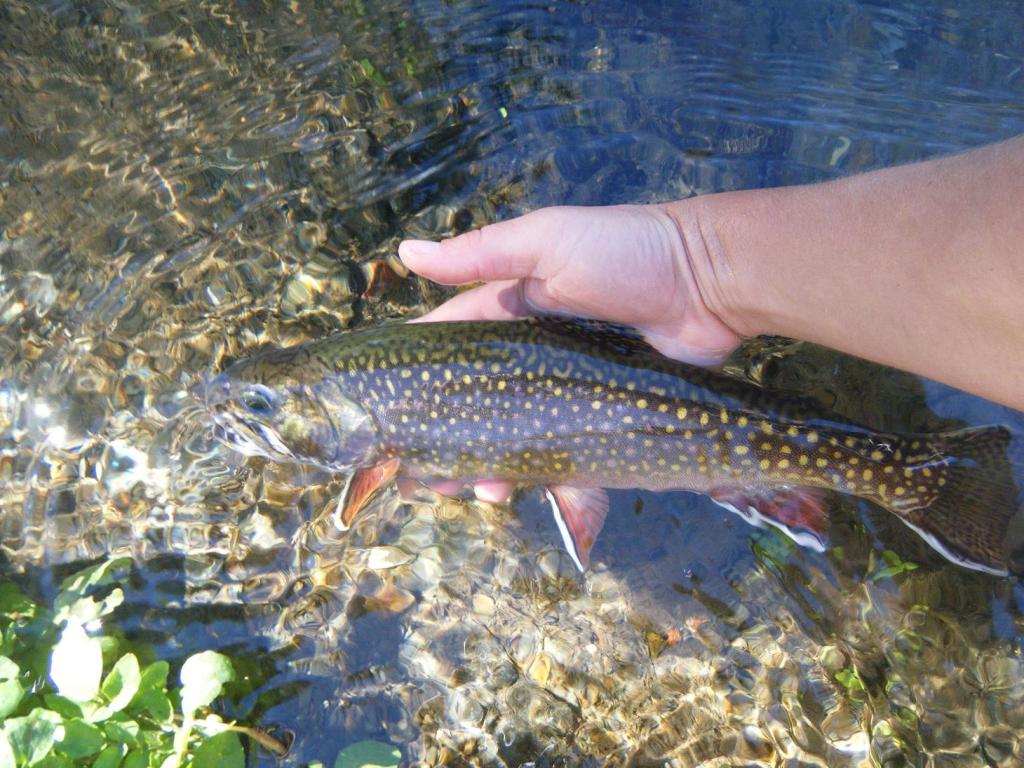
Brook Trout photo by 3wt7X
Brook Trout(Salvelinus fontinalis)
Brook Trout are the only stream trout native to the region. Generally, brook trout are found from northern Georgia along the Appalachian...
You are invited to attend and participate in the 2018 PAFF Eastern PA Fly Tying Jamboree, to be held on Saturday, February 17, from 10 AM to 5 PM.
This event is being hosted by Michael Lohman GenCon and Rich Mooney, Mooney4. Either of us will answer any questions regarding the event.
This event will be held at the Lehigh Gap Nature Center, in Slatington, PA. Directions can be found here: http://lgnc.org/
Everyone is invited to attend and watch the demonstrations, get tips from the the tyers, and have a great time. We particularly encourage beginner tyers to attend, and we'll have beginner instruction set up at a table. Details to follow.
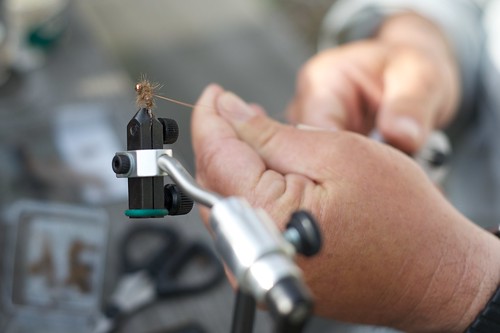
As always, we need to recruit a team of volunteer tyers of all skill levels to participate and we ask that you register your willingness to give a demonstration by signing up in this thread. Each tyer will be given 15-20 minutes to tie and explain their chosen demo fly. Tyers will tie one at a time, proceeding around the room. Please choose a pattern that fits in to one of the following categories, and list it in your signup post. Duplicates are OK, but try to pick a pattern that hasn't already been chosen.
Tying on a large hook (e.g. #12) makes it much easier for the audience to see what you are doing. It really helps if you practice your "demo" beforehand, especially to keep within the time limit. Having all materials laid out beforehand is also good. We should be able to fit about 30 tyers into the rotation. If we have extra time, that time will be used for Q & A sessions following each demo. We request...
Paflyfish is a popular spot for fly fishing anglers in the region for many good reasons. There are all sorts of great conversations and information shared in the forums on a host of different topics. We are very fortunate to have so many folks not only provide information online in the forums but help out beginners at clinics and instructional jamborees. Also, there are some darn smart anglers on the site coming from all walks of life.
The site is filled with thousands of great posts and threads that offer any angler any opportunity to expand their fly fishing opportunities. This section will be a dynamic page for beginners to find an index of information to get started with fly fishing. As relevant blog posts and threads are collected they will be added for quick and easy topics.
There are quite a few beginners on the board so I thought I would post a little on how I approach a day on the stream. I would be very interested to read about how others on the board approach a day of Fly Fishing.
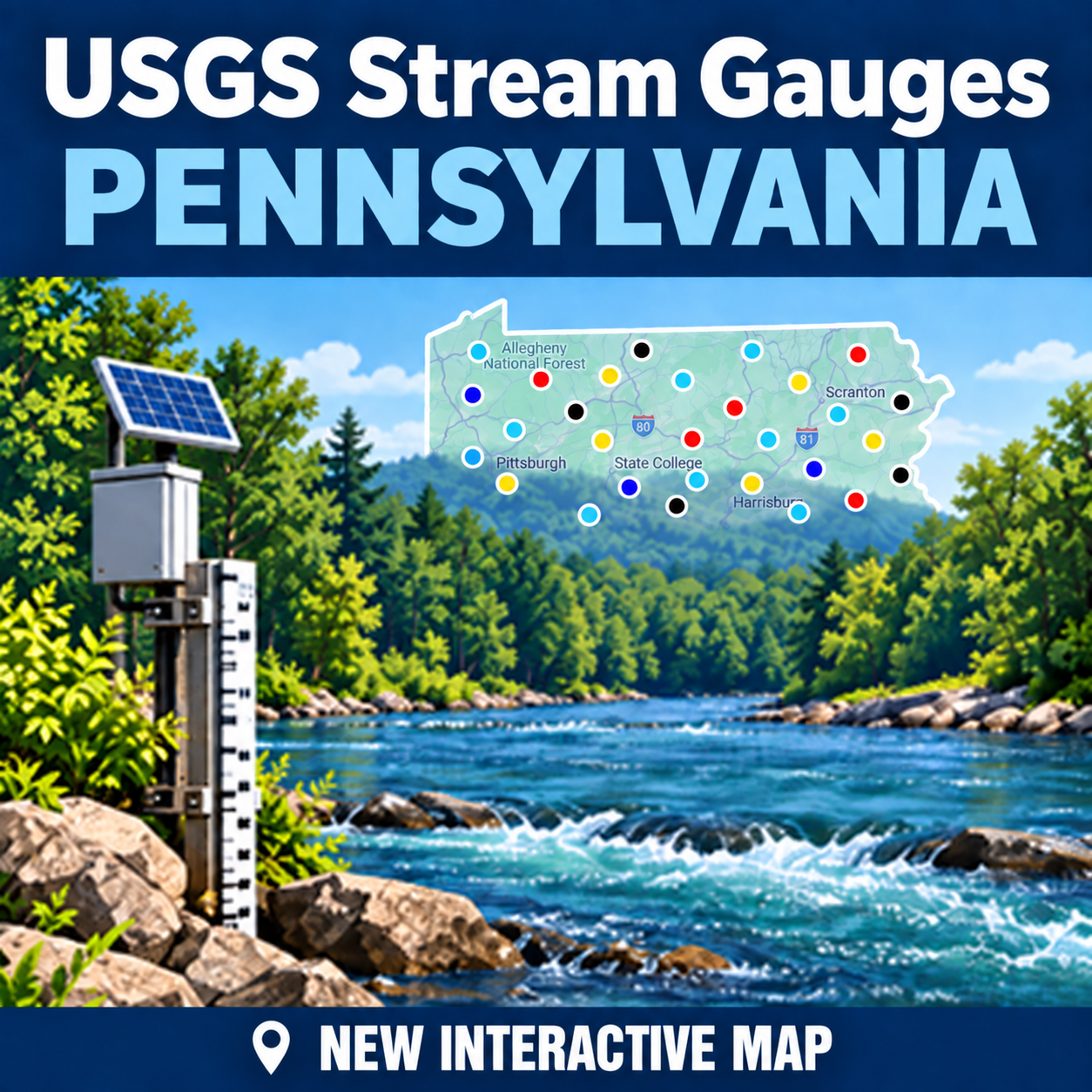
The success or failure of a day on the stream (although no day on the stream is really a failure…unless you drown I guess) is often determined before you even leave home. I check flows and temps on the USGS; conditions can differ in certain areas and streams. For example, if the water is high or low, perhaps a more stable stream like a limestoner would be a better choice. I also check the weather and find out the temperature high and low, cloud cover or sun, and rainfall info. I include all this info to make my decision on where to fish.
In addition, If I’m planning to fish an ATW, I will check of the PFBC site for stocking info. Actually, I’m not really a white truck chaser, quite the opposite. I try to avoid freshly stocked fish because I hate the crowds they attract, and I really don’t like fishing for freshly stocked fish, but that’s just me. Some may even use the Internet to find some hotspots (believe it or not!). IMO, posting a good report about a certain stream does attract anglers, especially in the short term. Again, I often do the opposite, if the word is out on hot fishing on a certain stream, I’ll often try to guess where the least amount of pressure is, and choose accordingly. Hatch info on the Internet is useful though. Even if the reports are from a different stream, I can “interpolate” and guess what’s hatching on some streams I know.
Once I pick where I want to fish, if it’s not an all-day trip, my next decision is when to fish; morning, afternoon or evening? As a general rule, in the winter the warmest time of day (afternoon) is usually the best, and in the summer...
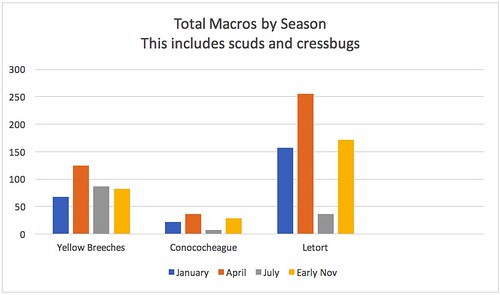
The chart below includes the total number of all macroinvertebrates in seine. The July sample in Letort may have been impacted by dense weeds producing a reduced number.
This survey sought to identify macroinvertebrate populations in three different central PA stream types over the course of a year for the purpose of shedding light on nymph populations that might be of interest to fly fishermen. Three streams were chosen reflecting a freestone stream (Conococheague), a semi-limestoner (Yellow Breeches), and a limestoner (Letort).
I attempted to ensure that each kick seine survey was done in as close to the exact spot in the riffle each time I conducted the survey. These surveys were done in January, April, July, and early November. Although I don’t claim that this effort was entirely scientific, the results do shed some light on nymph numbers and characteristics. Moreover, the results bear out fly fishing conventional wisdom: that nymphs are more numerous and larger in springtime. In all three streams, the macro biomass was highest in April. The graph above reveals the fluctuation in the riffle by season. Of note, the Letort far exceeded the other streams in total biomass, although as one would expect, this difference was largely due to scuds and cress bugs. If one were to break out scuds and cress bugs from Letort, the number of nymphs would have been less than Conococheague. If you’re a limestone stream nympher, Letort in particular, scud and cress bug patterns are well known for a reason.
Among general observations of the streams’ combined results that I think merit note are a couple things:
1. The relative scarcity of stoneflies and caddis compared to the much more numerous mayflies.
2. The generally small size of these nymphs throughout the seasons, but especially in summer and...
WATER: 3.2' at the Harrisburg gauge, gin clear, 60 degrees. A few boaters and yakkers but not a lot of activity.
HATCHES ETC: Nothing significant. A few scattered bugs, no rises; large schools of small minnows around 2" in length around shoreline areas. No crayfish seen. One bass caught in a riffle today had multiple caddis larva in his mouth and gullet. These caddis were dark colored and about #16.
Teamed up with Afishinado today to put some autumn hurtin on the Susky bass.
We arrived at mid day about 11am and fished until 5:30pm. It was a tough day. The bright sun and very clear water seemed to have the river switched off. We fished some very good sections with little success. Around 4pm, with the sun lower in the sky and softened by haze, the river seemed to wake up. We found active fish in fast water, mostly along current seams but also in shallow riffles. I had expected to find SMBs around ledge rock and and deeper tailouts today, but these spots didn't produce. The active fish were in pretty fast water. Had luck high sticking a helgy nymph and swinging a Clouser. I tried poppers briefly with no success. I managed about eight fish with three in the mid teens. Afish got fifteen bass with one at 18 inches.
A very nice day to be outside, but fishing was sub-par for what I'd expect on the big river in October. Nevertheless, with water levels still quite low, if you're a wading angler, the Susky is in great shape for FFing right now.
Members can follow along with comments in the forum here.