You are using an out of date browser. It may not display this or other websites correctly.
You should upgrade or use an alternative browser.
You should upgrade or use an alternative browser.
What Are You Tying Today? 2026
- Thread starter DaveKile
- Start date

lars
Well-known member
- Joined
- Feb 19, 2015
- Messages
- 604
no problem, i struggled with burning mono with not as nice results and just kinda had a flash one day. i'll throw out a caveat that i can't speak for durability, especially for bottom bouncing flies. so a topcoat might be appropriate and i've started squishing the tip of the mono flat in knurled pliers to give the resin a little more purchase. i was using 10lb brown maxima for my last crayfish ties.@lars
Gotta thank you for this method to make eyes. Couldn't reply to the 2025 thread. Brilliant!!
View attachment 1641248292
bdhoover77
Well-known member
“Wood duck” minnow streamer tied with dyed mallard flank and an olive CDL hen saddle feather.

SlingingWets
Well-known member
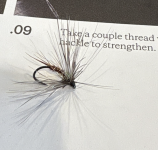
Size 16 BWO Last Chance Cripple


salmo
Well-known member
Could pass for a sulfur too.March Brown - #10 Sprite light wire DF hook. I’ve noticed that the MBs on the Beaverkill & EBranch seem to have a yellowish hue, while the MBs on Penns seem somewhat darker
View attachment 1641248007View attachment 1641248008View attachment 1641248009
salmo
Well-known member
Why the blue screen?
salmo
Well-known member
Better than white?

JG63
Well-known member
- Joined
- Mar 7, 2013
- Messages
- 1,606
A New England staple! Nicely done 😎👍🏼Looking to spin up a few more “old school” bugs here in 2026. Here is the first one of the year - The Hornberg tied on a size 10 3XL hook.
View attachment 1641247765
lars
Well-known member
- Joined
- Feb 19, 2015
- Messages
- 604
JG63
Well-known member
- Joined
- Mar 7, 2013
- Messages
- 1,606
Trinity is still my name …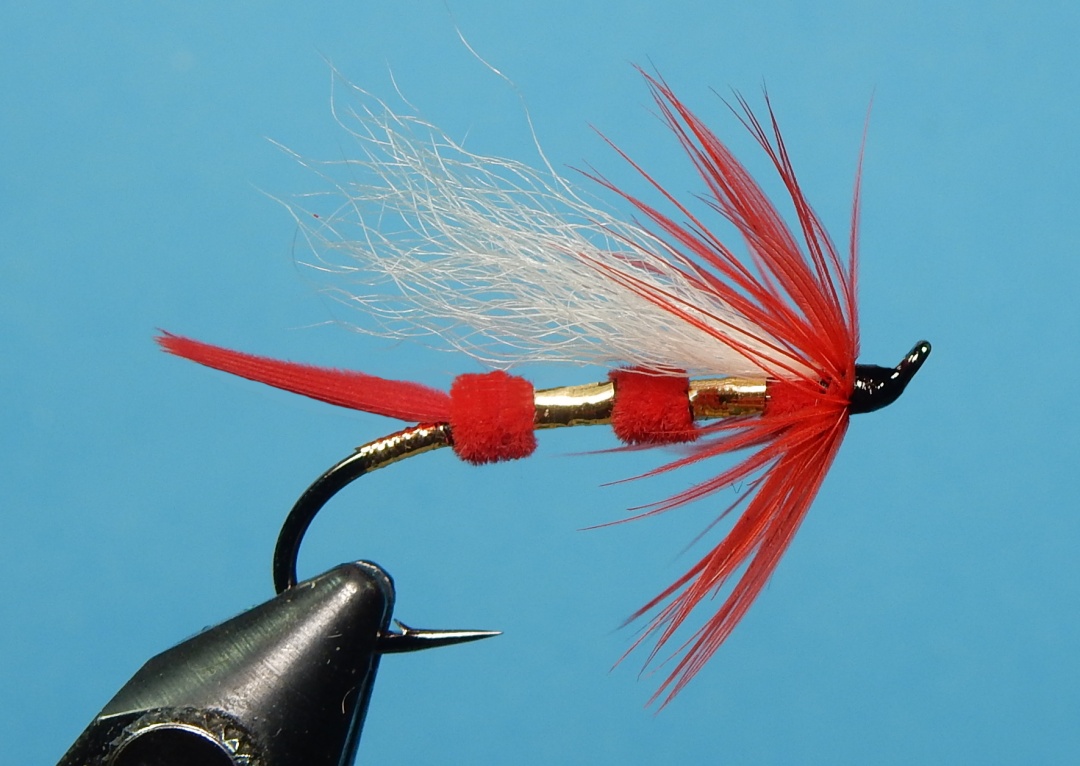
R/O Trinity
Hook - Single salmon
Thread - Black
Tip - Gold tinsel
Tail - Red duck or goose quill segments or red hackle fibers
Body - Three balls of fluorescent red chenille, separated by wraps of gold tinsel
Hackle - Fluorescent red
Wings - White calf tail or polar bear
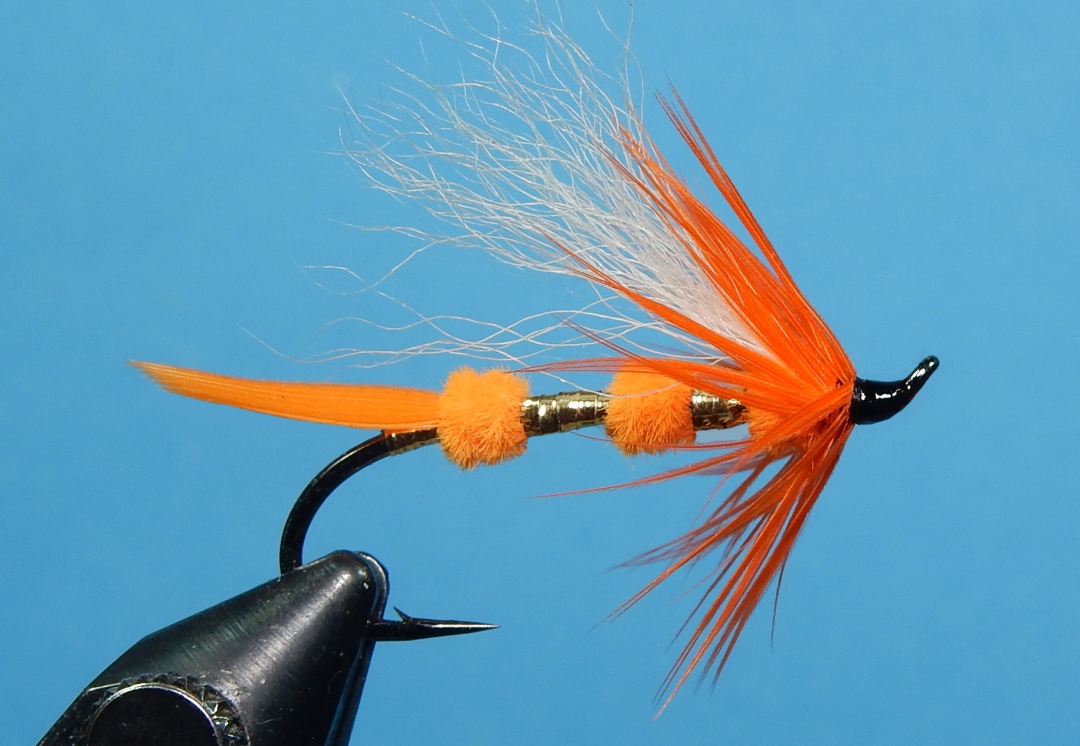
W/O Trinity
Hook - Single salmon
Thread - Black
Tip - Gold tinsel
Tail - Orange duck or goose quill segments or red hackle fibers
Body - Three balls of fluorescent orange chenille, separated by wraps of gold tinsel
Hackle - Fluorescent orange
Wings - White calf tail or polar bear
Author's Note
The pattern for this fly, came from the fine book by Bruce Ferguson, Les Johnson, and Pat Trotter, Fly Fishing For Pacific Salmon. They write that this fly was originated by James Garrett of Sequim, Washington. It is good for
JimNovo
Well-known member
Blue!!!
If you scroll back a page or two, you can see that I use a light blue paper-covered foam poster board from a local craft store as my background. It seems to just about split the difference between the medium blue and white backgrounds shown in the pic above. I think a bit of color helps to soften things and to reduce any glare coming off a pure white background.
The foam poster board is rigid so it can be stood up or leaned against something and stays in place.
The foam poster board is rigid so it can be stood up or leaned against something and stays in place.
salmo
Well-known member
The blue. Thanks



USGS Stream Gauges