What Are You Tying Today? 2025

Status
Not open for further replies.
What is the right CDC to use?
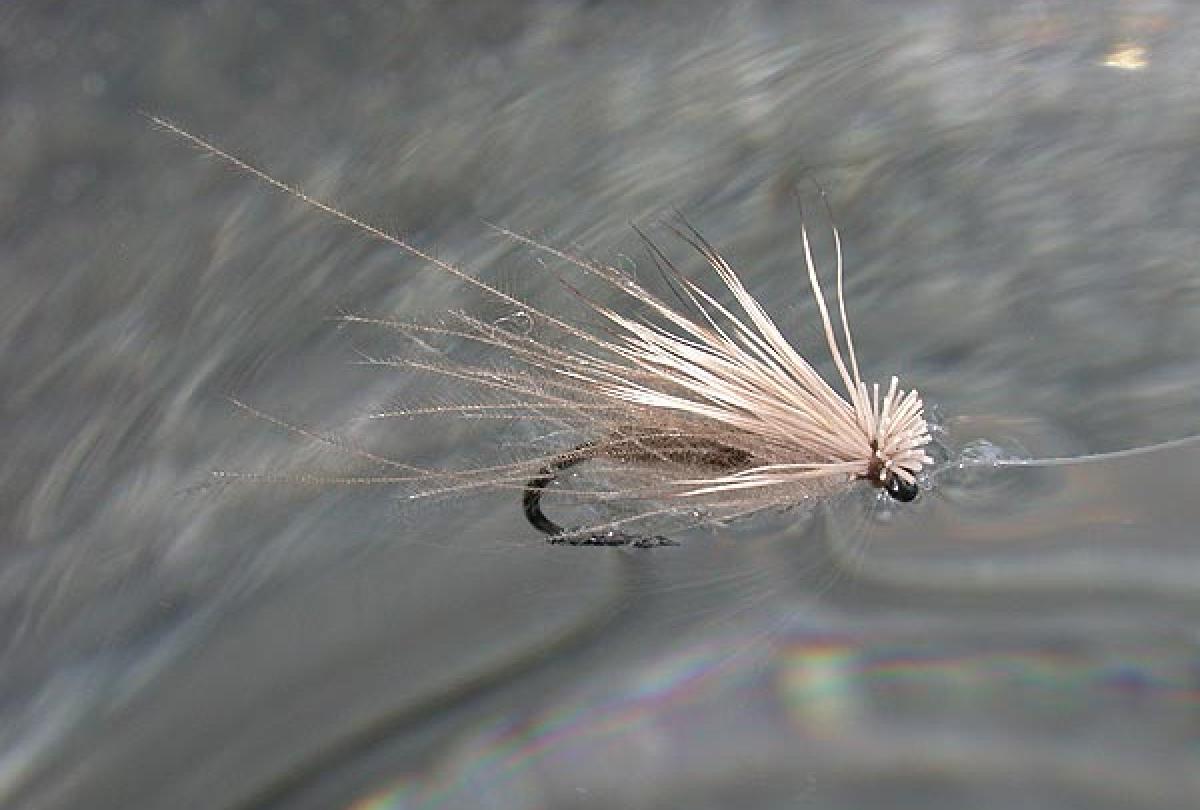
Tied in at the butt end first, whatever cdc you have that won’t split out on you on the first or second wrap. Some of it splits every time, other ones don’t tend to split on you as much. Trial and error will locate you some of the “right” cdc to use to tie IOBO flies and it probably doesn’t even matter much what color it is.
 
 
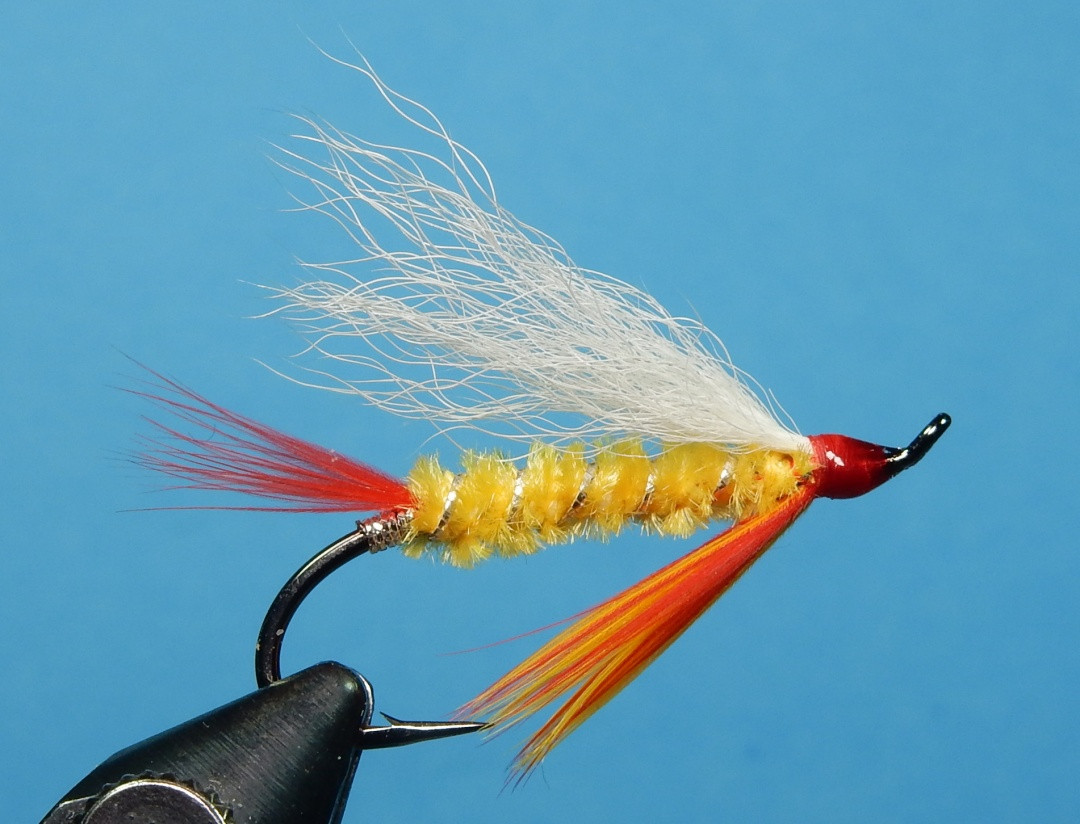
Skykomish-Yellow-1080.jpg


Skykomish Yellow

Hook - Single salmon
Thread - Red.
Tip - Oval silver tinsel.
Tail - Scarlet red hackle barbs.
Ribbing - Oval silver tinsel.
Body - Yellow chenille.
Hackle - Scarlet red and yellow tied on as a collar mixed and tied back and down.
Wing - White calf tail tied over the body.

Author's Note

Ken and George McLeod of Seattle, Washington, originated this pattern in the 1940s.

Fish Flies: The Encyclopedia of the Fly Tier's Art - Terry Hellekson
 
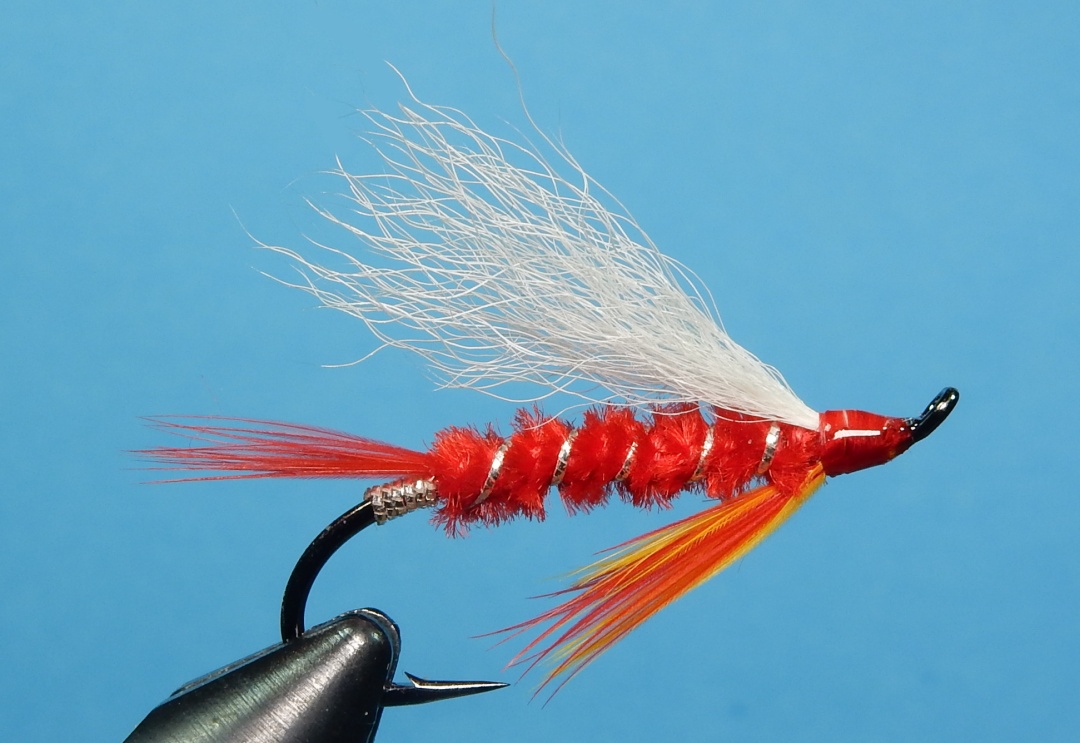
Mc-Leods-Skykomish-Sunrise-1080.jpg


McLeods' Skykomish Sunrise

Hook - Single salmon
Thread - Red
Tip - Oval silver tinsel
Tail - Scarlet red hackle barbs
Ribbing - Oval silver tinsel
Body - Red chenille
Hackle - Scarlet red and yellow tied on as a collar mixed and tied back and down
Wing - White calf tail tied over the body

Author's Note

Ken and George McLeod of Seattle, Washington, originated this pattern in the 1940s.

Fish Flies: The Encyclopedia of the Fly Tier's Art - Terry Hellekson
 
Hans Weilenmann ties an IOBO Humpy pattern. However, my dad belonged to a fly tying club, and was friendly with, the gentleman who invented the IOBO. My understanding of the original pattern is that it was not tied humpy-style. Rather, the CDC feather is tied in by the butt where the hook shank and bend meet, and it is simply wrapped forward to the wing position. While wrapping the stem or quill forward, the CDC barbules are stroked forward to prevent trapping them under the wound stem and sparing them to make the wing. Then, once the wing position is reached, the remaining CDC barbules are stood up and tied in the upright position.

I'm sure the humpy-style version has its place, but I've always believed the very sparse effect achieved by wrapping the CDC the way I described above is what lends to the magic of this pattern. The original pattern is extremely slender with only some trapped CDC barbules forming the body, and the visible stem, or quill, wrapped over top creates a very nice segmentation over the body.

Here is a video of Hans tying the IOBO Humpy:

 
1764762593099.png


McClain's Fancy

Hook - Single salmon
Thread - Brown
Tail - Coastal blacktail deer hair
Ribbing - Single strand of brown yarn
Body - Dubbed with yellow lamb's wool
Wing - Coastal blacktail deer hair tied over the body

Author's Note

Don McClain of Portland, Oregon, originated this pattern for summer-run fish. This fly should be sparsely dressed and fished with a floating line in the surface film.

Fish Flies: The Encyclopedia of the Fly Tier's Art - Terry Hellekson
 
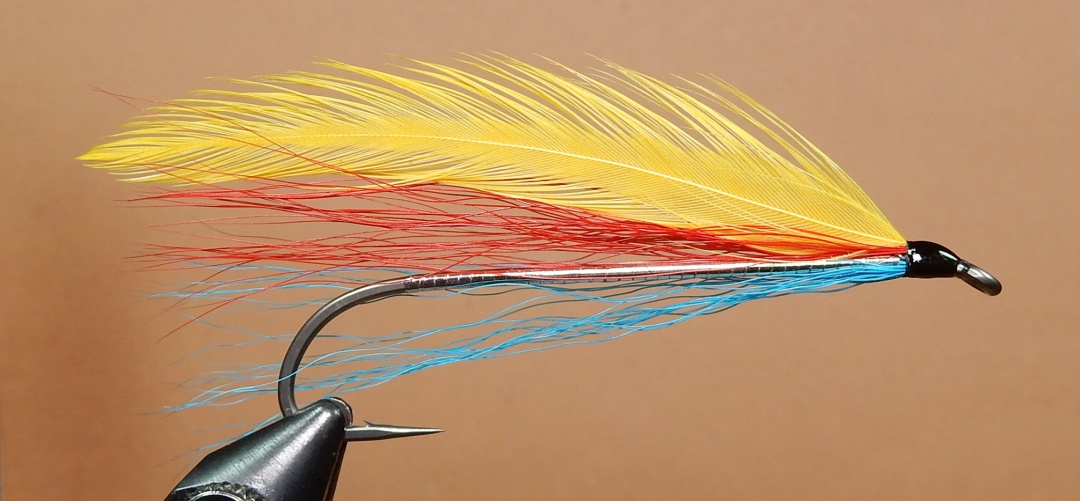
Guide-s-Special-1080.jpg


Guide’s Special

Hook - 7xl or 9xl streamer

Thread - Black

Body - Double wrapped flat silver tinsel

Belly - Long blue bucktail

Wing - Long red bucktail with four slim Ewing yellow saddle hackles over

Author's Note

This fly is one of those simple patterns that has an interesting history and has produced for years. The following history is a combination of what I have read and have been told by individuals who have a connection to Jim Warner and Lake Winnipesaukee.

Jim Warner use to tie and sell many of these Guide’s Specials. He was given the pattern by a very popular local guide on the lake Glenn Morrill of Alton, NH. The color combination of this fly when wet and the materials blend together closely imitate the coloring of a smelt. One other pattern the Babbs Ghost has similar colors in it. Jim created the Babbs Ghost and today it is still very effective.

Little is known about who created the Guides Special, which is consistent with how many of these fly patterns got passed down from angler to angler. I’ve personally used this pattern with success and tied it for anglers fishing in New England all reporting back that they caught fish with it.

 
Been tying up some streamers, decided to give game changers another shot... really happy with how this came out. Gonna take some gray and black sharpies to it and color it like a shad. Maybe I'll throw this and pray to the muskie gods this week.
Looks good! I don’t have the patience for game changers or spinning/stacking deer hair. Wish I did because I really like the flies.
 
Looks good! I don’t have the patience for game changers or spinning/stacking deer hair. Wish I did because I really like the flies.
There is definitely a learning curve to it! I'd say getting a nice distribution of hair around the hook is not even half the battle- the hardest skill is cutting and shaping it. Two things have really helped me:

1. GSP. There is no substitute. This is the only type of thread I would ever think about using to spin deer hair. For these flies I used Veevus GSP, White, 50D.

2. Razor blades: they need to be sharp. I use Astra Platinum (same ones I shave my face with), which are insanely sharp out of the box but dull rather quickly.
 
It's clearly a very effective nymph. My BS is just that I'm stuck in a cycle of tying the same patterns. I don't currently have a demand to expand, but it doesn't make for very compelling contributions to a tying thread 🤷‍♂️

It's not all that exciting - but I like to tie some of my prince nymphs with brown CDC hackle. If you are looking for a variation. Prince is a very effective pattern - no doubt.
 
Status
Not open for further replies.
Back
Top