How much does tippet size matter

Crap how? Are you saying that the lb test rating is wrong? Or the diameter is not as advertised?
Not being argumenitive, just curious. I put Walmart Stren on my spinning gear without issue but it doesn't get heavy enough use for me to have a clear opinion on it.

With spinning gear, absolute diameter is not nearly as much of a concern as it is for fly anglers. Granted, I think we make a bigger deal of it than it needs to be, but for purchasing line to be used as tippet, we care that it is a specific diameter and we generally want the highest strength possible. If you look at a lot of cheaper lines marketed for conventional gear, you'll see 4lb line that is .008" diameter. That is 3x diameter and only rated for 4lbs. This is pretty typical of cheaper monos. 3x equivalent should be 6lb test or better IMO. I find that abrasion resistance, knot strength, and knot tying characteristics to be sub par also.

 
Crap how? Are you saying that the lb test rating is wrong? Or the diameter is not as advertised?
Not being argumenitive, just curious. I put Walmart Stren on my spinning gear without issue but it doesn't get heavy enough use for me to have a clear opinion on it.
Dear dudemanspecial,

For general use on spinning or conventional gear I find Ande Premium and Backcountry lines to be perfect for me. I started using them in saltwater 50 years ago. The line is supple, holds knots well, and is abrasion resistant.

Oh one other thing. Ande is cheap!

Regards, Tim Murphy 😀
 
My newer freshwater spinning & casting reels are all low capacity because how line much do you really need to fish in a creek for trout or lake for bass or pickerel, plus lower capacity equals a bigger diameter spools so less memory coils or twists (if you fill them correctly) which increases casting distance.

On those reels, I use Sunline or Varivas mono and I like Seaguar fluorocarbon on the casting reel I use most for largemouth bass. I like to keep them full to maximize casting distance. With the low capacity spools that's not an expensive option even with premium Japanese brands.

I also have a couple of vintage spinning reels I use for trout with MUCH larger capacity spools. On those reels I use cheaper mono as "backing" and will spool 50 or so yards of the good stuff on top.

Again the result is a bigger spool diameter, less memory coils and less good line wasted filling deep spools with fishing line you will never use.
 
Fly size plays a factor along with water conditions. If I am using dries or nymphs on a gin clear clear, I am pretty much always using 5X or 6X. Streamers is 4X min, though I have been using 2X and 3X more often for streamers now.
 
With spinning gear, absolute diameter is not nearly as much of a concern as it is for fly anglers. Granted, I think we make a bigger deal of it than it needs to be, but for purchasing line to be used as tippet, we care that it is a specific diameter and we generally want the highest strength possible. If you look at a lot of cheaper lines marketed for conventional gear, you'll see 4lb line that is .008" diameter. That is 3x diameter and only rated for 4lbs. This is pretty typical of cheaper monos. 3x equivalent should be 6lb test or better IMO. I find that abrasion resistance, knot strength, and knot tying characteristics to be sub par also.
Are you using floro for your tippets? That would address your concerns on abrasion resistance.

To be honest, and I think I've said this elsewhere, I don't care what size line my connection is made with as long as it works. I DO CARE that my leader is kink free, scuff and cut free, and turns the fly over without acting like a 747 in a crash landing.

If I ever get to waters where the fish are so line shy that my world would be shattered because they caught a glimpse of something shiny near the fly, I think I'd pack up and find other waters to enjoy myself.
 
My newer freshwater spinning & casting reels are all low capacity because how line much do you really need to fish in a creek for trout or lake for bass or pickerel, plus lower capacity equals a bigger diameter spools so less memory coils or twists (if you fill them correctly) which increases casting distance.

On those reels, I use Sunline or Varivas mono and I like Seaguar fluorocarbon on the casting reel I use most for largemouth bass. I like to keep them full to maximize casting distance. With the low capacity spools that's not an expensive option even with premium Japanese brands.

I also have a couple of vintage spinning reels I use for trout with MUCH larger capacity spools. On those reels I use cheaper mono as "backing" and will spool 50 or so yards of the good stuff on top.

Again the result is a bigger spool diameter, less memory coils and less good line wasted filling deep spools with fishing line you will never use.
Dear Bamboozle,

Good point!

I have a Mitchell 408 with a large capacity spool that still has about 225 yards of line from 1975 on it. It had 250 yards from the original time I spooled the reel with the recommended 300 yards of #4 test, but I've respooled with newer line dozens of times, so it's bound to be shorter.

Regards,

Tim Murphy 🙂
 
Has anyone ever applied "mud" to their tippet material, especially while dry fly fishing?

I have used Fulling Mills' Fullers Mud on my tippet while steelhead fishing, but I can't say one way or the other whether it makes a difference. I strictly fish subsurface for steelhead, and I look for just about every legal and ethical advantage I can think of to maximize my chances of success (e.g., tippet mud, high quality fluoro tippet material, high quality hooks for my flies, Loon UV Knot Sense on knots, knots pre-rigged at home where I can almost see clearly, etc.)

The Fullers Mud may actually be more effective for dry fly fishing as it supposedly helps your tippet sink just below the surface and helps eliminate shine from the material. I apply a smidge to my fingers and run it up and down the tippet while fishing nymphs or eggs with the hope that it will help by removing any shine from the leader, but I'm likely wasting money and time because the fly and tippet is drifting a few feet under water and likely isn't glistening in the daylight like it would be while fishing a dry fly.

Here is a link, for what it's worth. Loon also sells a similar product called "Snake River Mud". Maybe I'll try mud while dry fly fishing someday and report back. However, I'm not good enough and don't fish often enough to know whether the mud works or not.

Fulling Mill Fullers Mud

Loon advertises their mud for nymph fishing, but as Devin Olsen notes on his website, it is "excellent for eliminating a surface imprint from your tippet when fishing dries."

Loon Snake River Mud at Tactical Fly Fisher
 
I use the loon stuff when nymphing, never tried it with dries. I usually rub payette paste from my tippet to leader junction to about 2 feet up my fly line but not on the tippet itself when fishing dries. Maybe ill try it out tomorrow.
 
Dear Bamboozle,

Good point!

I have a Mitchell 408 with a large capacity spool that still has about 225 yards of line from 1975 on it. It had 250 yards from the original time I spooled the reel with the recommended 300 yards of #4 test, but I've respooled with newer line dozens of times, so it's bound to be shorter.

Regards,

Tim Murphy 🙂

My 408 came with a deep & shallow spool, but even the specs on the shallow spool says it will hold 100 yards of 4lb which (IMHO) is WAY too much line for stream trout fishing so I keep 50 yards of cheap mono as backing.

Another thing, I recently got into brightly colored fishing line (chartreuse, orange, pink) which is WAY easier to see especially in 4lb & 2lb which improves (my) casting accuracy...

And so far, the fish could give a rat's arse...

With bright colored line on top of the clear regular fishing line, it's a LOT easier to tell where you are at with good line versus the cheaper backing.
 
I DO CARE that my leader is kink free, scuff and cut free, and turns the fly over without acting like a 747 in a crash landing.

Then you want good stuff and Stren and Trilene ain't it.

And yes I do use a variety of casting/spinning fluoros. P-Line for larger diameters and Seaguar Blue Label for the smaller sizes. Works great. There's a few other good ones out there too.
 

Latest Forum Posts

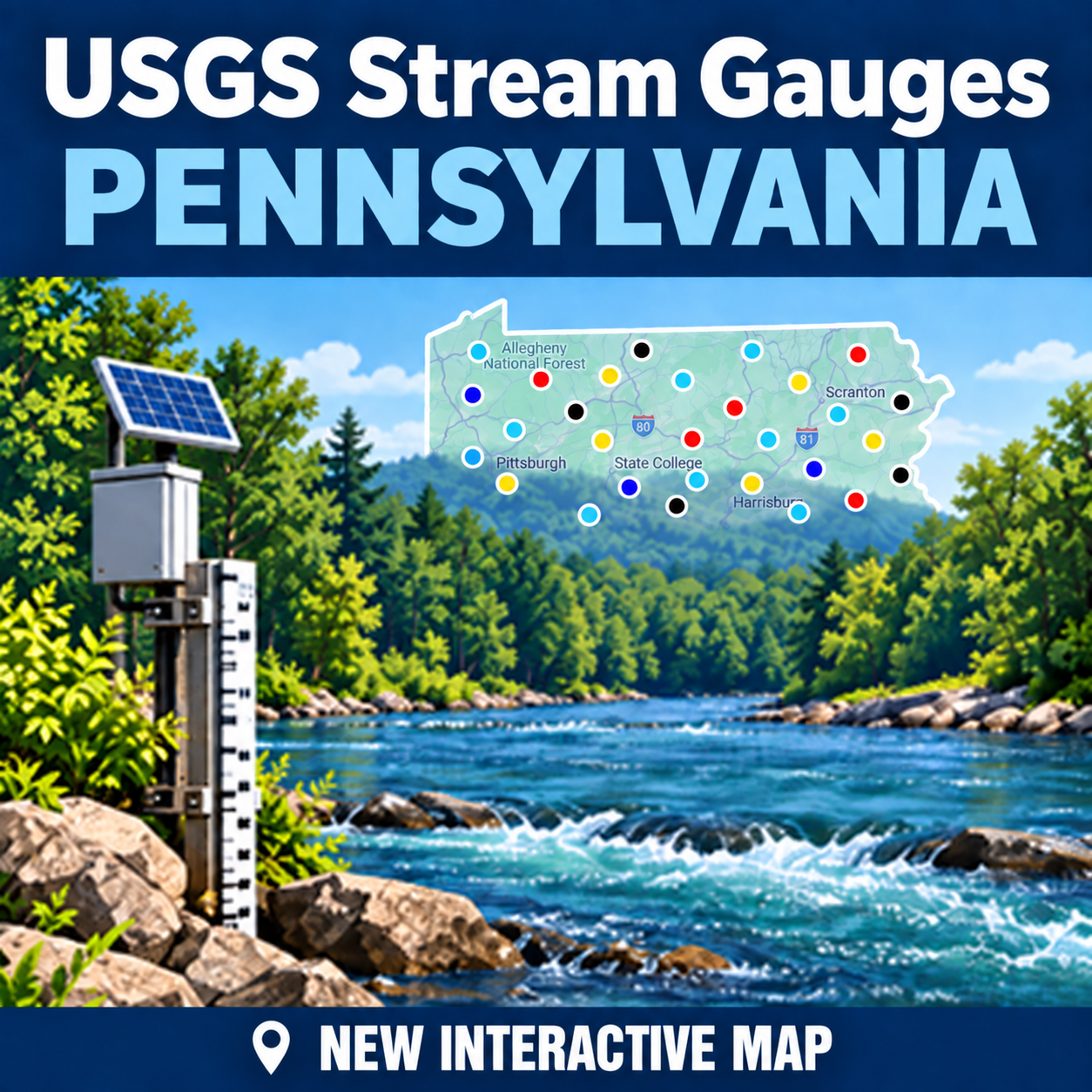
USGS Stream Gauges

Back
Top