Cornwall Warehouse

riverwhy

Well-known member
Joined
Jan 5, 2007
Messages
1,250
For the life of me I can’t imagine siting a warehouse here. Next
To a quarry/lake that a a local community uses as a water source, headwaters of trout stream, historic village, state historic site, and steep slopes with forested land.
Wait, quarry, water warehouse…..
Sound similar to South Hanover Township?
And so it goes.

 
I know reasonable people can disagree about whether this warehouse should be built, but I think those of us who fish these waters have a perspective that's worth adding to the conversation.

For anglers, this isn't just a land-use issue—it's a watershed issue.

The Quittapahilla Creek has been the focus of years of restoration work by local municipalities, the Lebanon County Conservation District, Trout Unlimited volunteers, and countless others. Floodplain restoration, riparian buffer plantings, streambank stabilization, wetland restoration, and habitat improvements have all been funded with public dollars and volunteer labor to improve water quality and aquatic habitat. Those investments recognize something we've known for a long time: you can't have healthy streams without healthy watersheds.

Projects like this work in the opposite direction. Replacing dozens of acres of open ground with roofs, pavement, loading areas, and truck traffic increases stormwater runoff, even when it meets today's engineering standards. More runoff generally means less groundwater recharge, flashier high-water events after storms, warmer water, and a greater chance that sediment, road salt, oils, brake dust, tire particles, and other pollutants eventually make their way into local streams.

It's also worth remembering that the Quittie doesn't exist in isolation. It ultimately flows into the Swatara Creek watershed, one of the most important recreational fisheries in south central Pennsylvania. Every decision made upstream has consequences downstream.

The ecological impacts go beyond water quality. Open fields, wooded edges, wetlands, and hedgerows provide habitat and movement corridors for birds, bats, pollinators, amphibians, reptiles, and mammals. Once those habitats are fragmented by large industrial development, roads, lighting, and around-the-clock activity, they're rarely restored to anything approaching their original ecological function.

My concern is also about cumulative impacts. One warehouse may not seem catastrophic by itself, but Lebanon County has seen warehouse proposals at an unprecedented pace over the last decade. Each project removes a little more open space, adds a little more impervious cover, generates a little more truck traffic, and puts a little more pressure on our streams. Eventually those "little" impacts become the new normal.

I'm not anti-development, and I recognize that if a proposal complies with zoning, municipalities may have limited legal grounds to deny it. But that doesn't mean we should stop asking whether this is the right place for a project of this scale or whether stronger protections for water quality, habitat, lighting, landscaping, and stormwater should be required.

As fly anglers, we spend more time than most people watching what's happening in our watersheds. We notice when stream temperatures creep upward, when runoff turns a stream brown after a summer thunderstorm, when insect hatches decline, or when riparian cover disappears. Those observations aren't just anecdotal—they're reminders that conservation starts long before water reaches the creek.

Healthy trout streams don't happen by accident. They're the product of thousands of land-use decisions made throughout an entire watershed. I hope that reality remains part of this discussion as the project moves forward.

The Rodfather
Engagement Czar and Conservation Chair
Dauphin County League of Chubsmen

 
For the life of me I can’t imagine siting a warehouse here. Next
To a quarry/lake that a a local community uses as a water source, headwaters of trout stream, historic village, state historic site, and steep slopes with forested land.
Wait, quarry, water warehouse…..
Sound similar to South Hanover Township?
And so it goes.

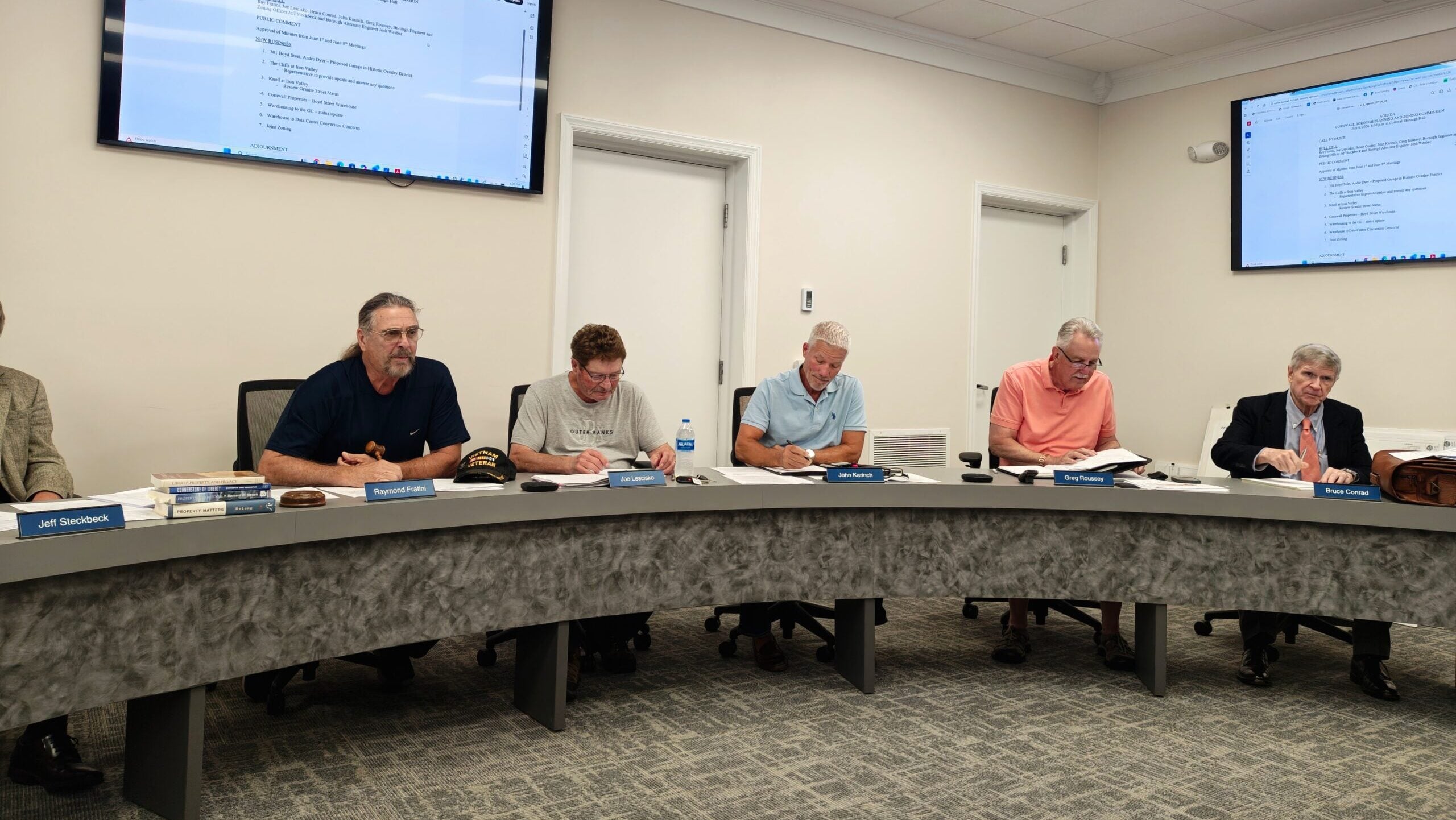
What I find gross about this is Cornwall is not a large town at all. It is very likely a good percentage of the town came to the meeting. When prompted by a speaker for others to raise their hand if they support this project, none did. This means that the officials are no longer representing the constituents.

Everyone says vote them out. Yes, you can and should but in the meantime...
you get things you don't support or want. It is like this everywhere and in most areas elected officials govern in our society today.
 
I know reasonable people can disagree about whether this warehouse should be built, but I think those of us who fish these waters have a perspective that's worth adding to the conversation.

For anglers, this isn't just a land-use issue—it's a watershed issue.

The Quittapahilla Creek has been the focus of years of restoration work by local municipalities, the Lebanon County Conservation District, Trout Unlimited volunteers, and countless others. Floodplain restoration, riparian buffer plantings, streambank stabilization, wetland restoration, and habitat improvements have all been funded with public dollars and volunteer labor to improve water quality and aquatic habitat. Those investments recognize something we've known for a long time: you can't have healthy streams without healthy watersheds.

Projects like this work in the opposite direction. Replacing dozens of acres of open ground with roofs, pavement, loading areas, and truck traffic increases stormwater runoff, even when it meets today's engineering standards. More runoff generally means less groundwater recharge, flashier high-water events after storms, warmer water, and a greater chance that sediment, road salt, oils, brake dust, tire particles, and other pollutants eventually make their way into local streams.

It's also worth remembering that the Quittie doesn't exist in isolation. It ultimately flows into the Swatara Creek watershed, one of the most important recreational fisheries in south central Pennsylvania. Every decision made upstream has consequences downstream.

The ecological impacts go beyond water quality. Open fields, wooded edges, wetlands, and hedgerows provide habitat and movement corridors for birds, bats, pollinators, amphibians, reptiles, and mammals. Once those habitats are fragmented by large industrial development, roads, lighting, and around-the-clock activity, they're rarely restored to anything approaching their original ecological function.

My concern is also about cumulative impacts. One warehouse may not seem catastrophic by itself, but Lebanon County has seen warehouse proposals at an unprecedented pace over the last decade. Each project removes a little more open space, adds a little more impervious cover, generates a little more truck traffic, and puts a little more pressure on our streams. Eventually those "little" impacts become the new normal.

I'm not anti-development, and I recognize that if a proposal complies with zoning, municipalities may have limited legal grounds to deny it. But that doesn't mean we should stop asking whether this is the right place for a project of this scale or whether stronger protections for water quality, habitat, lighting, landscaping, and stormwater should be required.

As fly anglers, we spend more time than most people watching what's happening in our watersheds. We notice when stream temperatures creep upward, when runoff turns a stream brown after a summer thunderstorm, when insect hatches decline, or when riparian cover disappears. Those observations aren't just anecdotal—they're reminders that conservation starts long before water reaches the creek.

Healthy trout streams don't happen by accident. They're the product of thousands of land-use decisions made throughout an entire watershed. I hope that reality remains part of this discussion as the project moves forward.

The Rodfather
Engagement Czar and Conservation Chair
Dauphin County League of Chubsmen
Wonderfully said and you reminded me of this Aldo Leopold
Quote:
“One of the penalties of an ecological education is that one lives alone in a world of wounds. Much of the damage inflicted on land is quite invisible to laymen. An ecologist must either harden his shell and make believe that the consequences of science are none of his business, or he must be the doctor who sees the marks of death in a community that believes itself well and does not want to be told otherwise.”

I think fisherman and especially fly fisherman can’t help but become ecologists. I remember someone on here criticizing some of us for driving distances to fish in better waters. To some of us that have seen these types of assaults despite our best efforts to help our local environs, we simply need to know that some of these places even exist anymore.

I have yet to harden my shell.
 
Each project removes a little more open space, adds a little more impervious cover, generates a little more truck traffic, and puts a little more pressure on our streams. Eventually those "little" impacts become the new normal.

I'm not anti-development, and I recognize that if a proposal complies with zoning, municipalities may have limited legal grounds to deny it.
That was an informative post, thanks for taking the time. Another issue that's taking place is the "rezoning" of agricultural, residenial, or light-commercial lands into heavy-industrial zones. Government, even small government, is a formidable adversary.
 
The best protection against heavy industrial or high density residential development is owning said property, beyond that, local zoning ordinances provide the most meaningful protections pertaining to landuse.

There is no doubt that warehouse developers, industrial scale solar and data centers have targeted rural municipalities with limited resources to regulate projects of this scale. Regardless of what their constituents want, local officials make up rules after applications are in hand.
 
  • Like
Reactions: CRB
What I find gross about this is Cornwall is not a large town at all. It is very likely a good percentage of the town came to the meeting. When prompted by a speaker for others to raise their hand if they support this project, none did. This means that the officials are no longer representing the constituents.

Everyone says vote them out. Yes, you can and should but in the meantime...
you get things you don't support or want. It is like this everywhere and in most areas elected officials govern in our society today.
What I find gross about this is Cornwall is not a large town at all. It is very likely a good percentage of the town came to the meeting. When prompted by a speaker for others to raise their hand if they support this project, none did. This means that the officials are no longer representing the constituents.

Everyone says vote them out. Yes, you can and should but in the meantime...
you get things you don't support or want. It is like this everywhere and in most areas elected officials govern in our society today.

They've already put hundreds of houses in in that general area.
 
Last edited:
Yeah but that was down below on the farmland for the most part. I have heard for years that there is a strong pro-property rights movement in that area and among the local officials. If there was such strong opposition to this type of development, where were the citizens on Election Day?
I should have seen the widening of 322 and the erection of a large digital billboard on the north side of the mountain that this was the future.
 
The best protection against heavy industrial or high density residential development is owning said property, beyond that, local zoning ordinances provide the most meaningful protections pertaining to landuse.
Eminent domain/re-zoning... Like I said, government, state or federal, is a formitable adversary.
 
The best protection against heavy industrial or high density residential development is owning said property, beyond that, local zoning ordinances provide the most meaningful protections pertaining to landuse.

There is no doubt that warehouse developers, industrial scale solar and data centers have targeted rural municipalities with limited resources to regulate projects of this scale. Regardless of what their constituents want, local officials make up rules after applications are in hand.
Unfortunately tax revenue in the local municipalities is a bigger deal than placing the lands idle. Not to mention in a conservation state(game lands, state parks, et).
Most municipalities in the state are dealing with not enough tax revenue. The way they are dealing with is: tax increase(not popular with the voters/landowners) , property reassessments(not popular with the voters/landowners), or have new investments made into the area{increase tax revenues, new jobs}(popular with the voters/landowners).
Municipalities are using zoning to keep the new investments out of my next door.(popular with the voters/landowners).
Best protection educate the local voters, landowners, and residents.
 
Unfortunately tax revenue in the local municipalities is a bigger deal than placing the lands idle. Not to mention in a conservation state(game lands, state parks, et).
Most municipalities in the state are dealing with not enough tax revenue. The way they are dealing with is: tax increase(not popular with the voters/landowners) , property reassessments(not popular with the voters/landowners), or have new investments made into the area{increase tax revenues, new jobs}(popular with the voters/landowners).
Municipalities are using zoning to keep the new investments out of my next door.(popular with the voters/landowners).
Best protection educate the local voters, landowners, and residents.
And our current state administration/ legislature is giving out tax breaks to data center developers left and right...

There is lots of abandoned industrial land in Pa along with heavily altered abandoned mine land that should be targeted for current industrial development. Generally speaking though, that is not what is happening.

Hyperscale data centers or any heavy industrial use has no business being located next to residential properties for example.

We could and should be making much better land use decisions in our society.
 
Last edited:
Just blame the state “administration” and let our US senators
Off the hook?!
 
Last edited:
just blame the state administration and let out senators
Off the hook?!
I intended state administration to mean Gov office including all economic and policy development offices that drive these decisions and the state legislature all in one.

Purely from a conservation viewpoint, we need to do a much better job with zoning and landuse decisions at a statewide scale. Losing prime farmland soils to development of all kinds is unwise. Losing thousands of acres of forested land for "green" industrial scale solar, warehouses and datacenters in high quality watersheds is not going to be good for aquatic resources in the long run.

Repurposing highly impacted mineland and abandoned industrial land should be prioritized and incentivized moving forward. Landuse planning at a municipal scale might be too tunnel visioned.

A good project for conservation organizations would be to undertake a significant gis mapping effort to identify priority areas of high conservation value that are vulnerable to development based on zoning. Then use this information to advocate for appropriate zoning and protection.
 
Please note I slightly altered my post since you responded. While I STRONGLY agree with what you are saying about what is going on at the state level, leaving Feds off the hook here is failing to address 90% of the problem we are
Facing. The federal government is increasingly coercing states to industrialize and rollover to moneyed interests.
 
Last edited:
I intended state administration to mean Gov office including all economic and policy development offices that drive these decisions and the state legislature all in one.

Purely from a conservation viewpoint, we need to do a much better job with zoning and landuse decisions at a statewide scale. Losing prime farmland soils to development of all kinds is unwise. Losing thousands of acres of forested land for "green" industrial scale solar, warehouses and datacenters in high quality watersheds is not going to be good for aquatic resources in the long run.

Repurposing highly impacted mineland and abandoned industrial land should be prioritized and incentivized moving forward. Landuse planning at a municipal scale might be too tunnel visioned.

A good project for conservation organizations would be to undertake a significant gis mapping effort to identify priority areas of high conservation value that are vulnerable to development based on zoning. Then use this information to advocate for appropriate zoning and protection.
Dear lycoflyfisher,

I've been posting words similar to your third paragraph so long everywhere I can that I'm tiring of doing it anymore.

Even here, I get met with the "But that costs them money, and unused land is so much more economical to ruin." That's not a quote of course, but it literally is the gist of the sentiment.

The idea that we, as taxpayers, have to pay to get ruined land repurposed is ridiculous. Saying NO to development is absolutely an option. But it appears that no one has the courage to say that.

Please give me a week to set things right. I might get shot dead, but it ain't like I give a crap anymore so what's the harm in trying?

Regards,

Tim Murphy 🙂
 
Like it or not, this is essentially the guide for development in Pa.

And here is the recent Senate Resolution to review the code.

Includes sponsor and the co-sponsers, which may interest some of you. Sponsor was from Berks Co.
 
Last edited:
Dear lycoflyfisher,

I've been posting words similar to your third paragraph so long everywhere I can that I'm tiring of doing it anymore.

Even here, I get met with the "But that costs them money, and unused land is so much more economical to ruin." That's not a quote of course, but it literally is the gist of the sentiment.

The idea that we, as taxpayers, have to pay to get ruined land repurposed is ridiculous. Saying NO to development is absolutely an option. But it appears that no one has the courage to say that.

Please give me a week to set things right. I might get shot dead, but it ain't like I give a crap anymore so what's the harm in trying?

Regards,

Tim Murphy 🙂
Dear Tim,
Apparently you didn’t learn much from your Econ professors at PSU. Me neither!
Paragraph three is spot on. Blaming the state government for everything ruining the state right now is not accurately assessing the blame.
 
Last edited:
Back
Top