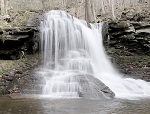
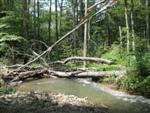
Central PA Troubles Tully was 65 degrees at 3pm

Is pesticide use worse now than it was fifty years ago? I am going to have to do some research on this topic.
I don't know about agriculturally, but I would guess that more pesticide use by government entities is occurring now. Residentially, I don't think there is any question that more people are using pesticides now than at any point in history.
 
I'm not talking specifically about the Tully. That water quality may be terrible. I am talking about as a whole. Anglers seem to think things were better "back in the day." I just don't know if I believe that. If water quality standards have improved, how have hatches not improved?
Dear jifigz,

I think water quality improvements peaked circa 1990 or so. Much of those improvements were led by the elimination of point source pollution from industrial sites. The environmental movement of the 1960's and 70's made it clear that just dumping a gate on the property to eliminate a mess created during a manufacturing process was not going to fly anymore.

Further improvements have been incremental at best and when combined with the changing patterns of land use and sprawl in certain areas and it's entirely believable to me that water quality has lessened in places. The Lehigh Valley, aka ABE, is definitely one of those places. So is the Cumberland Valley and I have personally witnessed the changes both areas. Thousands of homes have been built on fields and woodlots and many of the homeowners take great pride in having the finest chemically enhanced properties they can. Surely that has a negative effect on water quality.

The Spring Creek corridor is another place with which I am familiar. In the late 1970's-early 1980's three days of rain along Spring Creek muddied it up a little but that was about all it did. 90% of that rain fell on open farmland, or fallow fields. Nowadays a 3-hour thunderstorm can push the creek into people's yards and even encroach on their houses due to the extensive residential and commercial development and highway construction that has occurred in the region. No one will ever convince me that there has been an improvement of water quality in the Spring Creek corridor.

I know there have been places where the water quality has improved such as certain streams in the Anthracite region. But that is more a result of what isn't being done, coal mining, than it is a result of corrective measures or process improvements.

Regards,

Tim Murphy 🙂
 
What do you (and anyone else) think caused the increased wetness in that area?

It happened so suddenly from my perspective that it hard to rule out that the massive rain events of 2004 & 2005 may have dislodged tons of silt because I've fished the Letort since the 1970's and other than the fish kill in 1981, conditions until then were pretty stable. Yea, the fishing was up and down but the Letort was never a place where you expected to catch a dozen fish every outing...

HOWEVER, things haven't changed radically along the entire length of the stream, in other words the banks are just ridiculously muddy in some areas, most notably where I mentioned.

Into the 1980's and 1990's it was relatively easy to walk from the lower RR trestle just above Letort Park all the way up to Bonnybrook Road on the Spring Garden Street side of the creek. That's partly because of the work done by Fox, Marinaro & the Letort Regulars and the stream saw a LOT more pressure back then so the trails were well worn and easy to follow.

In addition, myself and others spent time cutting back stuff like multi flora rose so the trails were passable while others put rocks or stepping stones in the marshy areas. There were also secondary trails that enabled you park either at Vince's Meadow or elsewhere and walk right down to Otto's, just below Otto's or right to the Barnyard without disturbing others fishing between points A, B or C..

Heck, I used to park right by the quarry gate and walk right through thier propery to fish and they never said boo. I doubt that would be the case today... The trail maintenece isn't happening today at all, so the trails are overgrown to the point of being impassable and invisible.

As far as silt goes; gravel areas I know intimately are still there, although Fox, et al. had a lot to do with exposing some of them initially.

A good silt test I'm willing to let someone else try is to see if you can still cross the stream at two places between the Vince's Meadow and Otto's. At those spots there was some some gravel and larger rocks that permitted those in the know a way to cross to the other side without walking all way to one or the other RR trestles.

Coincidentally at one of those spots I used to catch a VERY, VERY small Trico hatch and would always catch a few dinks every outing...

Another silt test to ask the locals what the status is of the Trico hatch below Shady Lane. I haven't fished it in decades so I don't know.

As far as development goes, there is a TON more in the vicinity of Carlisle, but along Spring Garden Street to the right branch (AKA, "UNT to Letort Spring Run") headwaters, things are are pretty much unchanged and these headwaters now are protected. The property from Trego's upstream to the mainstem headwaters isn't really developed much more either.

The rest of the property on both sides of the stream in the FFO section are pretty much the same as they were the last 20 years and the Union Quarry is still in operation.The only exception other than the Home Depot is a $#!+load of newer townhouses built beside the Home Depot. Like Home Depot, I would HOPE they had to do something special with their storm water, but until someone tells me differently, I haven't seen a finger of blame pointed their way.

The bottom line is as Vince Marinaro said, the Letort would benefit from river keepers like they have in England who cut back weeds, maintain trails and keep the stream in shape. Vince & company did a LOT of that with much of the work being done just before wrote "In the Ring of the Rise."

But those guys were older in those days and while CVTU picked up some of the slack, it ain't even close to the way it was when I made my first pilgimage as a wide eyed teenager. It really saddens me because I fished there an awfult lot for someone who lived anywhere from 90 - 190 miles away...

 
Not speaking of the Tully specifically, but overall in my lifetime water quality has generally improved. The biggest movers are acid mine remediation and acid rain efforts. More and more of the old acid mine drainage streams are getting treated. And many of the coal plants in the midwest have either shut down or gotten more advanced scrubbers, so acid deposition is less than it used to be. We are also a little smarter in regards to sedimentation control during construction, having aquifer recharge when they build roads and such, and far more dams are being removed than added.

Yes there are threats. Global warming is one. Probably the biggest is just development, what used to be forest is often now housing developments or strip malls. And yeah, some streams are getting worse for sure. I just think more are getting better than the number getting worse.

As for the Tully, my understanding is that the biggest "change" from its "heyday" is the size of the deep water pool in the lake. The amount of cold water available is directly related to how much deep water exists behind the dam. It was always limited in Blue Marsh, but with the sediment load that lake takes on, that deep area is just filling in with silt. Nomatter how they manage the dam, there just ain't enough cold water to last the summer, and every year there's a little less and less. It raising to the mid 60's in early April is an example of the operators being well aware of this and spitting out only topwater in the early season to save every last drop of precious cold water that they can. They will keep the temp right where it is for as long as they can. A massive dredging operation is the only real solution, but would be expensive, and temporary, as it will just set the clock back a few decades and the deep area of the lake will begin slowly but surely silting in again as soon as the dredge leaves.
 
I used to fish the Tully quite a bit when I lived closer back in the rainbow fingerling stocking days. I liked it. There was almost always something rising. Those bows got pretty selective after some time in the stream and fought like hell. It was a great place to take newbies: easy to wade, lots of fish, room to spread out and teach someone to cast. If the trout were being stubborn, you could target 2-3 lb carp along the banks that would sip a size 18 caddis.

Took a couple of guys visiting from Asia there a couple of times. They loved catching carp on dries and wondered why anyone would prefer finicky trout to carp (which are considered good luck in their culture). It was hard to argue.

The last time I was there was over 5 years ago, when a buddy from Maine was visiting. He loved it. I taught him how to swing wets on a cold March morning when we were limited to special regs water.

That said, I've often wondered whether the Tully wouldn't make a great smallie stream. Seems to have decent habitat and a suitable temperature range. I can think of a few other streams like that and wonder why we try to force a trout fishery in places that may be better suited to other (self-sustaining) species.

I mentioned that idea here back in the day, and was met with outrage. Blasphemous! I was just about driven off the board with torches and pitchforks, as if the Tully was some hallowed shrine to non-native trout. 🤣 Lol. I'm cracking up at the Tully bashing going on here now.

Seriously though, why do we force-feed trout fisheries on waters that might provide great sport with other self-sustaining species?
 
It would be interesting to know how the amount of herbicides, pesticides, and fertilizer has changed on the average acre of farmland. Also add in the roadside roundup spraying by local and state governments. Some of the farmed acres and open spaces have been developed as well. I have trouble buying that water quality has improved in most
Places
I'm worried, not just about mayflies, but macroinvertebrates in general, including terrestials. How many of you recall when you needed to use the windshield wipers and cleaners nine months of the year, from all the bugs? Audubon documents a 40% decline in songbirds, which depend on eating bugs. I worry about the herbicides and pesticides which are almost as persistent as forever chemicals.
 
Sad times, no doubt, and so many people want to spray their yards and eliminate every weed in it, etc. I'll admit that I use some sprays. I just used BK-32 trying to wipe out invasive honeysuckles and multiflora rose in an area.

Honestly, with the growing population of the world, I'm not sure we and the earth can both win in the long run.
 
Dear jifigz,

I think water quality improvements peaked circa 1990 or so. Much of those improvements were led by the elimination of point source pollution from industrial sites. The environmental movement of the 1960's and 70's made it clear that just dumping a gate on the property to eliminate a mess created during a manufacturing process was not going to fly anymore.

Further improvements have been incremental at best and when combined with the changing patterns of land use and sprawl in certain areas and it's entirely believable to me that water quality has lessened in places. The Lehigh Valley, aka ABE, is definitely one of those places. So is the Cumberland Valley and I have personally witnessed the changes both areas. Thousands of homes have been built on fields and woodlots and many of the homeowners take great pride in having the finest chemically enhanced properties they can. Surely that has a negative effect on water quality.

The Spring Creek corridor is another place with which I am familiar. In the late 1970's-early 1980's three days of rain along Spring Creek muddied it up a little but that was about all it did. 90% of that rain fell on open farmland, or fallow fields. Nowadays a 3-hour thunderstorm can push the creek into people's yards and even encroach on their houses due to the extensive residential and commercial development and highway construction that has occurred in the region. No one will ever convince me that there has been an improvement of water quality in the Spring Creek corridor.

I know there have been places where the water quality has improved such as certain streams in the Anthracite region. But that is more a result of what isn't being done, coal mining, than it is a result of corrective measures or process improvements.

Regards,

Tim Murphy 🙂
There's no doubt that urban sprawl is ruining creeks. Spring Creek is doomed because State College isn't done growing.
 
There's no doubt that urban sprawl is ruining creeks. Spring Creek is doomed because State College isn't done growing.
And it’s suburbs like Milroy!
 
Dear jifigz,

I think water quality improvements peaked circa 1990 or so. Much of those improvements were led by the elimination of point source pollution from industrial sites. The environmental movement of the 1960's and 70's made it clear that just dumping a gate on the property to eliminate a mess created during a manufacturing process was not going to fly anymore.

Further improvements have been incremental at best and when combined with the changing patterns of land use and sprawl in certain areas and it's entirely believable to me that water quality has lessened in places. The Lehigh Valley, aka ABE, is definitely one of those places. So is the Cumberland Valley and I have personally witnessed the changes both areas. Thousands of homes have been built on fields and woodlots and many of the homeowners take great pride in having the finest chemically enhanced properties they can. Surely that has a negative effect on water quality.

The Spring Creek corridor is another place with which I am familiar. In the late 1970's-early 1980's three days of rain along Spring Creek muddied it up a little but that was about all it did. 90% of that rain fell on open farmland, or fallow fields. Nowadays a 3-hour thunderstorm can push the creek into people's yards and even encroach on their houses due to the extensive residential and commercial development and highway construction that has occurred in the region. No one will ever convince me that there has been an improvement of water quality in the Spring Creek corridor.

I know there have been places where the water quality has improved such as certain streams in the Anthracite region. But that is more a result of what isn't being done, coal mining, than it is a result of corrective measures or process improvements.

Regards,

Tim Murphy 🙂
Yeah this fairy tail has allowed for complacency.
 
Sad times, no doubt, and so many people want to spray their yards and eliminate every weed in it, etc. I'll admit that I use some sprays. I just used BK-32 trying to wipe out invasive honeysuckles and multiflora rose in an area.

Honestly, with the growing population of the world, I'm not sure we and the earth can both win in the long run.
I believe the nature conservancy uses herbicides to contol invasives. Not sure if the benefits are worth the costs though. I hope you protect yourself while applying that stuff. I just don’t understand guys that do that all day everyday for the yard companies with no protection. I have resorted to minimal use of chemical herbicides but only very carefully and only to select weeds like thistle where I need to kill the roots.
 
I believe the nature conservancy uses herbicides to contol invasives. Not sure if the benefits are worth the costs though. I hope you protect yourself while applying that stuff. I just don’t understand guys that do that all day everyday for the yard companies with no protection. I have resorted to minimal use of chemical herbicides but only very carefully and only to select weeds like thistle where I need to kill the roots.

How could you control invasives plants like multi-flora rose, autumn olive, shrub honeysuckles, barberry, buckthorn, tree of heaven (ailanthus), Oriental Bittersweet without herbicides?

Good alternatives would be very welcome. Cutting them doesn't kill them, it just makes them mad.

Also, is there any evidence that herbicides used to treat these invasives cause harm to streams? The most commonly used herbicides used to kill invasive shrubs are triclopyr and glyphosate.

Insecticides are much more of a threat to stream life than herbicides, IMHO.
 
Last edited:
How could you control invasives plants like multi-flora rose, autumn olive, shrub honeysuckles, barberry, buckthorn, tree of heaven (ailanthus), Oriental Bittersweet without herbicides?

Good alternatives would be very welcome. Cutting them doesn't kill them, it just makes them mad.

Also, is there any evidence that herbicides used to treat these invasives cause harm to streams? The most commonly used herbicides used to kill invasive shrubs are triclopyr and glyphosate.

Insecticides are much more of a threat to stream life than herbicides, IMHO.
You are probably correct. I just have to wonder about the sheer amounts I have seen used and very close to streams. Cutting and injecting the herbicide seems like a better albeit time-consuming alternative.
 
I can tell you they herbicides have little to no effects on honey bees. I have numerous vigorous and strong colonies directly on fields they get doused with glyphosate, and I've had those colonies on those fields for over 15 years, and they're doing fine.
 
You are probably correct. I just have to wonder about the sheer amounts I have seen used and very close to streams. Cutting and injecting the herbicide seems like a better albeit time-consuming alternative.
Dear riverwhy,

I just did a little googling and the best way to control invasives is burning them in the Spring when they are young and just leafing out and then applying herbicide. Young plants will be killed outright by fire, and the older established plants will be weakened enough that extra herbicide will probably not be needed.

The problem with that method is that unless you are doing 5 acres at a time and have a brush truck on standby it's not practical. I know the PA GC does a lot of controlled burns to remove invasive understory layers, it's just not something that homeowners, or even most landowners are equipped to do.

Regards,

Tim Murphy 🙂
 
I can tell you they herbicides have little to no effects on honey bees. I have numerous vigorous and strong colonies directly on fields they get doused with glyphosate, and I've had those colonies on those fields for over 15 years, and they're doing fine.
If they are in the ground I don’t think they would honeybees.
 
The wildflowers/weeds that the bees feed on get doused, and no doubt that bees are exposed to the chemicals through foraging on the weeds
 
Back
Top