
Trout Streams in Pennsylvania
Explore stocked waters, Class A wild trout streams, special regulation areas, and wilderness trout streams. Use the maps to narrow the search, then check access and current regulations before you go.
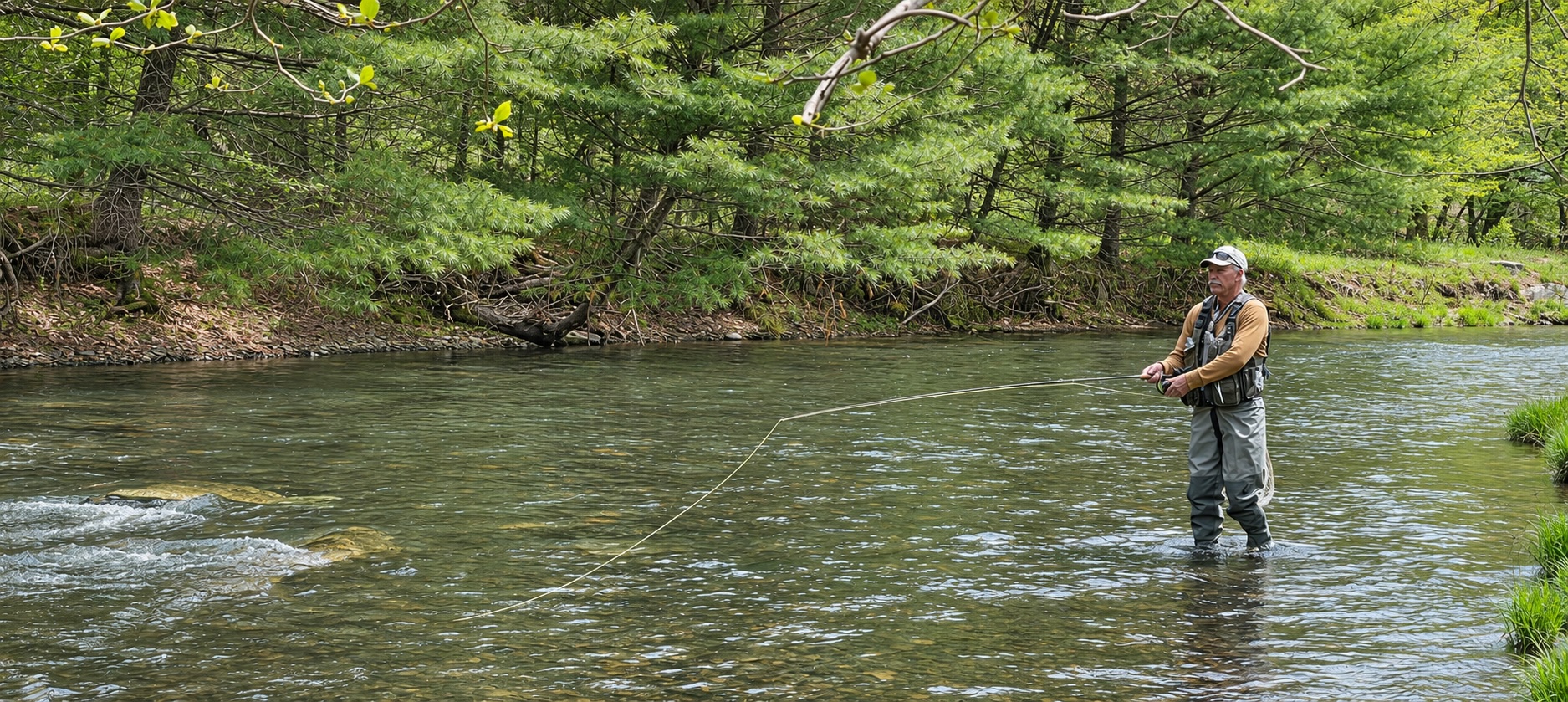
Pennsylvania offers some of the best fly fishing on the East Coast, with a remarkable range of water to explore. You can fish the broad reaches of the Delaware River, visit historic trout streams like the Letort, or follow a small mountain creek in search of native brook trout, Pennsylvania’s state fish. Penns Creek, Spring Creek, the Youghiogheny, Yellow Breeches, Kettle Creek, Pine Creek, and the Lehigh River are among the waters that draw anglers across the state. Each offers a different setting and a different kind of day on the water.
Many anglers begin on stocked trout waters. They are generally easier to identify, and the stocking schedule tells you which sections receive fish. Rainbow trout make up the largest share of PFBC stockings, followed by brown and brook trout. Pennsylvania has a single statewide opening day in April, but the rules for keeping trout can vary by water and season. A stocked stream is a good place to start learning, and it can remain a favorite long after you have learned your way around the state.
Wild trout offer another experience. Brown trout and native brook trout reproduce in Pennsylvania streams, sometimes in the same water, and a smaller number of streams hold wild rainbow trout. Some anglers spend most of their time seeking these fish, whether that means working a familiar stretch of Spring Creek or walking into a quiet headwater stream. The different designations can take time to sort out: a stream may support natural reproduction, qualify as Class A, or have special regulations on only one section. What matters most is understanding the particular water you plan to fish.
In the northwest, Lake Erie’s tributaries add steelhead fishing to the picture. These lake-run rainbow trout move into streams such as Elk Creek and Walnut Creek, offering an experience quite different from fishing Pennsylvania’s inland trout waters. Across a state this large, the distance between streams can be significant. Starting with a region and the kind of fishing you want—stocked trout, wild trout, or steelhead—makes the choices easier to manage. Then check the rules for the exact section, including seasons, tackle, access, and harvest. A local guide can be especially helpful if you are new to the state or have only a short trip.
Explore Pennsylvania trout waters
Explore Class A Wild Trout Streams, Stocked Trout Waters, Special Regulation Areas, Wilderness Trout Streams, Keystone Select Stocked Trout Streams, and Stocked Trout Year-Round Streams across Pennsylvania, with county boundaries for orientation.
Loading Pennsylvania trout water layers…
Stocked Trout Waters
Stocked Trout Waters are streams and other waters where the Pennsylvania Fish and Boat Commission releases hatchery trout, giving anglers fishing opportunities across the state. Most stocked trout are rainbows, with brown and brook trout also stocked; you might occasionally find a golden rainbow trout. These waters can be a good starting point for someone new to fly fishing or the state. Anglers may keep a limited number of trout during the open harvest seasons, though the limit and any special rules depend on the water and time of year. Many stocked streams warm in early summer, and trout may not survive those higher temperatures, while colder waters can continue to support them. Use the map to find a stream, then check its stocking schedule, public access, and current regulations before you go.
Special Regulation Areas
Pennsylvania has special regulations for certain stretches of trout water. There are over 140 sections on more than 120 streams across the state. Some hold wild trout, some are stocked, and some have both. You’ll find these areas on several well-known trout streams like the West Branch of the Delaware River, Spring Creek and the Letort, as well as waters you may be discovering for the first time.
The rules vary from one section to another. One may be fly-fishing only and require you to release every trout. Another may allow both flies and other artificial lures, with a short period when you can keep fish. The map will help you find these waters, but check the rules and boundaries for the exact section you plan to fish. The rules can change just upstream or downstream, so it’s important to know where you are on the stream.
The primary types of Special Regulations Streams:
- Catch-and-Release Fly-Fishing Only
- Catch-and-Release All Tackle
- Catch and Release, Artificial Lures Only
- Delayed Harvest Artificial Lures Only
- Trophy Trout, Artificial Lures Only
- All-Tackle Trophy Trout
- Artificial lures only trout slot limit
- Miscellaneous Special Regulations
Class A Wild Trout Streams
To earn Class A status, a stream has to meet strict standards. PFBC biologists survey the stream to determine the number and size of wild trout. If the stream has enough naturally reproducing trout to support long-term fishing without help from hatcheries, it can be designated as Class A.
There are different classifications for different trout species, including brook trout, brown trout, and even a few with rainbow trout. Some streams have strong populations of both brook and brown trout. As of October 2024, the PFBC had designated 3,267 miles of Class A streams in Pennsylvania.
Class A streams are protected and managed differently. Because they don’t need stocked trout, efforts can focus on preserving wild fish and maintaining healthy habitats. Many of these streams are also designated High-Quality Coldwater Fisheries, which gives them extra protection under state water quality laws.
For anglers, Class A streams offer a unique experience:
- The trout are wild, not stocked, so they tend to be more wary, stronger fighters, and more vibrantly colored.
- These waters are typically found in clean, scenic environments like state forests and parks.
- Fishing these streams helps sharpen your skills—reading water, matching hatches, and adapting to conditions.
- You become part of a conservation tradition by fishing responsibly in streams where trout populations thrive naturally.
- While Wild Trout streams may not be as well known to newer anglers, they offer a unique and memorable opportunity for those looking to expand their fly fishing experiences.
- Many of these waters are home to native brook trout—the only trout species native to Pennsylvania and the official state fish. Catching and releasing these beautiful fish is a special reward.
Fishing these waters means pursuing trout that were born and raised in the stream—not delivered by a hatchery truck. It’s about matching the hatch, reading the water, and enjoying the challenge.
Wilderness Trout Streams
Wilderness Trout Streams offer a chance to fish for wild trout in a remote, natural setting. The PFBC started the program in 1969 to protect native brook trout fisheries, the conditions trout need to reproduce, and the character of these places. The trout are born in the stream, and the surrounding watershed is part of the experience.
That setting is what makes the Wilderness designation distinct. The PFBC looks beyond the trout to the quality of the watershed and the limited disturbance around the stream. Every section in the program qualifies for Exceptional Value protection, the highest water quality classification provided by Pennsylvania’s Department of Environmental Protection.
Keystone Select Stocked Trout Streams
Keystone Select waters are stocked stream sections chosen to give anglers a chance at larger trout. The PFBC stocks about 10,000 trout measuring 14 to 20 inches among sections of 24 streams across Pennsylvania. Most are managed under Delayed Harvest Artificial Lures Only rules, while one has different special regulations. That means you need to check the rules for the section you’re fishing, especially when trout may be kept. If you’re new to the program, the main distinction is simple: these are stocked waters with more large trout than you’d typically expect to find in a standard stocking.
Stocked Trout Waters Open to Year-Round Fishing
These waters are stocked with trout but remain open to fishing during the late-winter period when most stocked trout waters are closed. The PFBC uses this designation for waters that also offer good fishing for warm-water fish, giving anglers a reason to fish them throughout the year. It does not mean trout are stocked year-round or that you can keep them at any time. Before opening day, any trout you catch must be released immediately; harvest is allowed during the regular and extended seasons under different limits. A trout permit is required to fish in streams and rivers with this designation.
Streams with Natural Reproduction
Pennsylvania has wild trout in far more streams than its Class A and Wilderness listings alone might suggest. A Natural Reproduction designation means the PFBC has identified a stream section where trout reproduce on their own. It tells you that wild trout are present, but it does not mean the stream is managed only for wild fish; many of these waters are smaller streams. It is estimated there are almost 6,000 known wild trout streams covering more than 17,500 miles with naturally reproducing trout documented in 64 of the state’s 67 counties.
Loading natural reproduction streams and county boundaries…