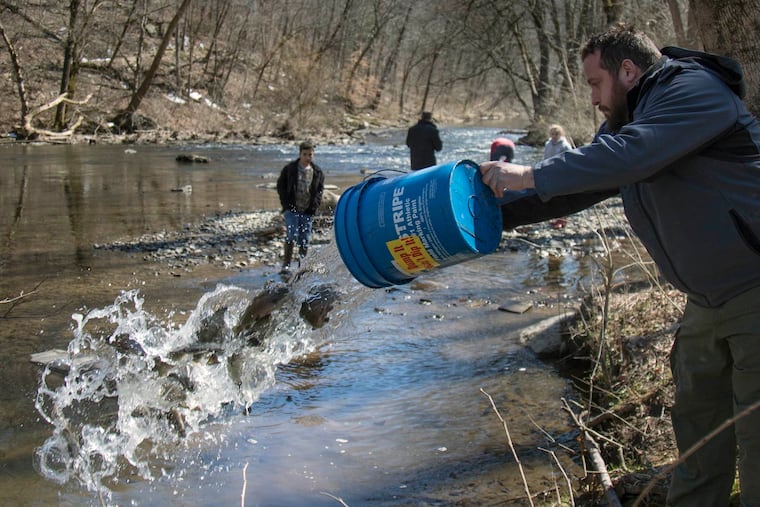
Wissahickon DO NOT EAT Advisory - stocking cancelled

That’s a real bummer, especially since it’s my home stream. I believe this is the same reason why stocking stopped on Neshaminy Creek, and that still hasn’t resumed, as far as I know.

Losing the Wiss would be a shame, since it’s one of a few stocked streams near the Philadelphia area. And a stream where there are no wild trout for the stocked fish to outcompete.
 
Well… that’s one way to end stocking. 😕
Not really. Those fish will probably just be stocked in some other water bodies where either the annual allocations are not at the max allowable or into new waters or new Sections that have never been stocked before. If they are not stocked to the max already, however, it’s likely that they have lower than desirable angler use, other social problems that don’t need to be exacerbated by additional stockings, or problems with mid-spring water temps and/or flows.

Note that the Wissahickon Basin, which is fully impacted by this news release, has 2 stocked stream Sections …Wissahickon Ck 02, Mntg Co (incl Fort Washington State Park), Wissahickon 04, Fairmount Park, Phila. Also near the top end of a trib is stocked Loch Alsh Reservoir, Ambler, Mntg Co.
 
Last edited:
Not really. Those fish will probably just be stocked in some other water bodies where either the annual allocations are not at the max allowable or into new waters or new Sections that have never been stocked before. If they are not stocked to the max already, however, it’s likely that they have lower than desirable angler use, other social problems that don’t need to be exacerbated by additional stockings, or problems with mid-spring water temps and/or flows.

Note that the Wissahickon Basin, which is fully impacted by this news release, has 2 stocked stream Sections …Wissahickon Ck 02, Mntg Co (incl Fort Washington State Park), Wissahickon 04, Fairmount Park, Phila. Also near the top end of a trib is stocked Loch Alsh Reservoir, Ambler, Mntg Co.
@Mike , what are the odds that the Pennypack won't come up with the same undesirable results if tested? Just curious if testing is going to continue to reveal the same problem in many urban/suburban streams in the Commonwealth.

As someone involved with a couple programs teaching fly fishing to kids who live close to these stocked cricks in very populated areas that sell a lot of licenses, I am a just wondering if you have an educated opinion on what the ripple effects will be. This post is about one crick, but I don't see this ending here.

DHALO does not solve anything, and these creeks get too warm to be catch and release ethically, a practice which could happen if the same chemicals are found in, say, the Lehigh Valley.
 
The problem is widespread throughout the Delaware River basin - although it appears to be concentrated more in the Philly metro area than the Lehigh Valley. There's a map linked in this study (below) that shows where the PFAS have been found.
 
On a stream like that, why can't they stock only for recreational enjoyment. They could still post the warnings not to eat the fish, which I think would cover their butts.
 
On a stream like that, why can't they stock only for recreational enjoyment. They could still post the warnings not to eat the fish, which I think would cover their butts.
Eh…I get from a legal liability perspective why it’s a better CYA move to not stock them at all. Somebody gets sick, and alleges it’s from eating them (despite posting warnings) and 100% the PFBC is going to be named as a defendant in that lawsuit. I think they’re making the right call. I wouldn’t want that headache either.

It’s one thing from a legal liability standpoint if someone harvests, consumes, and gets sick from naturally reproducing fish in an area that’s posted no harvest. Actively stocking fish into that kind of situation is different IMO, and likely creates liability exposure for the entity stocking them.

Are there other situations where fish are knowingly PFBC stocked into waterways with no consumption advisories? Honest question, I don’t know. The ones I can think of off the top of my head are not stocked. (Spring Creek for example.)
 
On a stream like that, why can't they stock only for recreational enjoyment. They could still post the warnings not to eat the fish, which I think would cover their butts.

I don't think they'd stock fish that will die if not harvested. That's why I noted that C&R would likely be off the table. Who knows?

The other wrinkle is that a bunch of folks from Manayunk and Roxborough stock the place with jumbos and hold a tournament every spring. I assume they will have to stop that too if there's potential liability.

Should be an interesting town hall. Philly folks are generally about as charming as me.
 
Philly folks are generally about as charming as me.
Which is pretty dang charming.

And I am aware of several creeks that were taken off the stocking list due to contamination. And I don't necessarily think it's a great idea to stock a contaminated stream, but I could see solely the recreational value of it in an environment such as that. And I would like to believe that signs posted in English and Spanish would be enough to CYA, but you fellers are right - it's a bad idea.

I guess people will just have to fish for snakeheads, flatheads, bass, and whatever else they can find in the nearby area.
 
On a stream like that, why can't they stock only for recreational enjoyment. They could still post the warnings not to eat the fish, which I think would cover their butts.
they could, it just may take time to finalize a study or designation like Valley or Spring Creek. Those didn't happen overnight.
 
I don't think they'd stock fish that will die if not harvested.
Here in Southern MD, the land of slow-flowing muddy or brackish water, the state stocks two little ponds in our county with 250-500 trout each year. The cost of those trout stamps offsets the cost of stocking trout that aren't harvested before the stagnant water temps climb past 80F by mid- to late-June.
 
The difference with Valley Creek is stocking was stopped because of PCB's from the Paoli railyard superfund, and a self-sustaining natural reproduction population was and continues to be present therefore a C&R regulation makes sense for the watershed.

With Wissahickon, its just not a cold water fishery all year round, so this truly is a recreational loss to the community in terms of access to a trout fishery. Maybe managing it for a WW fishery and helping foster those opportunities is the next step...

This page on PA's website was interesting talking about the history of Valley Creek, and its restoration: https://www.pa.gov/services/fishandboat/valley-creek-watershed-grant
 

Latest Forum Posts

USGS Stream Gauges

Back
Top