Tannin Stained Streams

cfarr

Member
Joined
Dec 25, 2025
Messages
55
City
Morgantown
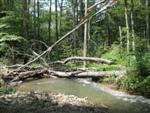
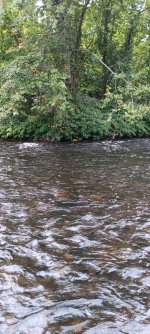
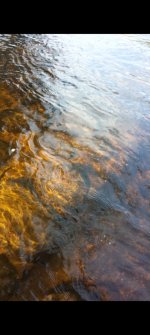
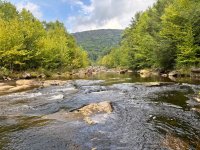
Hey y’all, was fishing a tannin stained creek early and got my bud handed to me, so it got me thinking. Do you guys think fishing tannin stained streams can be more difficult? Specifically, I’m of the belief that fishing dries in tannin stained streams absolutely can be more difficult, especially if the water is a little higher than normal.


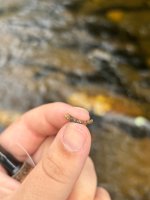
Attached is said creek plus a cased caddis
 

Attachments

  • IMG_8101.jpeg
    IMG_8101.jpeg
    664.8 KB · Views: 61
  • IMG_8095.jpeg
    IMG_8095.jpeg
    190.6 KB · Views: 61
Dear cfarr,

Sometimes, in fact many times, dry fly fishing is absolutely the wrong approach. It may be the angler's preferred method, but ultimately the trout are ones who cast the votes.

That said, when dry fly fishing is not going well dispense with the concept of trying to match the hatch or provide an appropriate period specific fly and try something odd or outrageous instead. Sometimes you can provoke strikes when it seems like nothing is happening. You may not have planned to fish a size 8 Chernobyl ant, or a Madam X, but if you are packing one try it out. Adding an impressionistic nymph like a BH Prince or BH Hare's Ear as a dropper might surprise you.

Regards,

Tim Murphy 🙂
 
Dear cfarr,

Sometimes, in fact many times, dry fly fishing is absolutely the wrong approach. It may be the angler's preferred method, but ultimately the trout are ones who cast the votes.

That said, when dry fly fishing is not going well dispense with the concept of trying to match the hatch or provide an appropriate period specific fly and try something odd or outrageous instead. Sometimes you can provoke strikes when it seems like nothing is happening. You may not have planned to fish a size 8 Chernobyl ant, or a Madam X, but if you are packing one try it out. Adding an impressionistic nymph like a BH Prince or BH Hare's Ear as a dropper might surprise you.

Regards,

Tim Murphy 🙂
Thanks for the advice. That’s the difficult thing about the trip is I barely dry fly fished and actually ended up tight-lining. Maybe it was an unusual tough day or something, I’m unsure. Even fished with some flies matching nymphs and emerging insects I saw, but only hooked onto one.
 
The tannin staining is probably the least impactful of the variables. It may impact YOUR fly selection and confidence, but the fish need to eat and they live in the tannin stained water 24/7/365, so they have adapted to their reality.

More likely it was water temps, front moving in, too sunny, too cloudy, someone traipsing throug the stream previously, etc.

Or perhaps it wasn’t that your offering was bad but the trout were bad at eating that day.
 
Are you sure there are many trout present where you fished?

The stream in the photo looks pretty large. Maybe it gets too warm in the summer to support many wild trout. And tannic streams often are draining large wetlands, ponds, lakes which can warm the water temperatures.

I've fished smaller tannic streams that held lots of wild trout, and caught plenty using dry flies. Some of these streams are black as coffee.
 
In my experience, tannin-stained streams are far, far easier to catch trout in the majority of the time. First, you need to know and make sure that this stream has an abundance of trout. Second, sometimes fish are tough to catch, and this applies to any body of water. We can speculate about what might have worked or what we might have been able to do better, but in reality, we'll never truly know.
 
Are you sure there are many trout present where you fished?

The stream in the photo looks pretty large. Maybe it gets too warm in the summer to support many wild trout. And tannic streams often are draining large wetlands, ponds, lakes which can warm the water temperatures.

I've fished smaller tannic streams that held lots of wild trout, and caught plenty using dry flies. Some of these streams are black as coffee.
I will say it’s a recovering fishery. It flows off of Dolly Sods in WV, so the stream is still recovering from the logging done in the past. The water stays cool year round and is beginning to get better. While unfortunately I haven’t seen many WVDNR studies to support it as they aren’t very transparent on stream studies often, people are noticing a rising population of brookies in the creek. Unfortunately, the water was high when I fished so I couldn’t confirm by sight (or rod either apparently) but it was also my first go at the creek.

Here in WV, some of my favorite brookie streams are tannin stained and normally fantastic. In fact, quite a few of our protected brookie water sheds are blood red with great populations.

Overall I think I’m just overthinking and trying to justify my bad day of fishing lol.
 
In my experience, tannin-stained streams are far, far easier to catch trout in the majority of the time. First, you need to know and make sure that this stream has an abundance of trout. Second, sometimes fish are tough to catch, and this applies to any body of water. We can speculate about what might have worked or what we might have been able to do better, but in reality, we'll never truly know.
You think so? Maybe some of my experiences haven’t been in the best of days or the best of holes. It could also just be a skill issue lol. Although, I have found that some of the larger brookie streams in WV can be quite tough at times.
 
I never noticed much difference in my catch rate on tannin stained waters...

I don't have any pictures, but some of the prettiest brook trout I ever caught came from a very heavily tannin stained stream near Wilkes Barre.

The fish were almost totally black & dark amber with bright red spots.

BTW - All caught on dry flies.
 
Last edited:
That stream looks very wide, so it probably gets warm enough that the brookies go up into the tribs for thermal refuge. Maybe most of them just haven't dropped back down yet.

I've had very fast fishing with generic dry flies on dark, tannic streams. The color of the water may actually help, just as water that is "chalky green" produces better fishing that water that is gin clear.
 
I will say it’s a recovering fishery. It flows off of Dolly Sods in WV, so the stream is still recovering from the logging done in the past. The water stays cool year round and is beginning to get better. While unfortunately I haven’t seen many WVDNR studies to support it as they aren’t very transparent on stream studies often, people are noticing a rising population of brookies in the creek. Unfortunately, the water was high when I fished so I couldn’t confirm by sight (or rod either apparently) but it was also my first go at the creek.

Here in WV, some of my favorite brookie streams are tannin stained and normally fantastic. In fact, quite a few of our protected brookie water sheds are blood red with great populations.

Overall I think I’m just overthinking and trying to justify my bad day of fishing lol.
Based on your description I think I know the stream. My son did extensive backpacking through there several years ago and reported he couldn’t buy a trout there. Didn’t move a fish. Sounds like it’s very much still recovering.
 
That stream looks very wide, so it probably gets warm enough that the brookies go up into the tribs for thermal refuge. Maybe most of them just haven't dropped back down yet.

I've had very fast fishing with generic dry flies on dark, tannic streams. The color of the water may actually help, just as water that is "chalky green" produces better fishing that water that is gin clear.
Due to acidic conditions in the headwaters of this system, these trout don't have that option. Normally I'd agree. He may have been fishing upstream of the trout-holding section.
 
I've never been there, but I think the Dolly Sods streams are very much lacking in fertility, and they have some major issues carrying decent populations of trout.
 
Due to acidic conditions in the headwaters of this system, these trout don't have that option. Normally I'd agree. He may have been fishing upstream of the trout-holding section.
The WVDNR has started to limestone dose the headwaters, and brook trout are making their way up there now. Last year my buddy did real well fishing that upper headwater section. I’m hoping the stream can recover, because it has some good potential. The bug life in the section I fished seemed very solid.
 
May be the weather. Non-stop bluebird days with high atmospheric pressure haven't helped my trout fishing the last couple of weeks. Looks like blue skies in your picture. All my action has been right at dusk with poor results in the bright sun.
 
I never noticed much difference in my catch rate on tannin stained waters...

I don't have any pictures but some of the prettiest brook trout I ever caught came from a very heavily tannin stained stream ...
My most beautifully colored wild trout, both brookies and browns, have come from tannic streams. So beautiful, I have a lot pics of them.
 
https://wchstv.com/newsletter-daily/wild-appalachia-red-creek-liming-hopes-to-help-brook-trout

Possibly not many trout there. Tannin stained streams are naturally acidic, and brook trout are more tolerant of natural acid than most other trout, however acid rain causes the pH to drop (lower pH, higher acid) even more and this is what kills the trout. Generally freestone creeks have very limited ability to buffer against additional acid (in the form of any molecule that results in positively charged hydrogen ions being added to the solution), so acid from natural tannins plus acid from unnatural sulfur compounds that come from burning coal and oil combine for a situation that makes a tolerable pH in a tannic creek (pH as low as 5.5, where 7 is neutral and 1 will burn away your flesh) into a deadly pH of 5.0 or lower.

As a point of reference, lemon juice has a pH in the range of 2.0 to 3.0, and household strength vinegar is at 2.5 to 3.5.

Drop the pH to 1.0, and you're talking about an acid that is 10 times more concentrated (powerful) than something with a pH of 2.0. It's like the earthquake scale where 1-5 is a range starting with something you can barely feel up to something like a truck rumbling by, while 6 can cause structural damage, 7 breaks pipes and causes some buildings to collapse, 8 levels everything and 9 is the end of the world as we know it.

In short, a small shift in pH can make a big difference.
 
Tough to compare streams as many factors affect fishing. Major impacts are: water temp, flow, pH, biomass, available structure, sun/ shade, angler pressure, angler ability/ knowledge to name a few.

Personally, i find limestone streams more difficult as it is a much different type of fishing than freestones, tannic included.
If you have more experience with limestone streams, it just maybe a learning curve thing.

The approach to fishing each type is much more important than it is for fishing a tannin impacted freestone vs a non tannin impacted one.
 
Just refurned from a tannic river in ct the farmington in nw ct my home river ......way way way way easier to get fish there. And this river gets absolutkey ANNIHALATED on a xaily basis year round ...
 
Back
Top