South Dakota record Pumpkinseed

wildtrout2

Well-known member
Joined
Feb 19, 2009
Messages
7,351
City
Montgomery County, Pa
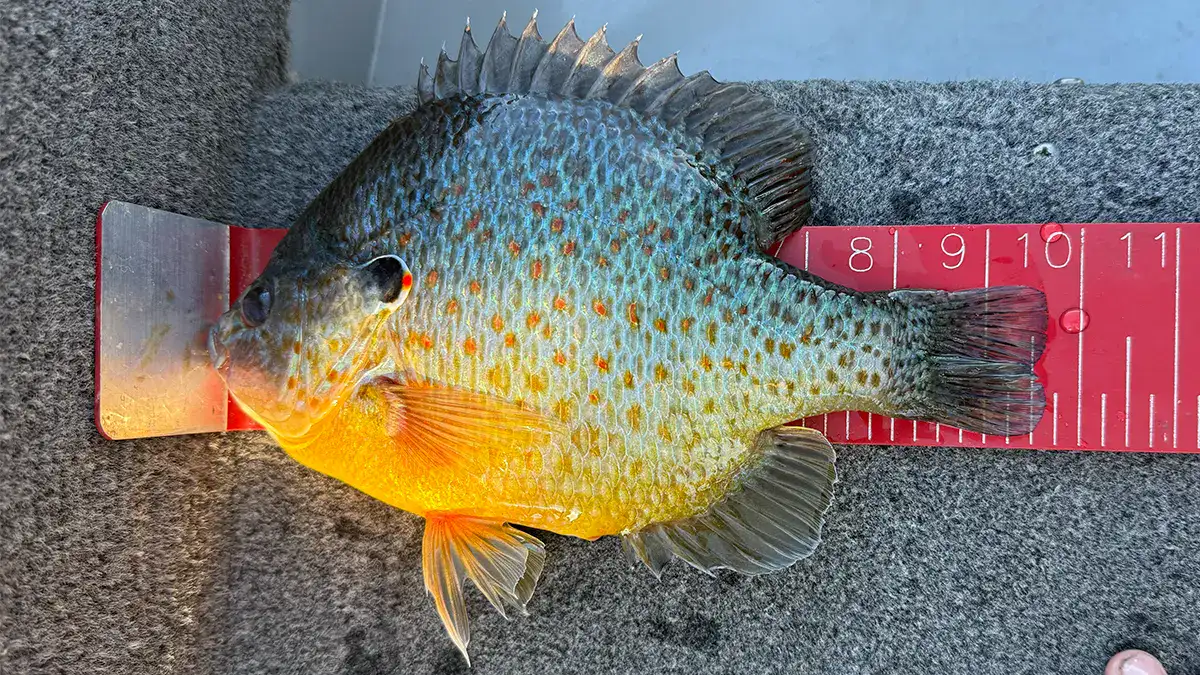
On June 18th, the 56 year old South Dakota state record for Pumpkinseed was broken, with a 9 1/2" one pound fish. The previous record was 12oz. It was caught on a jig with a whole nightcrawler at a depth of three feet.
 
Last edited:
Pix - or it didn’t happen 😉
 

Attachments

  • IMG_5931.jpeg
    IMG_5931.jpeg
    375.7 KB · Views: 52
On June 18th, the 56 year old South Dakota state record for Pumpkinseed was been broken, with a 9 1/2" one pound fish. The previous record was 12oz. It was caught on a jig with a whole nightcrawler at a depth of three feet.
We just caught the biggest pumpkinseeds I've ever seen in PA from Promised Land Lake the other week.
 
We just caught the biggest pumpkinseeds I've ever seen in PA from Promised Land Lake the other week.
Dear jifigz,

Try Shohola Lake next time you go to the Poconos.

Regards,

Tim Murphy 🙂
 
We just caught the biggest pumpkinseeds I've ever seen in PA from Promised Land Lake the other week.
Upper or Lower Lake?
 
Good catch if not for the forward facing sonar. Seems to be a shame to remove it from the gene pool for a piece of paper. This story highlights what fishing isn’t for me. But, one of my future trips is to Lake Havasu where I hope to catch sunfish in the 2 to 4 pound range. No FFS or piece of paper needed.
 
I suspect this one is as big, though it's was caught in PA. I've got a pond that I fish that has big ones. For what it's worth, I do have large hands.

View attachment 1641252928
Is this a typical bass / bluegill pond? What do ponds that have gills this big provide that others don't? I understand it on simple terms like food and shelter, but more specifically what do you think this pond's advantage was?

I have a few ponds around here that have decent sized bass but tons of small gills. I suspect if something was present to eat more of them, including more human harvest, it would help them to grow. As it is they aren't even big enough to make it worth harvesting.
 
Is this a typical bass / bluegill pond? What do ponds that have gills this big provide that others don't? I understand it on simple terms like food and shelter, but more specifically what do you think this pond's advantage was?

I have a few ponds around here that have decent sized bass but tons of small gills. I suspect if something was present to eat more of them, including more human harvest, it would help them to grow. As it is they aren't even big enough to make it worth harvesting.

I don't really know the answer to that and I've always been curious because it has HUGE Bluegill and Pumpkinseed and fair numbers of them. I've caught lots over 10" and some that were likely legit 11" and you can see that they're fat and healthy too. The lake does have largemouth and a handful of yellow perch as well, but what makes it so fertile and so able to produce big panfish is a secret to me. The previous owner, who I was very friendly with, insisted that I kill every Bluegill that I caught from the lake; it was his rule. His sons, who now `own the place, don't wish for ANYTHING to be harvested. They've owned it for half a dozen years, so I suppose in time it's possible that things might change because of the new policy of the sons.
 
Is this a typical bass / bluegill pond? What do ponds that have gills this big provide that others don't? I understand it on simple terms like food and shelter, but more specifically what do you think this pond's advantage was?

I have a few ponds around here that have decent sized bass but tons of small gills. I suspect if something was present to eat more of them, including more human harvest, it would help them to grow. As it is they aren't even big enough to make it worth harvesting.
Dear dudemanspecial,

I can only tell you about two bluegill ponds that consistently produced out-sized bluegills.

The first one was owned by a woman that was a teacher with my father. It was on a small farmette in central Bucks County when the area was still predominantly rural. I fished it as a kid with my brothers, but even then, I noticed that pond was probably built as way to drain the property so there would be tillable land. The inlet area was very marshy, and we would get our arses cracked by Dad if we went too far into it. Likewise, the outlet was similarly marshy. One thing that pond had in abundance was snapping turtles, no doubt because of the marshy terrain where they could lay eggs. It was a rare day at the pond when a fish on the line didn't get grabbed by a snapper before we could hoist it out. I think the turtles did the job of keeping the pond in balance and allowed both the sunfish and bass to grow to good sizes.

The second pond is on the property of a friend of a friend in Lycoming County. While I haven't been there in years, I can tell you that the pond was built in a natural draw on the hillsides of the property. He decided to build a pond and built a sump in a small cold-water creek to supply the pond's water. It literally took years for the pond to fill naturally from that sump, but it did. The source was just a little rill that continued alongside the border of one side of the pond as if no water was being taken out. That pond had clean clear cold water all the time. It was about 15 feet deep and didn't have many weeds. He bought like 50 bluegills and just stocked it. And they took off like wildfire. His brother got the brilliant idea of fishing the night before the opening day of trout season every year and usually dropped 35 to 50 trout in it every April.

Those were the only fish in the pond, and they all grew big on the abundant tadpoles and frogs in the pond. The water wasn't really clear except at the inlet end, but in May or June you could literally see clouds of tadpoles milling around on the shoreline. Every once in a while, you'd see a cloud of silt around the tadpole clouds. you just cast something into the cloud and bam, you had a nice bluegill or an even nicer 2- or 3-year-old stocky brown that grew up.

Neither of the mentioned ponds were particularly weedy, and any weeds that existed were the weeds common to the area. There was no hydrilla, or Eurasian milfoil or any introduced crap. Just plain old pond scum which provided habitat to damsel and dragon flies.

That's the story of the two best bluegill ponds I've ever fished. I know it's a long story but I'm old so humor me and read it! 😉

Regards,

Tim Murphy 🙂

 
Dear dudemanspecial,

I can only tell you about two bluegill ponds that consistently produced out-sized bluegills.

The first one was owned by a woman that was a teacher with my father. It was on a small farmette in central Bucks County when the area was still predominantly rural. I fished it as a kid with my brothers, but even then, I noticed that pond was probably built as way to drain the property so there would be tillable land. The inlet area was very marshy, and we would get our arses cracked by Dad if we went too far into it. Likewise, the outlet was similarly marshy. One thing that pond had in abundance was snapping turtles, no doubt because of the marshy terrain where they could lay eggs. It was a rare day at the pond when a fish on the line didn't get grabbed by a snapper before we could hoist it out. I think the turtles did the job of keeping the pond in balance and allowed both the sunfish and bass to grow to good sizes.

The second pond is on the property of a friend of a friend in Lycoming County. While I haven't been there in years, I can tell you that the pond was built in a natural draw on the hillsides of the property. He decided to build a pond and built a sump in a small cold-water creek to supply the pond's water. It literally took years for the pond to fill naturally from that sump, but it did. The source was just a little rill that continued alongside the border of one side of the pond as if no water was being taken out. That pond had clean clear cold water all the time. It was about 15 feet deep and didn't have many weeds. He bought like 50 bluegills and just stocked it. And they took off like wildfire. His brother got the brilliant idea of fishing the night before the opening day of trout season every year and usually dropped 35 to 50 trout in it every April.

Those were the only fish in the pond, and they all grew big on the abundant tadpoles and frogs in the pond. The water wasn't really clear except at the inlet end, but in May or June you could literally see clouds of tadpoles milling around on the shoreline. Every once in a while, you'd see a cloud of silt around the tadpole clouds. you just cast something into the cloud and bam, you had a nice bluegill or an even nicer 2- or 3-year-old stocky brown that grew up.

Neither of the mentioned ponds were particularly weedy, and any weeds that existed were the weeds common to the area. There was no hydrilla, or Eurasian milfoil or any introduced crap. Just plain old pond scum which provided habitat to damsel and dragon flies.

That's the story of the two best bluegill ponds I've ever fished. I know it's a long story but I'm old so humor me and read it! 😉

Regards,

Tim Murphy 🙂
I actually enjoy reading detailed recollections like that.
 
Last edited:
I actually enjoy reading detailed recollections like that.
Dear wildtrout2,

Us old farts do tend to stick together! 😉

Regards,

Tim Murphy 🙂
 
Back
Top