Seeking Advice Regarding Grannom Patterns

Skook

Well-known member
Joined
Apr 24, 2014
Messages
251
Greetings,

I would like to tie LaFontaine's Deep Sparkle Pupa and Emergent Sparkle Pupa patterns to imitate PA's Grannom Caddis flies. I have a decent selection of original LaFontaine sparkle yarn and touch dubbing, and I also have a good selection of FFP sparkle yarn, along with Jack Mickievicz's sparkle yarn and AB Caddis Blend dubbings. I have other stuff that will work too, if the colors are more appropriate.

To tie these Grannom patterns, which color combinations do you believe will be best suited for the sparkle yarn over body, the lightly dubbed underbody, and the dubbed head?

Recently, I watched old videos of Gary LaFontaine tying these patterns, and he uses straight shank hooks for both. I'm wondering if curved caddis-style hooks were available to him in those years, or if he purposefully chose to use straight shank hooks instead. If curved shank hooks were a later development, perhaps tying his patterns on caddis hooks might add something to the original patterns. On the other hand, if Gary decided against curved hooks, that's a good enough reason for me to stick with his original recipe and use straight hooks. Thoughts?

Any and all recommendations are welcome. Thank you.
 
Last edited:
On the big limestone streams, the adult grannoms have dark bodies (charcoal black).

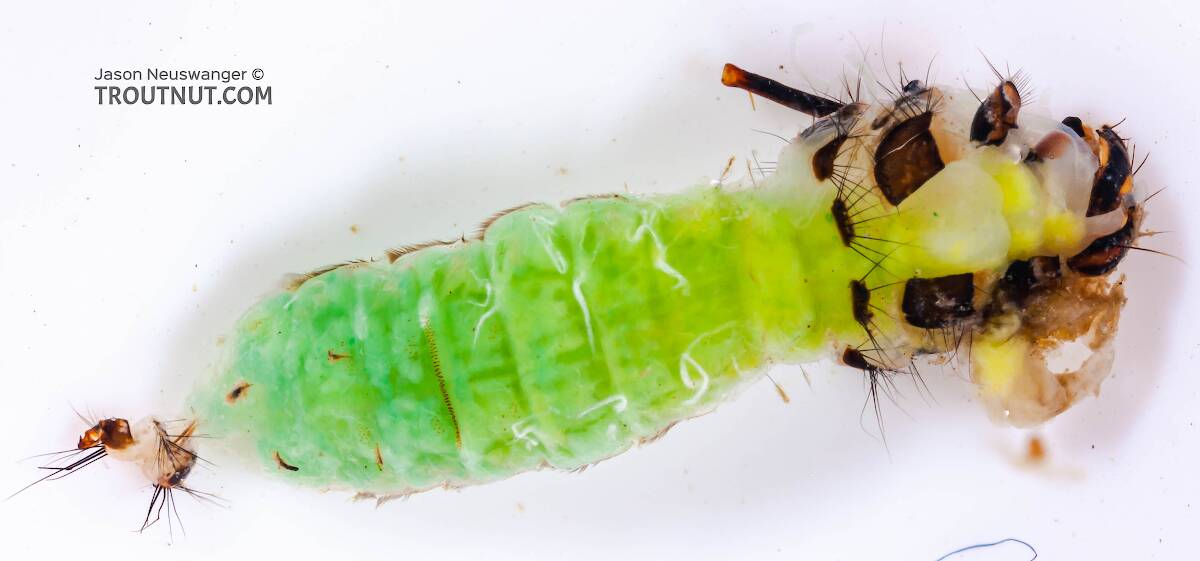
The larvae have bright green bodies.

But what color are the pupae as they emerge? Bright green like the larvae? Charcoal black like the adults? Something else?

For a Lafontaine style pupae pattern, what color should the body be?
 
The larva is tied in a mixture of black and brown fur. The Leadwing Coachman imitates the emerger- a gold tag, peacock herl body and white duck for wings. For the adult, I use a Peacock Trude originated by Chauncey Lively. Grizzly and brown for a tail, peacock herl body, deer hair wing(caddis style) brown and grizzly hackle, size 14 and 16.
 
I've read LaFountaine's book in the 80's and tied his DSP and ESP flies for many years. Bright green/brown ESP works well during the hatch and Dark Green or Black work best when adults return.
 
I've read LaFountaine's book in the 80's and tied his DSP and ESP flies for many years. Bright green/brown ESP works well during the hatch and Dark Green or Black work best when adults return.
Thank you. When you say bright green/brown for the ESP, is both the over body and underbody the same (or similar) bright green with a brown head?
 
All good suggestions. I'll post this one again. CDC Grannom. There is a video on youtube...found it.

1772905403618.png
 
Last edited:
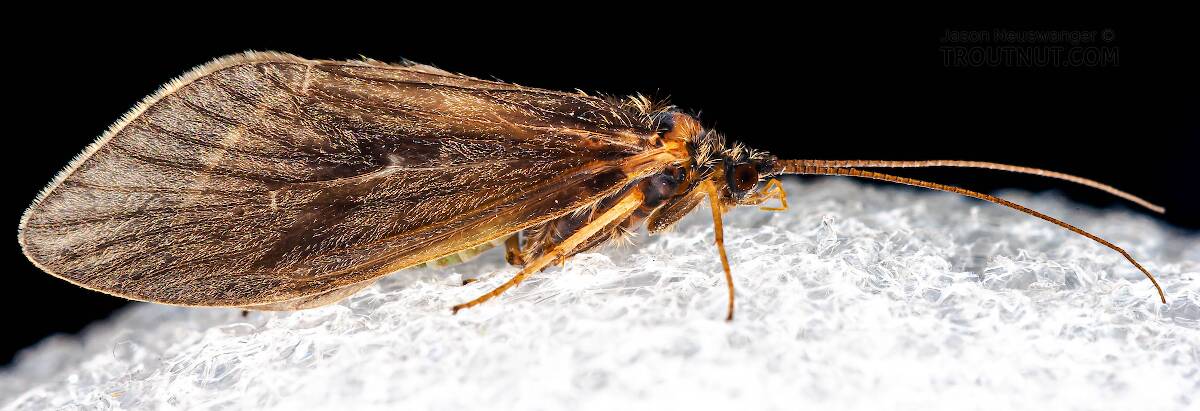
Here is a photo of the "apple green" Grannom. https://www.troutnut.com/specimen/713

Another type of Grannom has a black/charcoal body.

These are two different species, and their body colors are very different.

From what I've seen, the limestoners in mid-state PA have only the black/charcoal type.

The "apple green" type are common on the big freestoners in NC PA, such as Pine Creek.
 
Here is a photo of the "apple green" Grannom. https://www.troutnut.com/specimen/713

Another type of Grannom has a black/charcoal body.

These are two different species, and their body colors are very different.

From what I've seen, the limestoners in mid-state PA have only the black/charcoal type.

The "apple green" type are common on the big freestoners in NC PA, such as Pine Creek.
The adult caddis shown in the photo in the link included above has a green body, but the rest of the body parts appear to be in the tan/brown color shades. Also, the author mentions that the emergers are much lighter. I'm going to interpret that as meaning that the emerger's body is still green, but the wing and legs are a lighter tan color. I could be wrong.

Maybe green/green/brown will make for a good pupa pattern, as afishinado suggests, and a green/light tan/brown will make for a passable emerger pattern.

I have the Pocketguide to Pennsylvania Hatches by Meck and Weamer, and the Grannom they describe is Larva: brown head/light green body. Pupa/ Adult: greenish-black body, mottled brown wings, greenish black legs.

The closely related Apple Caddis is described as Larva: brown head/bright green body. Pupa/Adult: apple green abdomen, medium ginger thorax and legs, cream to light tan wings.

I guess I'll need a few different color combinations to cover my bases and might even need to blend a couple different colors for dubbing.
 
Here is a photo of the "apple green" Grannom. https://www.troutnut.com/specimen/713

Another type of Grannom has a black/charcoal body.

These are two different species, and their body colors are very different.

From what I've seen, the limestoners in mid-state PA have only the black/charcoal type.

The "apple green" type are common on the big freestoners in NC PA, such as Pine Creek.
I've noticed that too
Have seen apple green apple caddis on Sinnamahoning, Kettle, Pine, and the Delaware - with no brown grannoms there
But have seen brown grannoms on Sugar, Oil, and Neshannock creeks - with no green ones
So it doesn't seem that one favors freestone streams over limestones in that regard.

And it does seem like streams have one, or the other.
Not both
 
Here is a photo of the "apple green" Grannom. https://www.troutnut.com/specimen/713

Another type of Grannom has a black/charcoal body.

These are two different species, and their body colors are very different.

From what I've seen, the limestoners in mid-state PA have only the black/charcoal type.

The "apple green" type are common on the big freestoners in NC PA, such as Pine Creek.

I'm most familiar with the black/charcoal version in Central PA. I would note that the egg laying variety of these have a green egg sac in my experience.
 
I’ve been taking tying classes lately and the first fly we worked on was LaFontaine’s Sparkle Pupa Emerger. Based on the posted larva pictures, I tied a green bodied version. It was fun tying and I’ll give it a try.

I caught a lot of fish last year on the “adult” Grannom Caddis with a black body and green bump at the hook bend.

1772940533728.jpeg
 
The pupa darken. On the early grannom species, the pupa in the film are dark winged which veils most of the insect, with a hint of green abdomen under the shuck. I use a dark charcoal body with a green wire rib on mine. Fl.Chartreuse wire on my deep pupa version. On later species like numerosus, the ones I've seined in the film are charcoal.
 
This is a post I made about Grannoms quite a few times on here over the years:

The following info was posted by Lloyd Gonzales, the author of "Fly-Fishing Pressured Water." It is by far the best explanation of the PA grannom (Brachycentrus species) I have ever read. I was also confused. What Fly fishermen call grannoms around here range from black to dark green to bright green. His explanation follows:


Grannom, American Grannom, Shadfly, Apple Caddis, Mother's Day Caddis, and Black Caddis are all common names applied to Brachycentrus species. Mother's Day Caddis is the most common Western nickname for Brachycentrus occidentalis, a Western "grannom," but I have also heard this name applied generally to "grannoms" here in the East.

In PA, it is useful to think of "dark grannoms" and "light grannoms." The species your flies are imitating are more typical of the dark grannoms. The "apple caddis" is a light grannom. Most of the important (PA) Brachycentrus species have overlapping hatch periods, so either dark or light imitations (or both) can be called for, depending on the stream.

Here's my current breakdown for important PA species:

Brachycentrus numerosus--Penn's Creek Caddisfly, Dark Grannom, Dark Shadfly; adults have dark-mottled wings and dark blackish green bodies; pupae usually dark with green lateral stripes and dark wingcases.

Brachycentrus lateralis--Striped Grannom, Dark Grannom, Black Caddis; adults have dark wings and pupae are typically dark olive with tan lateral stripes and dark wingcases.

Brachycentrus nigrosoma--Little Dark Grannom, Little Black Caddis; adults/pupae are smaller and darker than numerosus.

Brachycentrus appalachia--Apple Caddis, Light Shadfly, Light Grannom; adults have very light tannish or grayish wings (almost white when freshly emerged) and apple green bodies; pupae are apple green with tan wingcases.

(Brachycentrus solomoni and incanu are also found in PA)

Most "grannom" activity in PA occurs from mid-April to mid-May. During that time, if you carry imitations of dark and light grannoms (adults and pupae) in sizes #14-16, you should have most bases covered.

You are right that the adult imitations are seldom very good during the emergence (pupa or emerger patterns are best). During the egg-laying activity, however, they are often very effective. The fish may prefer skittered, dead-drifted, or wet adult imitations depending upon the concentrations around their lies.


Lloyd Gonzales
Author of Fly-Fishing Pressured Water


I use LaFountaine black emergent and deep sparkle pupa for the dark species #14-18. For the light green I use a brown and bright green ESP & DSP #14-16. The recipes are in the LaFontaine's book, "Caddisflies."

Also, here is a link to troutnut showing grannoms:


Last edited:
I make a chocolate brown (dark) Haretron dubbing with some peacock ice dub mixed in. Gary didn't have any legs on his, but I add some woodduck that extends back past the bend. the pupa have long, filamentous legs, and it's an easy addition that doesn't mess up anything else.
 
Back
Top