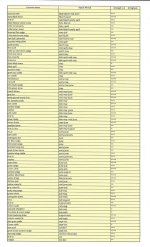
| Common Name | Latin Name | Hook Size | Start Date | Time |
|---|---|---|---|---|
| Little Black Stonefly | Allocapnia pygmaea | 16 | 5-Mar | Late Morning & Afternoon |
| Little Blue Winged Olive Dun | Baetis spp. / B. tricaudatus | 16–20 | 13-Mar | Late Morning & Afternoon |
| Midges | — | 18–26 | Mar (early) | All Day |
| Blue-Winged Olives (Spring) | Baetis vagans | 18 | 1-Apr | Late Morning & Afternoon |
| Blue Quill | Paraleptophlebia adoptiva | 16 | 5-Apr | Late Morning & Afternoon |
| Quill Gordon | Epeorus pleuralis | 12–14 | 5-Apr | Afternoon |
| Grannom Caddis | Brachycentrus numerososus | 12–14 | 9-Apr | Late Morning & Afternoon |
| Little Black Caddis | Chimarra aterrima | 18 | 14-Apr | Mid Day |
| Black Quill | Leptophlebia cupida | 14 | 12-Apr | Afternoon |
| Hendrickson (Female) | Ephemerella subvaria | 12 | 12-Apr | Afternoon |
| Red Quill (Male) | Ephemerella subvaria | 14 | 12-Apr | Afternoon |
| Dark Quill Gordon | Ameletus ludens | 14 | 18-Apr | Afternoon |
| Blue-Winged Olive (late spring) | Baetis spp. | 14–18 | 20-May | Mid Day |
| Cream Caddis | Psilotreta spp. | 14–18 | 3-May | Morning & Afternoon |
| Green Caddis | Rhyacophila spp. | 14 | April (late) | Morning & Afternoon |
| March Brown | Stenonema vicarium | 10–12 | 5-May | Late Morning & Afternoon |
| Little Blue Dun | Acentrella carolina | 20 | 1-May | Afternoon & Evening |
| Sulphurs | Ephemerella dorothea | 16–18 | 10-May | Evening |
| Sulphurs | Ephemerella invaria | 14–16 | 10-May | Afternoon & Evening |
| Gray Fox | Stenonema vicarium | 12 | 10-May | Late Morning & Afternoon |
| Light Cahill | Stenacron interpunctatum | 12–14 | 20-May | Evening |
| Green Drake | Ephemera guttulata | 8–10 | 20-May | Late Morning & Afternoon |
| Brown Drake | Ephemera simulans | 10–14 | 25-May | Evening |
| Slate Drake | Isonychia bicolor / sadleri | 12–14 | 26-May | Evening |
| Yellow Drake | Ephemera varia | 10–12 | June (late) | Evening |
| Trico | Tricorythodes stygiatus | 20–24 | 5-Jul | Morning |
| White Fly | Ephoron leukon | 10–12 | 7-Aug | Evening |
| Fall Slate Drake | Isonychia | 12–14 | September | Noon – Afternoons |
| Fall Little Blue Winged Olive | Baetis spp. | 18–20 | September | Mid Day |
| Fall Caddis | Pycnopsyche spp. | 6–12 | September (late) | Mid Day |
| October Caddis | Pycnopsyche guttifer / lepida | 6–10 | October | Afternoon & Evening |
| Micro Fall Caddis | Chimarra spp. / Hydroptila spp. | 16–20 | October–November | Afternoon & Evening |
In Pennsylvania, fly hatches follow a seasonal rhythm—but no two years are exactly the same. Most aquatic insects begin to stir once stream temperatures settle into that ideal spring range: cool enough to remain clean and clear, yet warm enough to awaken both trout and insect life. A string of sunny afternoons can jumpstart an early Blue-Winged Olive (BWO) or Little Black Stonefly hatch, while a stretch of cold rain or high, murky water can delay everything just as quickly.
By May, when freestone streams drop and water temperatures inch into the low 50s, the bigger mayflies—March Browns, Gray Fox, Sulphurs, and eventually Green Drakes—start to emerge reliably. Spinner falls often wait for perfect evenings: calm air, fading light, and a quiet that feels like time itself has slowed down.
Spring-fed streams like Spring Creek or the Little Juniata operate on a steadier schedule, thanks to consistent groundwater temperatures. In contrast, freestone streams vary more widely, responding quickly to weather patterns and warming trends. Each year has its own quirks, but over time, anglers learn to read the season not just by the calendar, but by the water, weather, and light.
Hatch data compiled from the following sources: Charles Meck, Keystone Fly Fishing and its contributors, Al Caucci, Bob Nastasi, Rick Nyles, Dave Kile, and over 5,000 stream reports from Paflyfish (1997–2025).
Last edited:


![[WR]](/data/avatars/s/46/46991.jpg?1788113944)