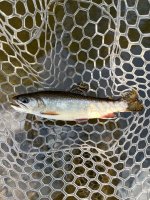
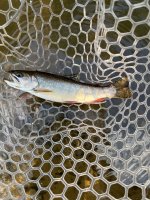
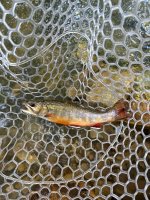
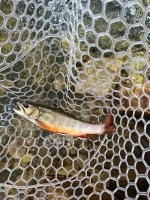
No streams with current wild ST populations flow in to Lake Erie from PA sources, so far as I know. The history of brook trout in the PA Lake Erie watershed is pretty foggy. Given that a scattering of smaller streams in the drainage currently support wild browns, it is likely that there were brook trout in at least a few of these streams at one time. Likely, but not for certain. The Lake Erie basin is the most inhospitable for wild trout of any of PA's major drainage basins. Any stream larger than 15 feet or so in width spends a good part of the year as a dusty shale bowling alley. The substrate is largely shale and siltstone with all the shifting and thermal issues attendant. Groundwater input is relatively poor throughout the basin with a few exceptions (upper Conneaut Creek). While there is good documentation of brook trout use and travel in all the upper Lakes and their watersheds, particularly Superior, I doubt there was much, if anything of the sort going on in Lake Erie.
All the same, my Dad grew up on Thomas Run, a Walnut creek trib and he told me that when he was a kid, there were brook trout in Thomas Run. This would have been in the 1930's. So, maybe... The problem with this is that back then, somebody was stocking virtually everything that made s damp spot between two rocks and Thomas Run probably was not an exception. So, maybe not...