Northwest Pa Native Brookies

BrookieBrothers

New member
Joined
Jul 19, 2026
Messages
6
City
Youngstown
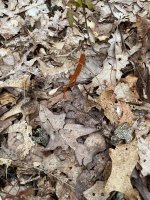
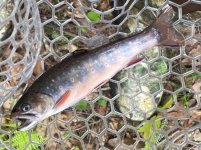
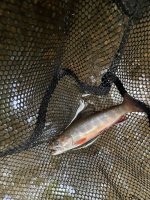
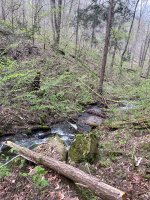
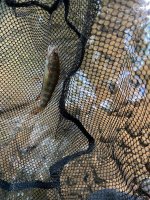
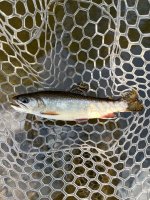
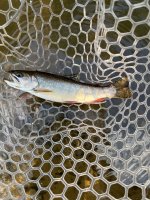
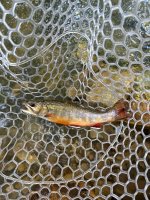
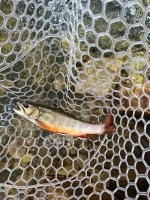
Hey New Member here, been looking at the threads here for a while and decided to join up I’m from the Youngstown area of Ohio and I’ve fished for Native Brookies in the Class A streams on SGL 39 and the Kennerdell Tract in Venango County with decent success. I’ve noticed most of the other class A Brookie streams in the region are on private land. My question is are there Natural Reproduction Streams on public lands or Class A’s on Private that is open to fishing that hold populations of native Brookies in that region of Northwest Pa (Venango,Mercer,Crawford,Erie)
 

Attachments

  • IMG_2497.jpeg
    IMG_2497.jpeg
    680.5 KB · Views: 69
  • IMG_2464.jpeg
    IMG_2464.jpeg
    445.4 KB · Views: 65
  • IMG_1193.jpeg
    IMG_1193.jpeg
    639.8 KB · Views: 65
  • IMG_2495.jpeg
    IMG_2495.jpeg
    873.8 KB · Views: 68
Short answer, yes, as to availability on public land. I tend to avoid fishing privately owned land, so as to not have to deal with access issues, so can’t give you much advice there. But, there are plenty of streams with Brookies in them on public land in NWPA.

You’ll want to look for public land tracts (National Forest, State Forest, State Game Lands, State Parks) are cross reference the streams on those with the PFBC Class A and Natural Reproduction lists. You’ll find there’s far more NR streams than Class A’s.

There’s some mapping tools out there that combine these things, but I still do it the old school way. Suspect one of the regulars who uses those mapping tools will respond, so I’ll let them explain them, as they’ll likely know more about how to best use them than me.
 
I’ve used the PFBC ARCGIS mapping tool the biggest issue I have with that is that it and the natural reproduction list doesn’t give you any idea what species are in those streams I’m just trying to find some knowledge on if it’s Brookies or Browns in a particular stream before I make an hour plus drive. Doing your own scouting is a little harder when you gotta drive from Youngstown not that I’m gonna be upset with a wild Brownie or Bow but I would prefer Brookies if I’m driving that far
 

Attachments

  • IMG_1174.jpeg
    IMG_1174.jpeg
    728.8 KB · Views: 57
Last edited:
Yeah, the NR isn’t gonna give you that like the Class A does.

Gonna have to go out and fish them and see what’s there. I will say that generally (not always) the further east you drive in the counties you mentioned and beyond, the likelihood of Brookies increases, and the likelihood of Browns decreases. Until you get to about eastern Elk, or Potter or Cameron Counties. Then more Browns start to show up again. Again, generally speaking.
 
Yeah, the NR isn’t gonna give you that like the Class A does.

Gonna have to go out and fish them and see what’s there. I will say that generally (not always) the further east you drive in the counties you mentioned and beyond, the likelihood of Brookies increases, and the likelihood of Browns decreases. Again, generally speaking.
Thank you for that bit of info I figure the natural reproduction streams near the class A’s I’ve fished in Venango are a good starting point. If anyone is willing to give up some secret spots in a PM I’ll treat it with the upmost respect
 
I'm local to the area in question. There are scattered brook trout populations in all of the counties you mention. The best fishing access to get at them is often on stocked streams where they are more incidental than dominant. This doesn't necessarily mean they aren't worth fishing, sometimes they are. I have a busy day today, but I'll try to get around and send you a more detailed PM in the next day or two.
 
I’ve used the PFBC ARCGIS mapping tool the biggest issue I have with that is that it and the natural reproduction list doesn’t give you any idea what species are in those streams I’m just trying to find some knowledge on if it’s Brookies or Browns in a particular stream before I make an hour plus drive. Doing your own scouting is a little harder when you gotta drive from Youngstown not that I’m gonna be upset with a wild Brownie or Bow but I would prefer Brookies if I’m driving that far
Yes, unfortunately the streams that support natural reproduction of trout list does not indicate the species present. It could have, but it doesn’t. That may have been a smart move in that species dominance may change over time and I doubt that the majority of the streams on the list will be resurveyed within decades from now, if ever.

Additionally, you need to be careful in using the natural reproduction list in order to determine fishing locations regardless of whether or not the streams’ riparian lands are public or privately owned. It only takes 3 fingerlings or three trout representing two separate year classes found in 100 m of stream length for a stream to qualify for the list. That minimum is not going to provide good fishing, although sampling sites are often at the mouth of a stream or at the point along its length where the minimum can still be met. This means that populations may be better farther upstream, but on small streams you may run out of water before you find better upstream populations. Additionally, some streams on the list are so thickly lined and protected by rhododendron or multi-flora rose that fishing is impossible or nearly so except perhaps in an occasional opening that also just happens to coincide with some decent holding water for desirable size fish. Good luck on those! In conclusion, if investigating from afar, the natural reproduction list will only be a starting point for those waters while the Class A list will at least almost guarantee a much greater number of trout unless something substantial has changed since the last survey. Neither list guarantees fishable water.
 
Last edited:
Hey New Member here, been looking at the threads here for a while and decided to join up I’m from the Youngstown area of Ohio and I’ve fished for Native Brookies in the Class A streams on SGL 39 and the Kennerdell Tract in Venango County with decent success. I’ve noticed most of the other class A Brookie streams in the region are on private land. My question is are there Natural Reproduction Streams on public lands or Class A’s on Private that is open to fishing that hold populations of native Brookies in that region of Northwest Pa (Venango,Mercer,Crawford,Erie)
Those are some really cool looking brookies.
 
the lack of buffer on NWPA streams limit brook trout numbers. Browns are fair more abundant the further east the better to brook trout fishing 1 hr is not enough
 
Yes, unfortunately the streams that support natural reproduction of trout list does not indicate the species present. It could have, but it doesn’t. That may have been a smart move in that species dominance may change over time and I doubt that the majority of the streams on the list will be resurveyed within decades from now, if ever.

Additionally, you need to be careful in using the natural reproduction list in order to determine fishing locations regardless of whether or not the streams’ riparian lands are public or privately owned. It only takes 3 fingerlings or three trout representing two separate year classes found in 100 m of stream length for a stream to qualify for the list. That minimum is not going to provide good fishing, although sampling sites are often at the mouth of a stream or at the point along its length where the minimum can still be met. This means that populations may be better farther upstream, but on small streams you may run out of water before you find better upstream populations. Additionally, some streams on the list are so thickly lined and protected by rhododendron or multi-flora rose that fishing is impossible or nearly so except perhaps in an occasional opening that also just happens to coincide with some decent holding water for desirable size fish. Good luck on those! In conclusion, if investigating from afar, the natural reproduction list will only be a starting point for those waters while the Class A list will at least almost guarantee a much greater number of trout unless something substantial has changed since the last survey. Neither list guarantees fishable water.
It would be ideal to have the species found when surveyed, and the date of survey included in the information when pulling up a result. It would also be nice to see the biomass. All of that information should be made publicly available, and it is available but exists in different, hard to find places.
 
Back
Top