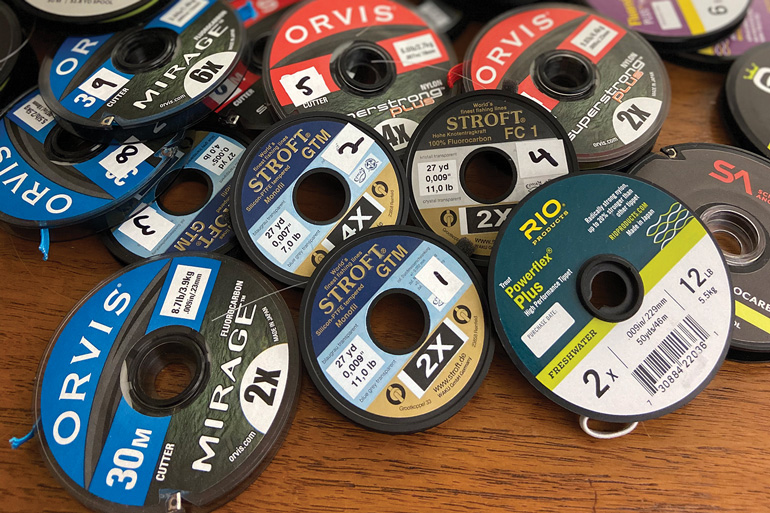
How much does tippet size matter

I only ever used 7x on high altitude lakes i Idaho. the kind where it looks like the there is no water and and logs are floating in space. And Silver creek. This kind of place. (not my pic)
1790000989781.png


Other than that between 5 and 3 is where I live. Been going bigger for streamers if I have the time to change lately because it saves flies.
 
What if Gin Clear stream conditions call for using 5 6 or even 7 X Tippet?
But the bite is on a size 12 or even 10 fly?
 
Just to add: going up can be as important as going down for another reason. Try throwing a hopper all day on 5X, then examine how twisted up your tippet gets. Same fly on 3X, and it won't happen.

I love half sizes too, but I am certainly a dirty euronympher 😉
Same thing happens with fine tippet and dry spinners with non-aerodynamic wings. Those spin like a propeller if the tippet is too fine.
 
I didn't know about this. Now I want some 4.5x tippet. Not for Euro-nymphing though.
Yes I use 5.5x tippet, not for euro-nymphing either. It's quite convenient when tying droppers on. I used to use 6x for my dropper when I used 5x for my dry. But then I saw that .5 stuff, and gave it a shot. I like it.
 
During cicadas last year I fished them with minimum 3x and sometimes 2x and took trout on hard fished creeks without a problem.
With terrestrial "plop patterns" you can use heavier tippets because the "plop" trigger aggressive strikes.

With a small mayfly pattern, it's different. The trout typically just rise and sip them in., rather than making a rushing attack. So, the trout have more time to see the fly and tippet.
 
Anybody put a micrometer on the .5 stuff and compare it to its fatter and skinnier neighbors in the same brands??

Then do the same measurements with other brands even if they don't offer .5 sizes.

Somehow I'm not buying a consistent .0005" difference in diameter or ANY stated difference in breaking strength.
 
Depends.

On a classic limestone spring or Stillwater to finicky trout it can matter, sometimes more than some will admit.

On freestone highly pressured trout, it can but less likely. On freestone fish that see little to no pressure probably not at all.

On brook trout in freestone streams with no pressure, if you could thread the eye of a size 16 bare hook with 0x and drag it through a hole, you might catch fish. So probably not at all.


IMO, getting in good position, casting well, presenting your fly well and reading the water well; so your first cast is on target, presented well, and is offered to a fish right the first time with little to no disturbance is king over anything else.

Spook fish and you can still catch them, but now you are going to have to pull out tricks rather than skill.
 
Last edited:
Anybody put a micrometer on the .5 stuff and compare it to its fatter and skinnier neighbors in the same brands??

Then do the same measurements with other brands even if they don't offer .5 sizes.

Somehow I'm not buying a consistent .0005" difference in diameter or ANY stated difference in breaking strength.
Yes, I have. It's pretty consistent. Some brands are also consistent in lying about the diameter. They say it is smaller than it is.

I can't speak to breaking strength. I can afford a decent micrometer but not an Instron.
 
I have taken to using heavy tippet for most of my fishing,so I don’t have to worry about breaking off,or playing a fish too long.
I carry 2,3,4,5 ,and sometimes 4.5 and 5.5 ,but use 3x 99% of the time

Often I use regular 6lb test fishing line for tippet
I was thinking about this yesterday-I needed some tippet and a store I stopped out was out of the size I wanted. Thought about just buying some Berkley mono...what REALLY is the difference!? I assume it's thickness, but there has to be SOMETHING that is comparable.
 
I was thinking about this yesterday-I needed some tippet and a store I stopped out was out of the size I wanted. Thought about just buying some Berkley mono...what REALLY is the difference!? I assume it's thickness, but there has to be SOMETHING that is comparable.

I've been using seaguar red label fluoro. 6lb is 3.5x. 4lb is 4.5x. Each mic out at .0006" larger than advertised.
 
I was thinking about this yesterday-I needed some tippet and a store I stopped out was out of the size I wanted. Thought about just buying some Berkley mono...what REALLY is the difference!? I assume it's thickness, but there has to be SOMETHING that is comparable.
Dear Sasquatch,

For fly fishing these are the only Berkley line specs that matter for use as tippet. This article shows all the major brands. https://gfreports.com/monofilament-line-diameter/

Regards,

Tim Murphy 🙂

Berkley Trilene XL (2–30 lb)​

Test (lb)Dia (mm)Dia (in)
20.1200.005
40.2000.008
60.2200.009
80.2500.010
100.2700.011
120.3300.013
 
I was thinking about this yesterday-I needed some tippet and a store I stopped out was out of the size I wanted. Thought about just buying some Berkley mono...what REALLY is the difference!? I assume it's thickness, but there has to be SOMETHING that is comparable.

First off with leaders & tippets, diameter is everything. Breaking strength is overrated if you know how to play fish as evidenced by IGFA records on 2lb test...

When it comes to using fishing line as lieader material or tippet as already has been mentioned; the diameter of fishing line for a given breaking strength versus the same breaking strength of purpose manufactured leader/tippet material will ALWAYS be fatter...

So, if you want to substitute fishing line for leader material and want the same "behavior..."

DON'T choose a fishing line that matches the pound test of your leader material. Choose a fishing line with a stated diameter as close to the DIAMETER that matches your size & brand of leader material...

Then put a micrometer to both so you know if you are comparing apples to apples. 😉

If you want consistency in diameter, buy Japanese fishing line that is rated in their "Gou" (pronounced "go") system that is based solely on diameter, NOT breaking strength.

Japanese Domestic Market (JDM) lines are WAY more consistent (and honest) in regards to diameter than their US counterparts. Companies that are members of the JAFTMA (Japan Fishing Tackle Manufacturers Association) will STRICTLY adhere to the standards so if you buy a 1 Gou line, it WILL be 0.165 mm or .0065" in diameter.

Even if the Japanese fishing line doesn't have the Gou number on it, you can generally trust the diameter because pound test has nothng to do with the marketing of the line.

It is becuse of this consistancy and the quality of the product that for my conventional fishing, I switched from my long, long, long, long time favorite Berkley fishing lines to Sunline, Varivas and other other JDM fishing lines.

 
First off with leaders & tippets, diameter is everything. Breaking strength is overrated if you know how to play fish as evidenced by IGFA records on 2lb test...

So, if you want to substitute fishing line for leader material and want the same "behavior..."

DON'T choose a fishing line that matches the pound test of your leader material. Choose a fishing line with a stated diameter as close to the DIAMETER that matches your size & brand of leader material...

Then put a micrometer to both so you know if you are comparing apples to apples. 😉

If you want consistency in diameter, buy Japanese fishing line that is rated in their "Gou" (pronounced "go") system that is based solely on diameter, NOT breaking strength.

Japanese Domestic Market (JDM) lines are WAY more consistent (and honest) in regards to diameter than their US counterparts. Companies that are members of the JAFTMA (Japan Fishing Tackle Manufacturers Association) will STRICTLY adhere to the standards so if you buy a 1 Gou line, it WILL be 0.165 mm or .0065" in diameter.
This^^^

Fly fishing specific tippet usually has a greater strength:diameter than standard spinning line, mono or fluoro.

Also, as indicated, put a micrometer on any line and you can see the true dia and compare to the line label. I've found some variation, particularly with Maxima.

As to breaking strength and playing fish: A guy in our fishing group did a demonstration showing how much pressure a 9' fly rod can apply to a fish by tying his tippet to a scale and reading the pounds of pressure applied by the rod. The fly rod was bent into a significant arc and there was around a 2 pound reading on the scale.
Maybe one could put 4 lb test mono as a tippet, tie it to a fencepost, and see i you can break the line before breaking the rod?
I think this is why we're always told not to pull on a stuck fly with the rod but point the rod at the stuck fly and pull on the line. I've read multiple stories of guys breaking a rod by pulling on a stuck fly.
 
This study tests tippet strength, diameter, and knots:


This shows real diameter vs manufacturer stated diameter:


(And yes Bam - they measure to the 4th decimal place)

And finally how the IGFA does it:

 
Back
Top