Hammer Creek 4/10/22

RobbieDanger

New member
Joined
Apr 9, 2022
Messages
1
City
Sinking Spring
10:30am Arrival
50 degrees
2wt Contact II
16 Tungsten Bateis Nymph
12 Tungsten Bateis Nymph
All safely released

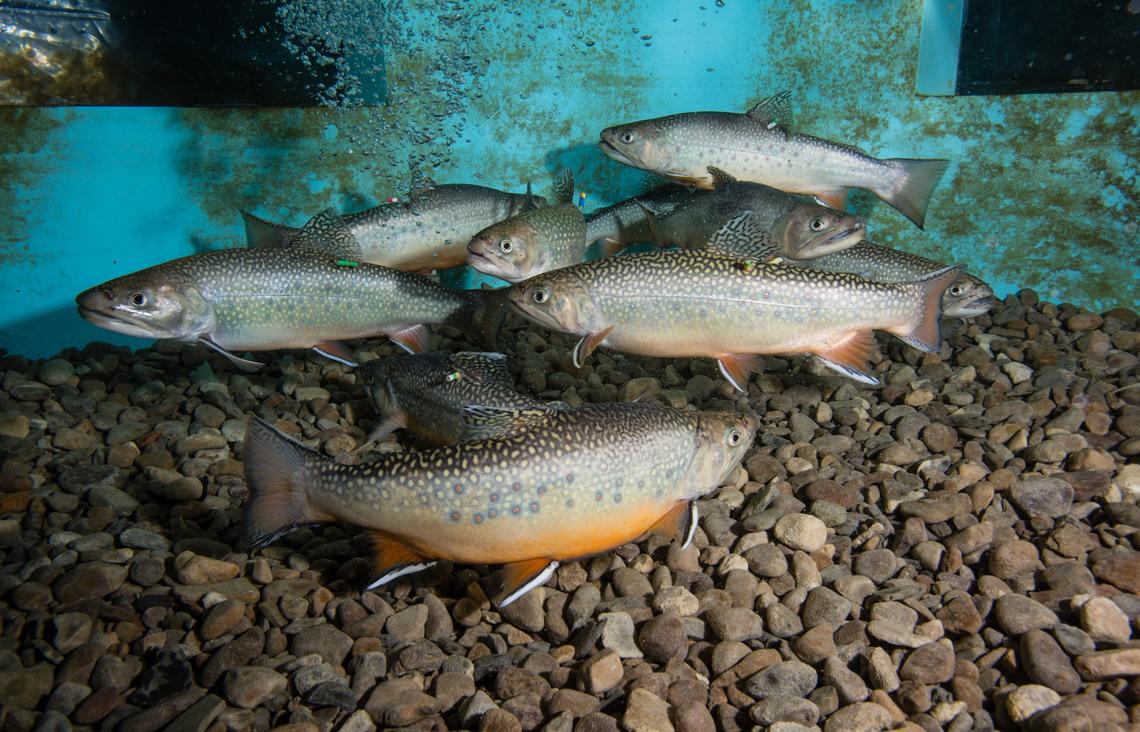
Started at pumping station road where the pull off is. Landed a nice brook after a few casts a good bit before the bridge. Followed this up rather quickly with a solid brown little closer to the bridge. Deep in the pool, ever so slightly I see a golden hugging bottom. Made about 12 casts slowly working my drifts closer to its position. I felt it in my wrist immediately and saw the slab turn the second I set the hook. It was on! After about a 2 minute fight I had it in the net. Best part my fishing partner had just shown up and got the whole thing on video. Fished up from there, and hit a streak of rainbows. Unbelievable day. Very grateful to have that good of a day for the first time fishing this creek.
593DCCF1-503E-4920-9999-0EBBF48F3549.png
711538E3-E6A1-4C41-8F34-B4AEC567AEA3.jpeg
A297F0B3-597B-4F7C-BE0D-6E81DC16AD40.png
F95425BC-6042-4E5A-AC95-4FB1E2FBB9D6.jpeg
 
Last edited:
Thanks for treating the brookie well and releasing based on picture. It’s ashame the commission still stocks that. It’s a miracle that creek has sustained its brook trout and its springs give those brookies hope through climate change if the state will ever stop stocking it. Where you caught that fish is near the mouth of a nursery stream and if you open up those rainbows your bound to find some young of the year brook trout I would imagine because as you probably noticed the most buckets go in around the mouth of that nursery tributary dumping in.
 
Nice catches.

It shouldn’t be stocked either way, but it’s decent sized for a Trout stream in that area and has a decent chunk on public land with good access. I don’t see it getting pulled from the stocking lists unfortunately.

It’s a good stream. Neat that it has Brookies, but it’s already well into the process of becoming a Brown Trout stream. Its “nursery trib” that was mentioned is a bit further behind, but also on its way.

Hammer is a good stream IMO to fish if you’re looking for a couple Stockers for the dinner table. Keep the stocked Bows. Let the Browns and Brooks go.
 
Glad to see a report from Hammer Ck. I believe anglers will be hard pressed to find a fish in the stomach of stream stocked trout, unlike their counterparts in those lakes in which there are large populations of gizzard shad, alewife, smelt, or spottail shiners or, I suspect, other schooling shiners. Furthermore, if you do find a fish in a Eastern Pa stream caught stocked trout digestive tract, the usual case upon close examination is that it is a fathead minnow, the species typically sold as bait, ie bait stolen from or cast off of an angler’s hook. I might have once found a blacknose dace, a common stream fish that is often present in great abundance. Over my lifetime, I have gutted and examined the stomachs and sometime the intestines of well over a hundred stocked trout from northcentral to NE to SE Pa. Even crayfish are not that common, although I used to find them occasionally in fish taken from the Benner Springs hatchery area of Spring Ck when it was a stocked trout stream.

Despite stocking, the populations of wild trout, brooks and browns, have grown in Hammer. What limits their abundance (wild brook trout) in the stocked stretch above Rt 322 to the upper stocking limit is low flow combined with excessive width creating shallow summer and fall habitat. The number found there in summer electrofishing is what one would expect in such shallow water.
 
Last edited:
Glad to see a report from Hammer Ck. I believe anglers will be hard pressed to find a fish in the stomach of stream stocked trout, unlike their counterparts in those lakes in which there are large populations of gizzard shad, alewife, smelt, or spottail shiners or, I suspect, other schooling shiners. Furthermore, if you do find a fish in a Eastern Pa stream caught stocked trout digestive tract, the usual case upon close examination is that it is a fathead minnow, the species typically sold as bait, ie bait stolen from or cast off of an angler’s hook. I might have once found a blacknose dace, a common stream fish that is often present in great abundance. Over my lifetime, I have gutted and examined the stomachs and sometime the intestines of well over a hundred stocked trout from northcentral to NE to SE Pa. Even crayfish are not that common, although I used to find them occasionally in fish taken from the Benner Springs hatchery area of Spring Ck when it was a stocked trout stream.

Despite stocking, the populations of wild trout, brooks and browns, have grown in Hammer. What limits their abundance (wild brook trout) in the stocked stretch above Rt 322 to the upper stocking limit is low flow combined with excessive width creating shallow summer and fall habitat. The number found there in summer electrofishing is what one would expect in such shallow water.
There is no question that sediment, nutrient load are dominant limiting factors but having surveyed that stream with 5 different restoration professionals over hundred of hours from its extreme headwaters to the pumping station lot, I can tell you the thermal profile is not as bad as you think due to the abundance of springs on all those private properties. Fine scale(and not so fine scale up near Buffalo springs) thermal refuge with very hospitable temperatures is in great abundance up there. And I’m talking with two fisheries PhDs with a king history of involvement in brook trout projects they have instructed me stocked/invasive salmonids are an extremely significant threat to the watershed and due to the speedwell barrier removal is indicated above the that barrier. They have advised me that brook trout will likely not benefit from the projects in the long run if the invasive species issue is not dealt with. I made sure to seek expert level multidisciplinary consultation with Brook Trout PhDs and Fluvial geomophologists. They said stocking over wild native brook trout was detrimental and recommended not doing it, much like eastern brook trout joint venture, TU’s chief scientist Hellen Neville, what you guys hear at national wild trout symposiums and the USGS. But it’s still stocked obviously despite this. There is also data that invasive brown trout are harmful to sculpin populations and that’s another native fish we are restoring the hammer for. Most of these people mentioned above have been boots extensively on the ground there and reviewed extensive GIS maps, survey, and watershed data.
 
Glad to see a report from Hammer Ck. I believe anglers will be hard pressed to find a fish in the stomach of stream stocked trout, unlike their counterparts in those lakes in which there are large populations of gizzard shad, alewife, smelt, or spottail shiners or, I suspect, other schooling shiners. Furthermore, if you do find a fish in a Eastern Pa stream caught stocked trout digestive tract, the usual case upon close examination is that it is a fathead minnow, the species typically sold as bait, ie bait stolen from or cast off of an angler’s hook. I might have once found a blacknose dace, a common stream fish that is often present in great abundance. Over my lifetime, I have gutted and examined the stomachs and sometime the intestines of well over a hundred stocked trout from northcentral to NE to SE Pa. Even crayfish are not that common, although I used to find them occasionally in fish taken from the Benner Springs hatchery area of Spring Ck when it was a stocked trout stream.

Despite stocking, the populations of wild trout, brooks and browns, have grown in Hammer. What limits their abundance (wild brook trout) in the stocked stretch above Rt 322 to the upper stocking limit is low flow combined with excessive width creating shallow summer and fall habitat. The number found there in summer electrofishing is what one would expect in such shallow water.
And as Swattie mentioned in the segloch thread, large rain events have likely had bearing on population fluctuations in the past and I would be interested to see if Pa fish and boat has longer term survey data before saying the populations have been “increasing” In general. Also if the browns have been increasing and brook trout are decreasing I would not consider that a “win” or reassurance just because more trout is not always the goal in strictly conservation effforts we want to focus on native species since brown trout is as an invasive species . I inquired about that information in the past and left a message but got no response I need to follow back up on that.
 
My anecdotal/gut read of Hammer in the years I’ve been fishing it, since 2010 or so, is that generally over that time frame, the wild Trout biomass has increased. But the increase I’ve noticed, has been the result of more Brown Trout. There are still Brookies, but whereas in 2010 an average day consisted of mostly Brookies, I now catch more Browns than Brookies. The number of fish caught is about the same, but the average size (biomass) is higher because the Browns run bigger on average. Similar to many of its neighbors seeing a shift in favor of Brown Trout. This is referring to the SGL stretch.

It stays plenty cold through there. Thermal issues are not a limiting factor, above the lake anyway. I took 68 deg water temps at the 322 bridge in a low flow heatwave a couple years ago. Not ideal for Brookies, but plenty survivable. Habitat, definitely a limiting factor, and if you’re looking to protect Brookies, wild Brown Trout, definitely also.
 
My anecdotal/gut read of Hammer in the years I’ve been fishing it, since 2010 or so, is that generally over that time frame, the wild Trout biomass has increased. But the increase I’ve noticed, has been the result of more Brown Trout. There are still Brookies, but whereas in 2010 an average day consisted of mostly Brookies, I now catch more Browns than Brookies. The number of fish caught is about the same, but the average size (biomass) is higher because the Browns run bigger on average. Similar to many of its neighbors seeing a shift in favor of Brown Trout. This is referring to the SGL stretch.

It stays plenty cold through there. Thermal issues are not a limiting factor, above the lake anyway. I took 68 deg water temps at the 322 bridge in a low flow heatwave a couple years ago. Not ideal for Brookies, but plenty survivable. Habitat, definitely a limiting factor, and if you’re looking to protect Brookies, wild Brown Trout, definitely also.
Good point about the temps, we have a continuous monitor that any can view real time temps 24/7 365 on SRBC website. Even the gross temperature profiles are pretty good but at fine scale there are 100’s of sizeable spring seeps and some massive spring heads too that probably stay well below 65 all summer long. Farmers say anecdotally that even woarst droughts on record hammers springs keep flowing when others fry up for generations. Habitat is certainly a limiting factor and the sediment factors into that as well as far as spawning conditions and macro production/forage. I have been told by Dr. Shirey who is a PhD/JD Brook trout researcher and Native Fish Coalition advisory council that brown trout removal is indicated above the speedwell forge dam eventually if goal is to restore for native brook trout. Based on Dr. Kurt Faust’s observations in the early 80’s that brown trout displace brook trout from prime habitat, and Dr. Doug deitermans observations on pressmence of large habitat features I have been instructed. Restoration without eventual removal of brown trout could actually hurt the brook trout populations by allowing browns to hog the habitats increase their numbers and push out brook trout as tragically demonstrated in this case study. https://www.kiaptuwish.org/wp-conte...tion-Manuscript_Wild-Trout-Symposium_0917.pdf


This is an area of active research and I believe a big definitive study on this will be concluding in the next year or two that will further shed light on this concerning phenomenon, when Published I can share more.
 
I think the vast majority of the brookies are in the main stem now. Just in time for the onslaught. There is plenty of water downstream to stock.
There is no reason those fish could not be moved below speedwell I agree with you both on that and it’s ashame the commission can’t recognize the significance of this upper hammer creek watershed for native brook trout conservation and just follow the recommendations of numerous non profits, federal science agencies, and academics who are recommending not stocking over our wild native brook trout.
 
Allowing that stream to transition to a brown-only population when it was once densely populated with fairly large brook trout would be a travesty. Sound like the shift in favor of browns took 12-20 years or so (without knowing exactly when browns started to get a foothold there). So probably about that much longer until the number of brook trout goes to zero. My grandparents lived nearby, by the time I took an interest in fishing it, the browns were already taking over the best habitat. Shame it's even farther beyond the tipping point now.
Agreed, there is hope for that stream though above speedwell. The barrier is both a gift and a curse. It does make it possible to realistically talk about removal of brown trout on the hammer through manual removal. This is going on about an hour south in the catoctins in hunting creek where marylands fish managers actually acknowledge main stream fisheries science when it comes to brook trout and are managing much less at odds with the scientific community. Removal of this nature could be a possibility on the hammer as well. While manual removal has poor rates of total eradication it will not be long, relatively speaking, until XYY super male brown trout are available to finish the job for good. We will also likely get better control techniques in the future for this sort of thing too. So we may have to just “mow the lawn” to preserve that population and its genetics until the latter mentioned more definitive control techniques are available. It would not be hard for me to find willing researchers who would want to do a removal project on there, pa fish and hot has indicated they have no current capacity to do removal despite recommendations from USGS, TU, and EBTJV. I am currently looking into feasibility of this. It’s becoming more common on the east coast. NY does it in a lot of their heritage brook trout ponds, marylands doing it, and so are a number of other states.
 
Allowing that stream to transition to a brown-only population when it was once densely populated with fairly large brook trout would be a travesty. Sound like the shift in favor of browns took 12-20 years or so (without knowing exactly when browns started to get a foothold there). So probably about that much longer until the number of brook trout goes to zero. My grandparents lived nearby, by the time I took an interest in fishing it, the browns were already taking over the best habitat. Shame it's even farther beyond the tipping point now.
This paper was a study actually done in PA in the Alleghenies that illustrates the trade offs between in stream barriers and isolation of brook trout behind barriers. It also indicates downstream brown trout stocking has a detrimental effect on brook trout even if not stocked directly over native brook trout basically proving Pa fish and boats current” section” based management approach a laughable symbolic gesture towards managing brook trout. Shannon whites loyal sick study would support the fact that section based management is an ineffective dinosaur as well.

 
Allowing that stream to transition to a brown-only population when it was once densely populated with fairly large brook trout would be a travesty. Sound like the shift in favor of browns took 12-20 years or so (without knowing exactly when browns started to get a foothold there). So probably about that much longer until the number of brook trout goes to zero. My grandparents lived nearby, by the time I took an interest in fishing it, the browns were already taking over the best habitat. Shame it's even farther beyond the tipping point now.
The other exciting possibility for the hammer creeks brook trout to avoid succumbing to invasive species, climate change, and past human disturbances is genetic rescue. I have been told the Barrier at speedwell forge actually makes hammer and candidate for genetic rescue which was tested in NC recently and showed quick amazing results with longer/heavier more fertile/fit fish in the first year after the genetic rescue. We commonly think brook trout are a loosing proposition because next to nothing significant has been done for them in this state and intact we are paying a truck load of money annually to stock over them. If you live in even a more southern state with warmer temps they have healthier populations like in VA, WVU, MD. They are doing removal projects, starting conservation hatcheries for reintroductions. I’d hate for people to think that brook trout it are doomed just because our state doesn’t alnowledge essentially any other factor besides water and habitat and conservation distantly downplays solid science point out the importance of invasive species, life histories, management/ connectivity at watershed scale and stocking. There are 30 ft wide streams with only brook trout in those states and most of those states produce fish in the 15-17” range in freestoners. We could certainly have healthier native brook trout in this state and “we” (the fish commission) chooses not to by ignoring recommendations of people with a much higher degree of specialized expertise in this matter than they have.
 
So you think stocked RT are eating native ST within 3 weeks of being stocked?Did a PhD tell you that happens or is that your own original work?

Why are you pushing your agenda on a fishing reports page?
 
So you think stocked RT are eating native ST within 3 weeks of being stocked?Did a PhD tell you that happens or is that your own original work?

Why are you pushing your agenda on a fishing reports page?
Because it’s about the stream I’m actively restoring. And yes if you want like a link to a whole slew of articles showing that rainbow trout are a threat to native brook trout here you go many in the list of 40 are about RT hurting brookie populations. Or you just look at NC, Tennessee and the efforts to rotenone them in brook trout streams there. Do you even fish the hammer? Are you volunteering on it? These people on this thread are all involved in it and have an interest in its native brook trout that’s why it’s relevant. The real question is why are you here besides trying to make sure native brook trout aren’t successfully managed in one stream In this state. And AGAIN not my agenda it’s the EBTJV, Helen Neville from TU national as outlined in the brook trout conservation portfolio, the USGS leestown science center, and the management recommendations of numerous academics. I stage this repeatedly every time you bring this up and I’m questioning your literacy at this point. Either admit you just don’t like what the sciences says at this point and you just want to sacrifice the coldwater ecosystem habitats for what you value in your fishing experience or tell me these people who have devoted the air lives to the study of thy is stuff are wrong and post some data to prove it.

Links to the data supporting “ my agenda” below. Removal is recommended by USGS, EBTJV and TU in select locations and all agree invasive salmonids are a large threat to brook trout. You act like I tried to invent this stuff moon.


I didnt say they weren't a threat. I am telling you that they are a much smaller threat than you think they are. I am telling you stocked rt aren't eating native ST within 3 weeks of being stocked. I am telling you that habitat degradation is the main reason that BT have displaced ST, and that the introduction of BT and stocking of RT are (very) minor reasons.

I'm here to share what I know about fishing and to learn about fishing. I'm not here writing 10,000 word posts that are copy and pasted from scientific studies that I don't understand. I'm not here trying to prove that I am the smartest person in the room.

You took a post of a guy that was happy because he had a great day fishing and wrote 35,000 words to push your agenda. This is the wrong forum for it.
 
I didnt say they weren't a threat. I am telling you that they are a much smaller threat than you think they are. I am telling you stocked rt aren't eating native ST within 3 weeks of being stocked. I am telling you that habitat degradation is the main reason that BT have displaced ST, and that the introduction of BT and stocking of RT are (very) minor reasons.

I'm here to share what I know about fishing and to learn about fishing. I'm not here writing 10,000 word posts that are copy and pasted from scientific studies that I don't understand. I'm not here trying to prove that I am the smartest person in the room.

You took a post of a guy that was happy because he had a great day fishing and wrote 35,000 words to push your agenda. This is the wrong forum for it.
Not my agenda again and your posts are short because they contain no proof backing up what you say. You have no new information to bring to the discussion. While I agree that loss of habitat/water quality are extremely important we have downplayed the importance of invasive species and that’s why my posts are so long because their full of proof backing up that statement. And I never claimed to be able to critically evaluate the design of these studies but it’s kind of hard to misinterpret as you say a study discussion that says removal of invasive trout would likely allow downstream expansion of native brook trout or a study where they removed invasive trout and the brook trout increase in size and migrate back downstream.
 
There is no question that sediment, nutrient load are dominant limiting factors but having surveyed that stream with 5 different restoration professionals over hundred of hours from its extreme headwaters to the pumping station lot, I can tell you the thermal profile is not as bad as you think due to the abundance of springs on all those private properties. Fine scale(and not so fine scale up near Buffalo springs) thermal refuge with very hospitable temperatures is in great abundance up there. And I’m talking with two fisheries PhDs with a king history of involvement in brook trout projects they have instructed me stocked/invasive salmonids are an extremely significant threat to the watershed and due to the speedwell barrier removal is indicated above the that barrier. They have advised me that brook trout will likely not benefit from the projects in the long run if the invasive species issue is not dealt with. I made sure to seek expert level multidisciplinary consultation with Brook Trout PhDs and Fluvial geomophologists. They said stocking over wild native brook trout was detrimental and recommended not doing it, much like eastern brook trout joint venture, TU’s chief scientist Hellen Neville, what you guys hear at national wild trout symposiums and the USGS. But it’s still stocked obviously despite this. There is also data that invasive brown trout are harmful to sculpin populations and that’s another native fish we are restoring the hammer for. Most of these people mentioned above have been boots extensively on the ground there and reviewed extensive GIS maps, survey, and watershed data.
 
Back
Top