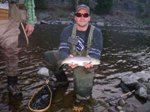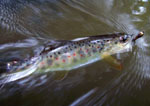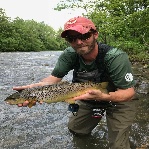
West Branch of Delaware River, PA/NY border. 6/26

If you're fishing way up on the branch, the slime is a little worse. I don't think that I had to clean my fly off between Balls and Shehawken but when I went up to the 17 bridge, every 2 casts had slime on the fly.

They were being bast*rds about the sulphurs. I showed them 6 different patterns. They would follow, nose the fly or bail at the last second. The floating olive nymph I was using was getting slashed at or taken regularly. If I would have pulled my boat over and actually nymphed the riffs rather than drag my rig down as I floated through, I'm thinking I could have taken 30-40 fish. I had fish on every couple of minutes when I nymphed..... but I hate nymphing. LOL.

 
My secret weapon on the West Branch this year has been frog's fanny. Especially when the slime is bad. The fish were very selective on the sulphurs and they wanted a high riding comparadun. I know it is an oxymoron because comparaduns ride low but I would apply the fanny every 3 or four casts and when the fly was riding high and drag free they would take. We tie them with yellow biots very sleek and they seem to work. Same idea with the spinner.

Everyone that floated past us told us how tough the fishing was on the sulphurs. I found you have to target one fish and pound the feeding lane over and over, to get a take. It was difficult to do with so many fish rising but it is a timing game and we had great success targeting one fish at a time.

We had some good success in the gamelands fishing midges and small olives in the morning and it was nice to fish without the slime.
 
Slime not snot. It comes from the reservoir. It has been bad in the upper west. Once you get to the gamelands its not a problem. If they would release some more water from the reservoir it would really help to move that stuff out of there.
 
sun,

The "slime" is basically an algae. I can't tell you if it comes from low flows allowing it to grow along the river banks, if it forms in the spillway during low flows or if it comes from the shoeline in the lake and gets into the river. I can tell you that if it rains hard and the wind blows, it will send all of that algae over the dam and the river is a green mess for a while afterwards.

I don't think there's been any massive 'blooms' of didymo on the WB. I've seen it on the upper east and was told by a local guide that near Harvard it's completely covering the streambed and is 2-3" thick. That infestation is only over a short section of the stream though. My understanding is that the unusally warm water temps in the lower east and main river may have killed off much of the didymo in those areas. Can't say for sure, I'm not a biologist but I do play one on TV.
 
Back
Top