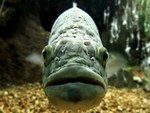
The video is nice and reinforces the perspectives made by the late Bob Butler and Bob Bachman and others employed, that were observations made from a enclosed tower on the left bank of a stretch of Spruce Creek. Much study was done during the 1970s.
Wild trout behave as described in the video. They almost just put a chin on a rock and minimize energy loss.
And they watch for food looking materials floating through the water.
The alpha trout take the best positions depending on the food availability. E.g., if it's blue winged olive emerging it will have different best location for feeding. If it's a green drake emergence the best positions in the water column and the "stretch" or "pool" are different.
But dominant trout will occupy the best, most energy efficient feeding locations.
Of course the time of day and the amount of light penetrating are causes for dominance by the larger trout to occupy safe, shadowed locations within the flow.
Stocked trout, on the other hand behave differently.
They have been specifically bred to have a raceway behavior that has them continuously swimming in pods facing upstream. Bank walking doesn't seem to intimidate them much at all. They are used to energy waves hitting them from people and feeders up and down a raceway.
(In Pennsylvania, wild trout were an initial attempt for production-raising trout for stocking, but the wild trout didn't adapt to raceways and were not as tolerant of people being near. They constantly sought shade. This was told to me in the late 1980s by a biologist who was involved with the 1930s projects. He said the flood of 1936 changed everything - the initial hatcheries flooded and a different strategy was followed.
Domesticated bred trout were imported from other states where selective breeding for raceway production was already being done. For example, rainbow trout were strongly selected for food fish and raceway behavior. That's how palomino rainbows were produced. They were imported into Pennsylvania for raceway high production.)
Wild trout constantly chase the stocked trout away. The hatchery breeds don't really seem to care. That significantly degrades the health of the wild trout trying to defend their territories.
When the stocked trout are gone, the surviving wild trout are not in the best shape for surviving through tough times.
As far as being affected by loud noises, years back I fished Stony Creek which flows east to west in the long valley on the northern, other side of the Ft. Indiantown Gap firing range. It was a day when the range was being heavily used.
They were all native brookies in Stony at the stretch and time we fished. Every time a blast from the range rocked the mountain ridge they all darted for cover.
It really made for a poor outing, but not as much of a waste of time because it taught us that loud noise and ground rumbling will cause trout to tense up and hide!
But even a shadow of a great blue heron coming over the water will cause wild trout to hide.
Experience is that bank walking does send vibrations via the ground of the banks and adjacent flood plain. Those waves of energy invoke reaction. Just walking along a bank of the stream will be felt by the lateral lines; not just the weight of the walker, but the rhythm of the walking and distance from the stream bank. The changing of the energy waves is felt by the trout.
If they become aware of waves of energy that are consistent and coming toward the fish, they will stop feeding and take positions within the flow that provide the best and quickest routes to safety.
They are on alert and with seeming anxiety awaiting triggers to move upstream or down, or just remain in that position and relax when the sense of danger is gone.
They may be visible but not in the mental state for feeding.
Hatchery trout do not react the same.
Personally, I approach wild trout streams by staying far back on the flood plain, parallel, but far back. Taking short steps and few at a time. Intermittently. A few steps then stop. Then a few steps and stop.
Hiding behind trees to block noise and visibility being noticed by the trout.
Watching and studying the flow and its flood plain and banks, looking for feeding fish, most likely locations and spots to approach.
Not watching the clock.
I also try to stay below the end of the pool when approaching. Strategizing. Seeking an approach and position where waves of energy will hopefully not travel upstream, but rather be nullified by the rocks and shallows below the end of the pool. Then cast upstream, slowly fishing the tail end and then working upstream.
If trout at the tail end of the pool are scared they will zip to the top of the pool and trigger the other fish to seek shelter.
Hook one at the end of the of the pool and prevent it from going upstream if possible. If possible, release the tail-end catch into the top of the pool downstream. Otherwise, they will zip upstream and disturb the rest of the population in the pool.
The flood plain distance and approach is just something that I learned for use in the attempt to become part of the natural environment. The goal is to imitate a nonthreatening mammal - squirrel going from tree to tree; deer slowly feeding and heading toward a shallow end of pool for crossing.
Entering quietly and secretly into the "tunnel" of world surrounding streams seems to not only help improve success in hooking trout, but can also provide an internal feeling of being part of nature.
Let nature decide opportunities and strategies.
It's always a different game!
Hope this is helpful.