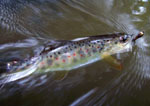
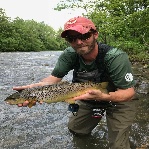
Speciation of invasive fishes, a possibly controversial new species description, which I’d imagine will cause some “discussion”, not least on its validity. 𝑆𝑎𝑙𝑚𝑜 𝑒𝑝𝑖𝑚𝑜𝑙𝑜𝑠, a new species of brown trout, is described from Spruce Creek, Pennsylvania, USA. In this study, the author explores two non-native, sympatric species of 𝑆𝑎𝑙𝑚𝑜 found in Spruce Creek, Pennsylvania, documenting the discovery of 𝑆𝑎𝑙𝑚𝑜 𝑒𝑝𝑖𝑚𝑜𝑙𝑜𝑠, a new species coexisting with 𝑆𝑎𝑙𝑚𝑜 𝑡𝑟𝑢𝑡𝑡𝑎, and presents evidence of their morphological divergence.
Open-access - https://www.tandfonline.com/doi/full/10.1080/24750263.2025.2556324
𝗥𝗲𝘀𝗲𝗮𝗿𝗰𝗵 𝗧𝗶𝘁𝗹𝗲
Speciation of invasive fishes
𝗖𝗶𝘁𝗮𝘁𝗶𝗼𝗻
Stauffer, J. R., Jr. (2025). Speciation of invasive fishes. The European Zoological Journal, 92(1), 1159–1170. https://doi.org/10.1080/24750263.2025.2556324
𝗔𝗯𝘀𝘁𝗿𝗮𝗰𝘁
Intentionally introduced plants and animals are in effect founder populations, 𝑠𝑒𝑛𝑠𝑢 Mayr. Since the Middle Ages, fishes have been introduced both purposefully and unintentionally and subsequently have established viable populations. Certainly, invasive species have caused the extinction/extirpation of native species and ecosystem structuring. Many studies have shown that invasive species can evolve rapidly, adapting to new environments through a combination of phenotypic plasticity and genetic changes, potentially leading to the formation of new species. Given the global scale of the introduction of fishes, understanding the processes of adaptation and speciation within these founder populations is critical.
In this study, I explore two non-native, sympatric species of 𝑆𝑎𝑙𝑚𝑜 found in Spruce Creek, Pennsylvania, documenting the discovery of 𝑆𝑎𝑙𝑚𝑜 𝑒𝑝𝑖𝑚𝑜𝑙𝑜𝑠, a new species coexisting with 𝑆𝑎𝑙𝑚𝑜 𝑡𝑟𝑢𝑡𝑡𝑎, and present evidence of their morphological divergence. Detailed morphological and meristic analyses revealed clear distinctions between the two populations, supporting reproductive isolation and divergence.
This case provides insights into the processes of speciation in invasive species, highlighting the evolutionary potential of founder populations in novel environments and their impact on biodiversity and conservation.
𝗘𝘁𝘆𝗺𝗼𝗹𝗼𝗴𝘆
𝐸𝑝𝑖𝑚𝑜𝑙𝑜𝑠 is a noun in apposition, from the Greek, meaning invader.
𝗣𝗵𝗼𝘁𝗼 𝗖𝗿𝗲𝗱𝗶𝘁
𝑆𝑎𝑙𝑚𝑜 𝑒𝑝𝑖𝑚𝑜𝑙𝑜𝑠, Penn State University 13,458, 161.1 mm SL; USA; Pennsylvania, Centre County, Spruce Creek, 40.7043–77.9734.
Copyright © 2025 the Author(s). Published in The European Zoological Journal. This paper is released under a Creative Commons Attribution 4.0 International (CC-BY-4.0) licence. https://creativecommons.org/licenses/

 www.facebook.com
Open-access - https://www.tandfonline.com/doi/full/10.1080/24750263.2025.2556324
𝗥𝗲𝘀𝗲𝗮𝗿𝗰𝗵 𝗧𝗶𝘁𝗹𝗲
Speciation of invasive fishes
𝗖𝗶𝘁𝗮𝘁𝗶𝗼𝗻
Stauffer, J. R., Jr. (2025). Speciation of invasive fishes. The European Zoological Journal, 92(1), 1159–1170. https://doi.org/10.1080/24750263.2025.2556324
𝗔𝗯𝘀𝘁𝗿𝗮𝗰𝘁
Intentionally introduced plants and animals are in effect founder populations, 𝑠𝑒𝑛𝑠𝑢 Mayr. Since the Middle Ages, fishes have been introduced both purposefully and unintentionally and subsequently have established viable populations. Certainly, invasive species have caused the extinction/extirpation of native species and ecosystem structuring. Many studies have shown that invasive species can evolve rapidly, adapting to new environments through a combination of phenotypic plasticity and genetic changes, potentially leading to the formation of new species. Given the global scale of the introduction of fishes, understanding the processes of adaptation and speciation within these founder populations is critical.
In this study, I explore two non-native, sympatric species of 𝑆𝑎𝑙𝑚𝑜 found in Spruce Creek, Pennsylvania, documenting the discovery of 𝑆𝑎𝑙𝑚𝑜 𝑒𝑝𝑖𝑚𝑜𝑙𝑜𝑠, a new species coexisting with 𝑆𝑎𝑙𝑚𝑜 𝑡𝑟𝑢𝑡𝑡𝑎, and present evidence of their morphological divergence. Detailed morphological and meristic analyses revealed clear distinctions between the two populations, supporting reproductive isolation and divergence.
This case provides insights into the processes of speciation in invasive species, highlighting the evolutionary potential of founder populations in novel environments and their impact on biodiversity and conservation.
𝗘𝘁𝘆𝗺𝗼𝗹𝗼𝗴𝘆
𝐸𝑝𝑖𝑚𝑜𝑙𝑜𝑠 is a noun in apposition, from the Greek, meaning invader.
𝗣𝗵𝗼𝘁𝗼 𝗖𝗿𝗲𝗱𝗶𝘁
𝑆𝑎𝑙𝑚𝑜 𝑒𝑝𝑖𝑚𝑜𝑙𝑜𝑠, Penn State University 13,458, 161.1 mm SL; USA; Pennsylvania, Centre County, Spruce Creek, 40.7043–77.9734.
Copyright © 2025 the Author(s). Published in The European Zoological Journal. This paper is released under a Creative Commons Attribution 4.0 International (CC-BY-4.0) licence. https://creativecommons.org/licenses/
NANFA - North American Native Fishes Association | Speciation of invasive fishes, a possibly controversial new species description, which I’d imagine will cause some “discussion”, not least on it... | Facebook
Speciation of invasive fishes, a possibly controversial new species description, which I’d imagine will cause some “discussion”, not least on its validity. *𝑆𝑎𝑙𝑚𝑜 𝑒𝑝𝑖𝑚𝑜𝑙𝑜𝑠, a new species of brown...
www.facebook.com