First trip out to the Tully this year, fished below the DHALO in the standard regulation water. The flow was about 275, nice slight green tint, didnt get a temp while fishing but the guages tell me it was between 55 and 60 degrees. Fished between 3pm and dark.
Good insect activity, caddis here and there earlier in the day and then steady from about 6pm on, the only one i managed to capture was size 16 with mottled wings and a greyish tan body. Midges as well, heavier after 6 and craneflies around in good numbers at time too. A few mayflies here and there which i never identified. I expected to see a lot more surface activity than i did.
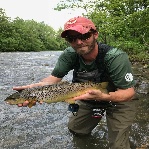
Brought two fish to hand, one, a nice fat healthy rainbow in the 15 inch range on a white zebra midge not too long after i started fishing then a cookie cutter brown on a pheasant tail a couple hours before dark.
Found a small pod of risers close to dark, fooled what felt like a nice fish on a tan cdc caddis but he shook loose after a putting a nice bend in the rod briefly. I think the risers were mostly keyed on some type of emerging caddis which i never identified. They were in a tough spot and were pretty picky
Been trying to work on my nymph game and caught both fish that way without using an indicator on a style of leader that was a little different than what i had been using so i had fun and learned some new things, got to fish with my Dad, it was a fun day
Good insect activity, caddis here and there earlier in the day and then steady from about 6pm on, the only one i managed to capture was size 16 with mottled wings and a greyish tan body. Midges as well, heavier after 6 and craneflies around in good numbers at time too. A few mayflies here and there which i never identified. I expected to see a lot more surface activity than i did.
Brought two fish to hand, one, a nice fat healthy rainbow in the 15 inch range on a white zebra midge not too long after i started fishing then a cookie cutter brown on a pheasant tail a couple hours before dark.
Found a small pod of risers close to dark, fooled what felt like a nice fish on a tan cdc caddis but he shook loose after a putting a nice bend in the rod briefly. I think the risers were mostly keyed on some type of emerging caddis which i never identified. They were in a tough spot and were pretty picky
Been trying to work on my nymph game and caught both fish that way without using an indicator on a style of leader that was a little different than what i had been using so i had fun and learned some new things, got to fish with my Dad, it was a fun day