Gorosaurus
Member
- Joined
- May 6, 2011
- Messages
- 375
Trindle Spring Run is a little-publicized spring creek running through a very populated and commercial center near Mechanicsburg. Although it originates about 6 miles from the Conodoguinet, the 'fishable' portion, where it last emerges from underground, is almost a mile long. I have attempted to fish it once before, but returned defeated with only one possible trout sighting.
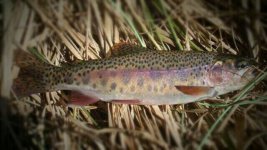
Trindle is special because all stocking of the stream by public or private parties stopped in 1992 because a viable wild population of rainbow trout was noticed.
A 2009 survey found that around 200 fish were within this stretch:
http://fishandboat.com/images/fisheries/afm/2009/7x11_20trindle.htm
The most trout-friendly water, in my opinion, appears to be near the mouth by an old, abandoned spring house.

The sky was clear blue, and the water was gin clear. I was on the water from about 7:45am - 12:30.
The water was VERY cold. I did not have a thermometer with me, but I would estimate the temperature to be around 58. It was dramatically colder than the Connie and my expectations! I would like to return with a working thermometer to get a real number.

There is a lot of vegetation in Trindle Run. The stream itself flows along the right side of this picture and averages about 2 feet deep when the stream width is under 5 feet. When it widens to 10 feet, that drops to 1 foot or less.

It's rather beautiful for being surrounded by population. So far I have seen no evidence of trout.

Nature abounds around this stream! It is absolutely important to the local wildlife- I saw more creatures around this small, urban stream than I would find in the state game lands of the area. It is clearly one of the few refuges for a large amount of animals. This is a black snake that I found near the upper reaches of the run.

At this turn in the stream I saw two fawns cross after two adult female deer. One of the fawns is in the picture, but even I can't clearly see it because of the lighting.

These 'meadows' are strewn about the upper reaches of the run. Not far after the Carlisle Pike does the stream turn treacherous. I encountered mud that was very much like quicksand. It would envelop entire legs, and each step only dug you equally deep. Eventually I had to crawl out on my hands and knees. This occurred 2 or 3 times during the trip up.
There are also trees that have fallen across the stream forcing fishermen to either crawl on their belly or walk through the thicket on the sides of the stream. This was my first time using a new pair of waders and, after a few thorn scares, I found it was easiest to try and go below any trees in the one or two feet between the water and the tree. Spider webs when trying this were more than annoying.

More whitetail! This one looked very young. The stream splits into two, and I followed the heaviest flow for another 200 or so yards until it essentially was just water flowing from rocks, not far beyond this picture. This was a very young deer, and after he scampered away I also saw a muskrat that swam right past my legs. There were a few long-rotted 'bridges' that people had built in the upper reaches. They were probably a part of a nature walk or birding trail and a football field in any direction took you through the trees and into someone's yard.

After turning around, I was exhausted from trudging through so much mud and muck. I walked as much as I could along the stream, but it was pretty often that the water was the easiest route (and with the fewest spiders)!

On the way back I made sure to pick up rocks and check on the invertebrates. Perhaps this could help shed some light onto why the stream seemed devoid of trout.
All-in-all, I saw 2 or 3 trout during my day. One of them nearly took my tan caddis, but turned around quickly. I saw another fish with bright red coloring hide away at one point. I initially thought it was a very vibrant brookie, but that's probably conditioning. If that was a rainbow, that would be among the brightest red marks I have ever seen in pictures or person.
The bottom half of the run has ample amounts of scud. Unfortunately I only had a few in my pack, and none in the correct size. I found one that was a size 14, the rest were very small size 18s and were very prominent. I did not find any mayfly nymphs, but small brown mayflies (tricos, I believe) caught in spider webs show that they are largely in the area and probably not just in the Conodoguinet.
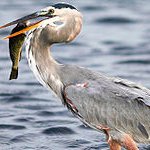
If you are looking to try this stream yourself, I recommend that you have a healthy adventurous spirit and are more interested in sights than fish. Use tiny scud patterns, grey or chartreuse, and only go as far as the Carlisle Pike. More than 200 yards past that I only found one single scud on a rock and sighted no trout (though they are likely around, as herons were present).
Better yet-

Swing a bugger in the Connie and enjoy some wonderful bass fishing! My only fish of the day came during my trek back to the car through the Conodoguinet. There are plenty of bass and they are eager to chase a bugger.
My adventures to Trindle Run on two separate occasions have left me worried about the trout population there. I have never had such trouble encountering/scaring trout in view, let alone catching them. After a little research, I now realize that 200 trout, if that number is still relatively similar, is very few, and angling surveys will not accurately determine stream health.
Although it left me bruised, battered, and beaten on two occasions, I do think I'll return some day and try again. It just feels very defeating to spend all day looking and not see but one or two trout on a class-A stream.
But wow, what a pretty little gem! Anyone ever have luck there? There's also a similar stream on the other side of the Susquehanna that I'd like to try again, very similar in difficulty and setting.
Trindle is special because all stocking of the stream by public or private parties stopped in 1992 because a viable wild population of rainbow trout was noticed.
A 2009 survey found that around 200 fish were within this stretch:
http://fishandboat.com/images/fisheries/afm/2009/7x11_20trindle.htm
The most trout-friendly water, in my opinion, appears to be near the mouth by an old, abandoned spring house.
The sky was clear blue, and the water was gin clear. I was on the water from about 7:45am - 12:30.
The water was VERY cold. I did not have a thermometer with me, but I would estimate the temperature to be around 58. It was dramatically colder than the Connie and my expectations! I would like to return with a working thermometer to get a real number.
There is a lot of vegetation in Trindle Run. The stream itself flows along the right side of this picture and averages about 2 feet deep when the stream width is under 5 feet. When it widens to 10 feet, that drops to 1 foot or less.
It's rather beautiful for being surrounded by population. So far I have seen no evidence of trout.
Nature abounds around this stream! It is absolutely important to the local wildlife- I saw more creatures around this small, urban stream than I would find in the state game lands of the area. It is clearly one of the few refuges for a large amount of animals. This is a black snake that I found near the upper reaches of the run.
At this turn in the stream I saw two fawns cross after two adult female deer. One of the fawns is in the picture, but even I can't clearly see it because of the lighting.
These 'meadows' are strewn about the upper reaches of the run. Not far after the Carlisle Pike does the stream turn treacherous. I encountered mud that was very much like quicksand. It would envelop entire legs, and each step only dug you equally deep. Eventually I had to crawl out on my hands and knees. This occurred 2 or 3 times during the trip up.
There are also trees that have fallen across the stream forcing fishermen to either crawl on their belly or walk through the thicket on the sides of the stream. This was my first time using a new pair of waders and, after a few thorn scares, I found it was easiest to try and go below any trees in the one or two feet between the water and the tree. Spider webs when trying this were more than annoying.
More whitetail! This one looked very young. The stream splits into two, and I followed the heaviest flow for another 200 or so yards until it essentially was just water flowing from rocks, not far beyond this picture. This was a very young deer, and after he scampered away I also saw a muskrat that swam right past my legs. There were a few long-rotted 'bridges' that people had built in the upper reaches. They were probably a part of a nature walk or birding trail and a football field in any direction took you through the trees and into someone's yard.
After turning around, I was exhausted from trudging through so much mud and muck. I walked as much as I could along the stream, but it was pretty often that the water was the easiest route (and with the fewest spiders)!
On the way back I made sure to pick up rocks and check on the invertebrates. Perhaps this could help shed some light onto why the stream seemed devoid of trout.
All-in-all, I saw 2 or 3 trout during my day. One of them nearly took my tan caddis, but turned around quickly. I saw another fish with bright red coloring hide away at one point. I initially thought it was a very vibrant brookie, but that's probably conditioning. If that was a rainbow, that would be among the brightest red marks I have ever seen in pictures or person.
The bottom half of the run has ample amounts of scud. Unfortunately I only had a few in my pack, and none in the correct size. I found one that was a size 14, the rest were very small size 18s and were very prominent. I did not find any mayfly nymphs, but small brown mayflies (tricos, I believe) caught in spider webs show that they are largely in the area and probably not just in the Conodoguinet.
If you are looking to try this stream yourself, I recommend that you have a healthy adventurous spirit and are more interested in sights than fish. Use tiny scud patterns, grey or chartreuse, and only go as far as the Carlisle Pike. More than 200 yards past that I only found one single scud on a rock and sighted no trout (though they are likely around, as herons were present).
Better yet-
Swing a bugger in the Connie and enjoy some wonderful bass fishing! My only fish of the day came during my trek back to the car through the Conodoguinet. There are plenty of bass and they are eager to chase a bugger.
My adventures to Trindle Run on two separate occasions have left me worried about the trout population there. I have never had such trouble encountering/scaring trout in view, let alone catching them. After a little research, I now realize that 200 trout, if that number is still relatively similar, is very few, and angling surveys will not accurately determine stream health.
Although it left me bruised, battered, and beaten on two occasions, I do think I'll return some day and try again. It just feels very defeating to spend all day looking and not see but one or two trout on a class-A stream.
But wow, what a pretty little gem! Anyone ever have luck there? There's also a similar stream on the other side of the Susquehanna that I'd like to try again, very similar in difficulty and setting.