No problem. I'm very interested in the culvert removal topic. If someone starts a thread on that, I'd be happy to pitch in.That’s fair, sorry Troutbert.

You are using an out of date browser. It may not display this or other websites correctly.
You should upgrade or use an alternative browser.
You should upgrade or use an alternative browser.
The Good, the Bad, and the Unexpected
- Thread starter jifigz
- Start date
I know I’m being feisty and pissing you off troutbert, but I’m not trying to. Not at all.
By the way. FYI.
View attachment 1641250967
☝️ Here is a screenshot of my Private message inbox with suggestions of any brookie creeks that any stream projects have improved.
Turns out I’m not the only one that couldn’t think of any. In fact no one messaged me even one example. I doubt they will. I’m not sure it exists.
I don't mind if you make yourself look bad. Do that all you want.
5footfenwick
Well-known member
- Joined
- Dec 20, 2006
- Messages
- 712
Well whenever you want to take a break, I’ll take overI don't mind if you make yourself look bad. Do that all you want.
Last edited:

I've never seen LWD projects. The streams I'm referring to are all natural I do believe.
lycoflyfisher
Well-known member
- Joined
- Apr 15, 2014
- Messages
- 1,719
Please provide photographic evidence or quantifiable evidence to prove troutbert wrong.Pennsylvania, logging has destroyed our trout populations. I thought you would have heard about it by now.
I want to believe you but my inbox lacking even a single example of even a single stream that would prove your point is still empty.
No it is a stream with the trees cut down along the bank. It isn’t a forest or natural.
No actually this is bad. Especially for trees. Artificially Forced hourglassing of genetics always results in an inferior species.
Well how would we know if you chopped them all down who was gonna make it and who wasn’t?
Name a single light thinning. Just one. One creek. This is completely untrue. Every single thing you say in this last paragraph is factually untrue. The people doing these projects are very unaware. Very uneducated. They cut down hemlocks and they cut down the trees directly on the bank in all of the projects I have seen. Way too many trees. Everything you said is incorrect and untrue of North Central PA Large woody projects in my experience. Just my experience.

5footfenwick
Well-known member
- Joined
- Dec 20, 2006
- Messages
- 712
I think a simple google search and ten seconds of your life would solve that for you. (As Mike would say) Common sense would tell you that all these people complaining about how many trees are in the creek probably aren’t lying. So everyone on the internet and everyone on this site is lying about there being too many trees. But Troutbert is the only one telling the truth about the light thinning? Why would a DCNR chainsaw operator who is worried about sleeping with his coworker Jenny on lunch break be educated on woody debris projects? Why would he be extra aware? Every single project is lots of Hemlocks and too close to the bank. Why would all of us lie and only Troutbert tell the truth? Come on man. It doesn’t bother you he hasn’t been able to cite a single example? For like 6 hours now and still counting? Of any stream? Of anything factual or true. That doesn’t make you wanna call him out? Why?? What good comes from trying to pull the wool over everyone’s eyes? LWD projects harm fisheries. They harm them bad. Hell that’s all we talked about and learned about in college. 23 years ago we knew LWD projects are a hoax and a scam. I’m just having fun and goofing around. This is what we talked about a few decades ago. So it’s fun to reminisce.Please provide photographic evidence or quantifiable evidence to prove troutbert wrong.
I mean what do we all think that cutting down stream side trees in lesser numbers is the antivenom that will cure us from the venom of cutting them all down? It isn’t even logical or possible for him to be right. If he was he would have proved it hours ago and every creek in Pa would have 20” brook trout for the last 100 years. But since none of that has ever happened………… it simply isn’t true. Troutbert has no problem correcting others when they are uneducated. So why is it a big deal if I correct him when he is completely uneducated on a topic?
JeffP
Well-known member
Just let the streams be or if need be, let nature take over. Plant trees. Fight for clean water. We are only a snapshot in history. And it's not all about the fishing.
lycoflyfisher
Well-known member
- Joined
- Apr 15, 2014
- Messages
- 1,719
You clearly have an axe to grind. Straight up calling someone a liar when your own posts contain substantial falsehoods is brazen.I think a simple google search and ten seconds of your life would solve that for you. (As Mike would say) Common sense would tell you that all these people complaining about how many trees are in the creek probably aren’t lying. So everyone on the internet and everyone on this site is lying about there being too many trees. But Troutbert is the only one telling the truth about the light thinning? Why would a DCNR chainsaw operator who is worried about sleeping with his coworker Jenny on lunch break be educated on woody debris projects? Why would he be extra aware? Every single project is lots of Hemlocks and too close to the bank. Why would all of us lie and only Troutbert tell the truth? Come on man. It doesn’t bother you he hasn’t been able to cite a single example? For like 6 hours now and still counting? Of any stream? Of anything factual or true. That doesn’t make you wanna call him out? Why?? What good comes from trying to pull the wool over everyone’s eyes? LWD projects harm fisheries. They harm them bad. Hell that’s all we talked about and learned about in college. 23 years ago we knew LWD projects are a hoax and a scam. I’m just having fun and goofing around. This is what we talked about a few decades ago. So it’s fun to reminisce.
I mean what do we all think that cutting down stream side trees in lesser numbers is the antivenom that will cure us from the venom of cutting them all down? It isn’t even logical or possible for him to be right. If he was he would have proved it hours ago and every creek in Pa would have 20” brook trout for the last 100 years. But since none of that has ever happened………… it simply isn’t true. Troutbert has no problem correcting others when they are uneducated. So why is it a big deal if I correct him when he is completely uneducated on a topic?
People constantly complain about large wood in Clarks Creek, which is from natural hemlock mortality. You are about the only one complaining about man added large wood.
I encourage you to watch this presentation. If you dont have 20 minutes to educate yourself, then from 13min on its all about brook trout response to large wood. Similar reaults are being observed in Pa.

CinnamonJoe
Well-known member
So, I don't think I have a dog in this fight, aside from my own observations over the last couple years on this LWD stuff.
Simply stated: too much slash can create frog water real fast.
LWD as a mangement tool right now is 'trendy', because it checks all the buzzword boxes, on paper anyways. In the right situation, its probably great, but not all, or even most. IMHO.
I have not been able to get out much yet this spring, but I will try to remember to take some pics of examples of 'good' and 'bad' LWD projects.
Oh, and yes, I have read the articles and watched some videos documentaries on LWD management.
Joe
Simply stated: too much slash can create frog water real fast.
LWD as a mangement tool right now is 'trendy', because it checks all the buzzword boxes, on paper anyways. In the right situation, its probably great, but not all, or even most. IMHO.
I have not been able to get out much yet this spring, but I will try to remember to take some pics of examples of 'good' and 'bad' LWD projects.
Oh, and yes, I have read the articles and watched some videos documentaries on LWD management.
Joe
Does anyone have a list of streams and sections in Pa where this has been done? Dates of the work would be helpful also.
If the work is mainly done on mountain tribs with decent gradient, I don’t see how much frog water would be created. I watched the videos and this seemed like a successful experiment. What’s wrong with trying it on other streams and seeing if it can be replicated. It’s pretty apparent Pennsylvania needs to make some changes. Start with stopping the current stocking regimen would be first in my mind.
If the work is mainly done on mountain tribs with decent gradient, I don’t see how much frog water would be created. I watched the videos and this seemed like a successful experiment. What’s wrong with trying it on other streams and seeing if it can be replicated. It’s pretty apparent Pennsylvania needs to make some changes. Start with stopping the current stocking regimen would be first in my mind.
I'd also like to have a list. I've seen some of them, but I'd like to go see more.Does anyone have a list of streams and sections in Pa where this has been done? Dates of the work would be helpful also.
If the work is mainly done on mountain tribs with decent gradient, I don’t see how much frog water would be created. I watched the videos and this seemed like a successful experiment. What’s wrong with trying it on other streams and seeing if it can be replicated. It’s pretty apparent Pennsylvania needs to make some changes. Start with stopping the current stocking regimen would be first in my mind.


I don't think fishing data is the best indicator. What else has happened to these creeks in the last 38 years?Just my own fishing data for the last 38years.
Belly up =got worse , the creek is not worth fishing. Adult fish are gone. Browns have now taken over Etc. etc. etc. in my opinion belly up is all of these and that is what I am describing. The only creeks that have gotten worse in my 5-7 county area are the ones with grant money, Tu. or dcnr projects on them. The only ones. And none of them were headed downhill until the project started.
Yes a culvert pipe can be and is often the entire fully maturing and adult sized population of brook trout in an entire stream. Without it you have often destroyed the entire stream. No wintering hole. No summer hole. No protection from drought. No protection from predators.
Trust me I wish it wasn’t so. But it’s every creek ruined they do it on that I know of. All of therm.
@hemlock what brook trout streams do you know of in north central Pa that have benefited from culvert pipe removal?
Feel free to Dm me
All of the culvert replacement projects I am aware of are on first order streams. They allowed some fish movement but they didn't open up a brook trout paradise to brown trout. The brown trout were already there or the brook trout fishery wasn't great. Kind of off topic but I will add I am totally in favor of adding intentional barriers to prevent movement of brown trout. But I'd like to see them on second/third/fourth order streams. I won't get into the weeds on that.
I'd argue if a culvert is providing the only habitat features that you listed, the creek could probably use some LWD.
Hopefully some surveys will be done where these LWD projects have taken place in PA to prove benefit or not. I personally can not prove anything, I have no data. I won't come on here and claim a fishery has collapsed or boomed. I will say that I trust the data from other projects where LWD was used and I do believe that there used to be natural LWD in PA streams. I can't imagine that humans came in, altered the forests and streams and somehow made brook trout fishing better because "LWD is bad!".
lycoflyfisher
Well-known member
- Joined
- Apr 15, 2014
- Messages
- 1,719
Little Arnot Large Wood Reintroduction_Hayes
 pacleanwateracademy.remote-learner.net
Here is a presentation about some monitoring of a large wood addition in the ANF. Worth noting that this project also involved removal of a significant berm restricting floodplain access so this is more intensive work than most of the chop and drop large wood addition work that is happenning.
Below is part of the summary of the presentation
"Following restoration in August 2021, the lateral extent of hyporheic zone remained greatest during wet winter and spring months, but increased to as much as 30 m from the channel. Hyporheic flux rates from the stream to the adjacent alluvial aquifer remained high 0.23 m3 s 1) during the spring months, when water levels in the stream are high. During the driest period of the year (August - October), water levels are 0.2m higher across the valley and hyporheic exchange rates increased from 0 to 0.19m3 s-1 Because of the bedrock-alluvium architecture, groundwater gradients continue to be greatest down the axis of the valley and down-valley flow estimated to be 3 to 5 times greater than lateral flow rates. However, increased lateral hyporheic exchange during the hot, dry summer and fall months has consistently decreased stream temperatures during the summer by 2-4°C for the past five years. Side channels, now reconnected and flowing year round, provide refugia for native brook trout during spring floods and spawning habitat in the fall."

Trapshooter
Active member
- Joined
- Mar 22, 2017
- Messages
- 283
How come I don't hear of planting hemlocks. Do we need a Johnny Appleseed's?
wildtrout2
Well-known member
New/young eastern hemlock plantings would likely be just as susceptible to wolly adelgid (aphids), which is what's killing them. Just a thought.How come I don't hear of planting hemlocks. Do we need a Johnny Appleseed's?
Yep, we are probably going to lose all hemlocks at some point, which would be very similar to our ash trees, or American chestnuts, a lot of our elm trees, etc.New/young eastern hemlock plantings would likely be just as susceptible to wolly adelgid (aphids), which is what's killing them. Just a thought.
Lots of oaks are dying, too. If the Asian longhorn beetle ever got firmly rooted in our forests, they would decimate the maples. Our forests aren't healthy, folks, but some trees will fill in their places and carryon.
wildtrout2
Well-known member
We are also seeing some of our American beech trees declining because of Beech Leaf Disease. It's a tiny worm that attacks the developing leaf buds. I've seen a number of trees that have been effected by this.
You're right. I forgot beech. Nearly every beech I've seen in the last few years has been blighted by beech leaf disease. It's caused by a nematode.We are also seeing some of our American beech trees declining because of Beech Leaf Disease. It's a tiny worm that attacks the developing leaf buds. I've seen a number of trees that have been effected by this.
wildtrout2
Well-known member
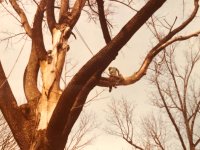
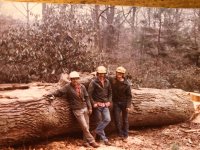
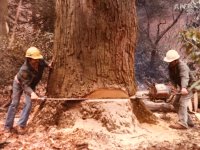
I remember way back in the mid 70's early 80's, when I was a climber, we took down a LOT of American elm trees due to Dutch Elm Disease (bark beetles). It was sad to see them dying at the rate that they were back then. Many of them were very large, iconic specimens, some of which were on the Swarthmore College campus, which is/was somewhat of an arboretum.
I'm the guy in the tree, the biggest poplar I ever climbed, also at Swarthmore. It had been struck by lightning (you can see the crack), so it had to be removed. We used an old Disston two man chainsaw to start the wedge cut. Ahh, the good ole days.
I'm the guy in the tree, the biggest poplar I ever climbed, also at Swarthmore. It had been struck by lightning (you can see the crack), so it had to be removed. We used an old Disston two man chainsaw to start the wedge cut. Ahh, the good ole days.
Attachments
Last edited: