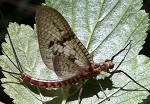
Spring Creek, Centre County, 8/1/24

I don't think that there is anything special about that stretch that favors rainbows. Instead it has to do with the location where a private party introduced the wild strain rainbows. They have been spreading out from there, and probably will continue to do so.
+1, agreed
 
I remember when Benner Springs hatchery got flooded and many thousands of those rainbows were in the stream. Any repo from those or they not the right strain to reproduce?
 
I don't think that there is anything special about that stretch that favors rainbows. Instead it has to do with the location where a private party introduced the wild strain rainbows. They have been spreading out from there, and probably will continue to do so.
And who is/was that private party?
 
I would say the majority came from the flood due to Hurricane Ivan in 2004. Rainbows were everywhere and I still catch one here and there from time to time.
 
Not making accusations here, but rumor has it.... the farm that's posted downstream of the trout road bridge. They must lease it out to guides because I've seen them back there. It also has signs up about video monitoring
So was it the farm/property owners, or the guides wanting something different for their clients to catch?
 
Not that I would be surprised if they expanded their longitudinal range in Spring Ck, but there could be something about the present stretch that allows for reproduction and survival of young RT that doesn’t exist elsewhere on the stream. This was the case in a relatively short portion of the Codorus Creek special reg area for about a decade and then for some unknown reason the very substantial RT reproduction stopped, the sizable population in that short segment disappeared, and we were not finding any wild RT or maybe one or two individuals after that within a fixed location survey site that included (by chance) a portion of the RT reproduction reach.
Mike,
Doesn’t this track back to the RT female having to be in a consistent temp range for 6 months. Specifically water temps not exceeding 54 deg F are preferable for a period of at least 6 months prior to spawning and once in the redds excessive losses of eggs occur during incubation if stream temps fall below 42 deg F. I guess that is why some year classes don’t exist. Temps got too high or too low at a critical time.
 
yes, it is my understanding that the temps aren't right here. I was told (I don't know) RT that reproduce in streams around here coming from the hatchery developed to spawn in the fall like brown trout.
 
Mike,
Doesn’t this track back to the RT female having to be in a consistent temp range for 6 months. Specifically water temps not exceeding 54 deg F are preferable for a period of at least 6 months prior to spawning and once in the redds excessive losses of eggs occur during incubation if stream temps fall below 42 deg F. I guess that is why some year classes don’t exist. Temps got too high or too low at a critical time.
I guess that explains why Big Spring is so favorable for RT natural reproduction.
 
Yes, you’re on the right track with that, particularly I believe if Spring Ck RT fingerlings being described are from fall spawners. That becomes a question when private stockings are suggested in this thread as a possibility. Furthermore streams can vary in temperature characteristics over short distances in limestone settings. Streams can become thermally revitalized by the inflow of a one or more substantial springs, either visible along the riparian area or emerging from the stream bottom and their influence may not last for more than 200 m, but it’s enough to support a yr around wild trout population, including localized reproduction. There is a situation that appears to be like that for wild BT in a particular stretch of Manatawny Ck. Similarly, it’s possible that RT adults could reside in a thermally suitable (for gamete production) stretch of stream in the summer, but move in fall to sites that are better suited for reproductive purposes.
 
That's 100% accurate. Hard to believe they can make it in there with all the summertime human activity (wading, building rock dams, runoff, etc.), but they do. Personally speaking, I don't have a problem with them, as they seem to co-exist well with the wild browns. There are so few places in PA that have wild rainbows that finding a place that has them is a nice change of pace. At this point in time the native brook trout that once called Spring Creek home are a thing of the past, so enjoying the wild fish it gives us is still a treat.

Although you dint see them the wild Brooke's are everywhere! Not like they used to be no these are like your normal mountain runoffs! Basically fingerlings but they do thrive yet when the browns don't eat them! Saddest part is the catch and release of wild trout in this section of water is pretty killer on them
 
Although you dint see them the wild Brooke's are everywhere! Not like they used to be no these are like your normal mountain runoffs! Basically fingerlings but they do thrive yet when the browns don't eat them! Saddest part is the catch and release of wild trout in this section of water is pretty killer on them
In Spring? Ive fished it regularly for over a dozen years, in various sections, and never seen a brookie. I suppose there could be a small remnant population, but I suspect they may come down from small tribs
 
Aren't the small tribs basically all developed in that State College megalopolis?
 
no, but the tribs with brookies are separated from Spring Creek by inhospitable stretches of water that would prevent them from migrating to Spring creek
I would guess those coming off Tussey Mountain are those you are referring to. Any off Nittany Mountain? I remember catching a bunch in Gap Run back in the late 80's.
 
Although you dint see them the wild Brooke's are everywhere! Not like they used to be no these are like your normal mountain runoffs! Basically fingerlings but they do thrive yet when the browns don't eat them! Saddest part is the catch and release of wild trout in this section of water is pretty killer on them

I would guess those coming off Tussey Mountain are those you are referring to. Any off Nittany Mountain? I remember catching a bunch in Gap Run back in the late 80's.
Gap Run has its brookies, but before it dumps into Spring Creek it goes underground. I don’t know if they are able to get to the main stream.
 
Back
Top