(In the interest of keeping at least a nominal amount of mystery in the Age of the Internet, I went with the original spelling for this location, and hope that comment writers will do the same. Why make this report even easier to find? )
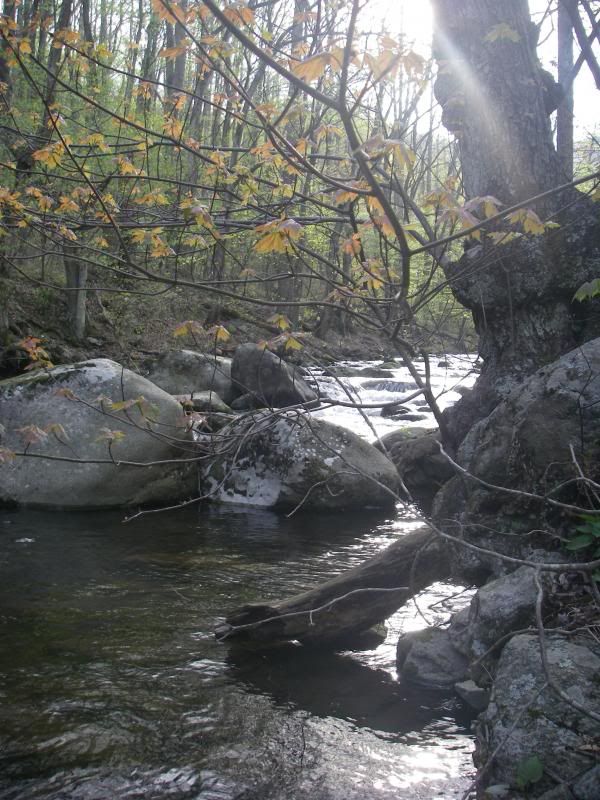
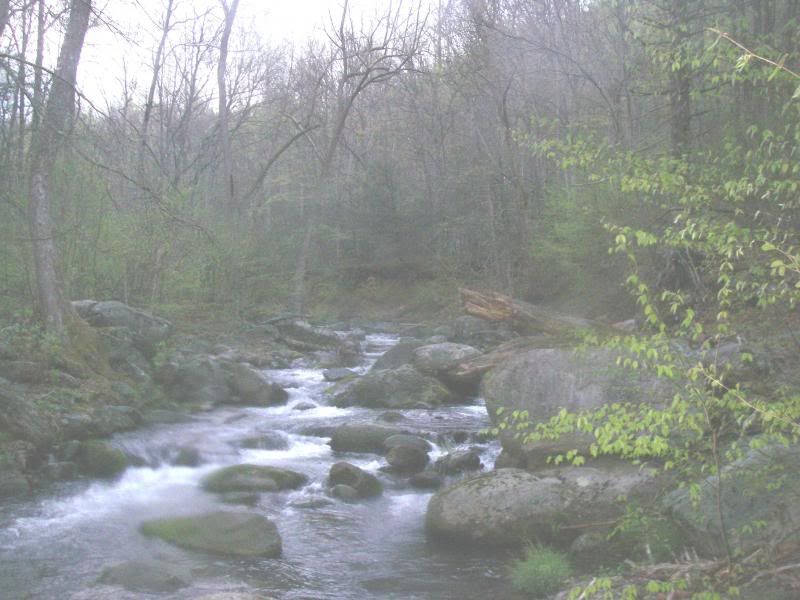
Still early spring up in the Shenandoahs. The leaves on the trees haven't filled out. In some ways, it looks almost like autumn.
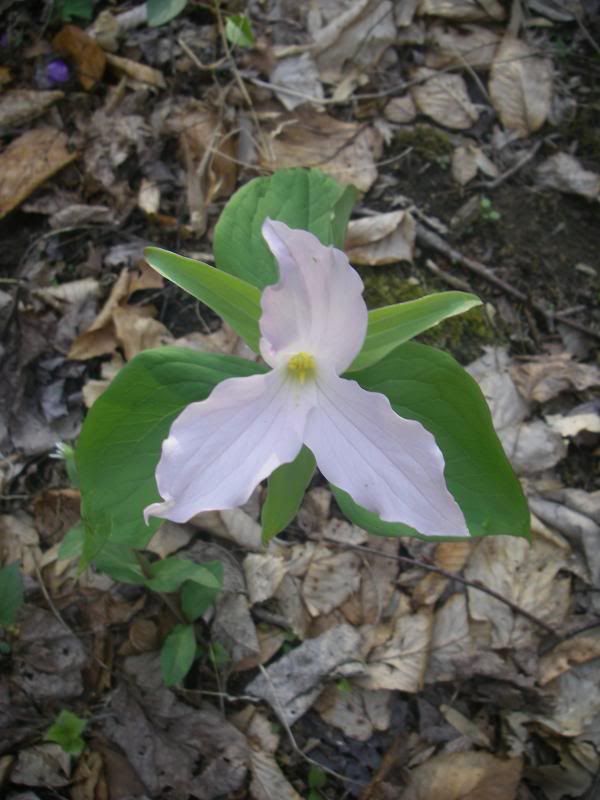
There are some spring flowers out in bloom, though.
Some people wonder why anglers prefer to fish, rather than simply being satisfied with a hike through gorgeous scenery, and looking at the flowers...well, flowers are pretty, but brook trout are cosmic.
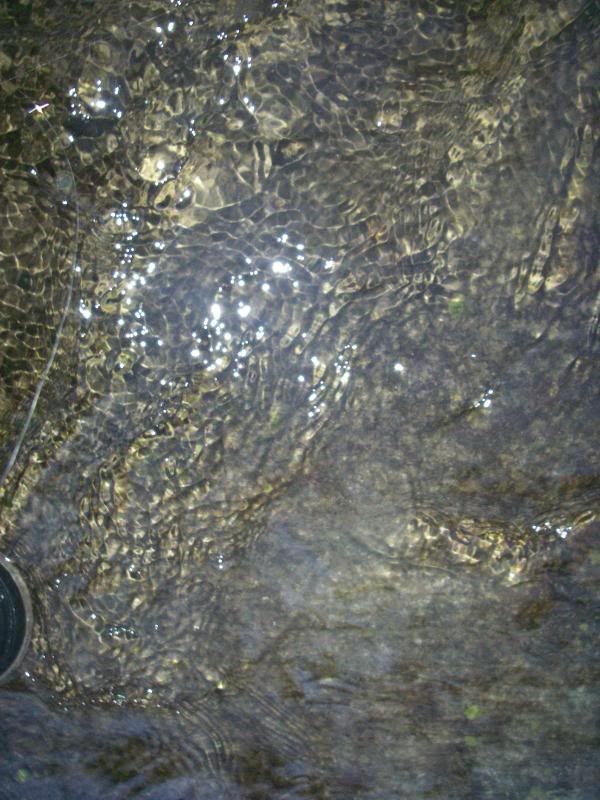
Plus, you get to stare at the river until your eyes go funny
Like, psychedelic. Peace, love, and brook trout power.
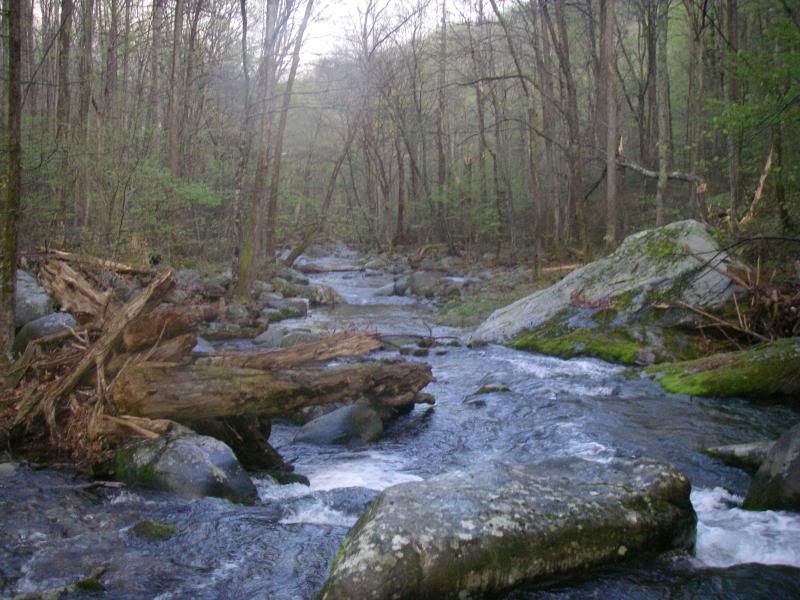
There are a remarkable number of downed and uprooted trees up on the slopes, this year. Looking downstream
Also quite a bit of erosion visible.
This river always has a strong flow, but between the and the number of uprooted trees, I wonder how the fire road will hold up. And I hope that the number of uprooted trees isn't part of a trend. The Shenandoahs should stay forested, not turn into meadows.
One interesting thing I realized: the Rapid Anne isn't necessarily that reliable of a dry fly water, compared to many other headwater brook trout streams. This river has quite a few pools that are deeper than 6 feet, interspersed between runs and riffles that are often more like rapids, especially when the flows are up- like in the springtime, especially after a rain. The combination of a steep gradient and deep pools ensures that many of the fish will be holding deep.
In headwater brookie creeks where pools don't get deeper than 2-3 feet, floating morsels are both more easily visible and easier to chase and capture than in a river where fish are finding cover under rocks and ledges 4 to 10 feet below the surface. Fish in shallow lies are much more inclined to look up and go after floating and surface emerging flies without requiring a hatch to concentrate their attention.
Also the challenges of fishing deep pools in a fast flow that's complicated by cross-currrents range from difficult to impossible, even for nymphers and wet-fly swingers. Brook trout may not be all that sensitive to fly selection, but they spook easily. All that's needed to set them off is a line slap, or a fly water-skiing across a current on the tether of a suddenly tautened leader. Add to that the factor that most deep pools of any size have at least one trout holding in the tail end. If that fish spooks upstream to mid-pool, they all flee for cover, for at least a few minutes.
Finally, it sometimes seems as if the only places that one can stand or crouch to get a cast off- or even to drift a dapping fly- are right in the middle of where at least one trout is likely to be holding.
The pocket water is tough, too- mostly because the flow is so fast that flies flash past in an instant. Even when a fly draws a take, it's often a miss in swift water.
To sum up: there are a lot of brook trout streams out there that are easier to fish than the Anne, especially with a dry fly. Fishing successfully entails skipping a lot of water, including good habitat that holds fish but is either impossible to fish without putting down the trout, or impossible to land any trout that might be hooked. Although I can definitely see some advantages to Tenkara on this stream.
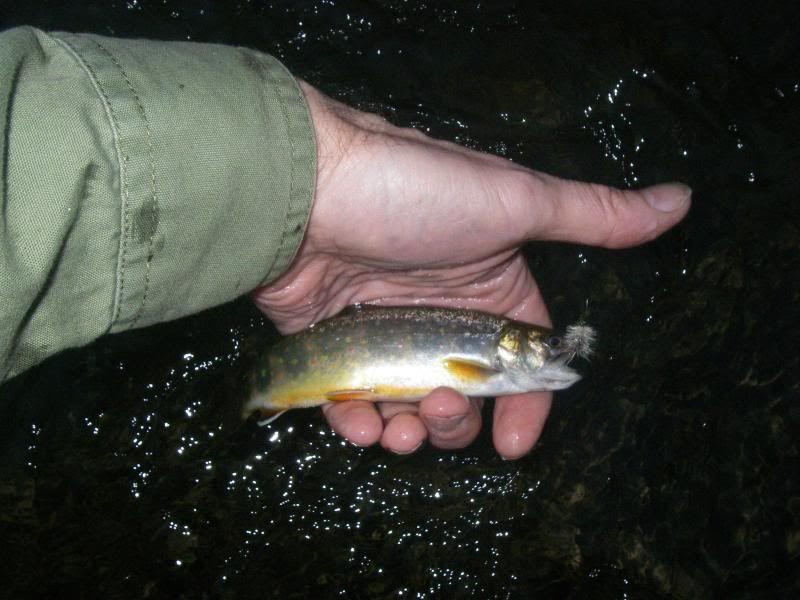
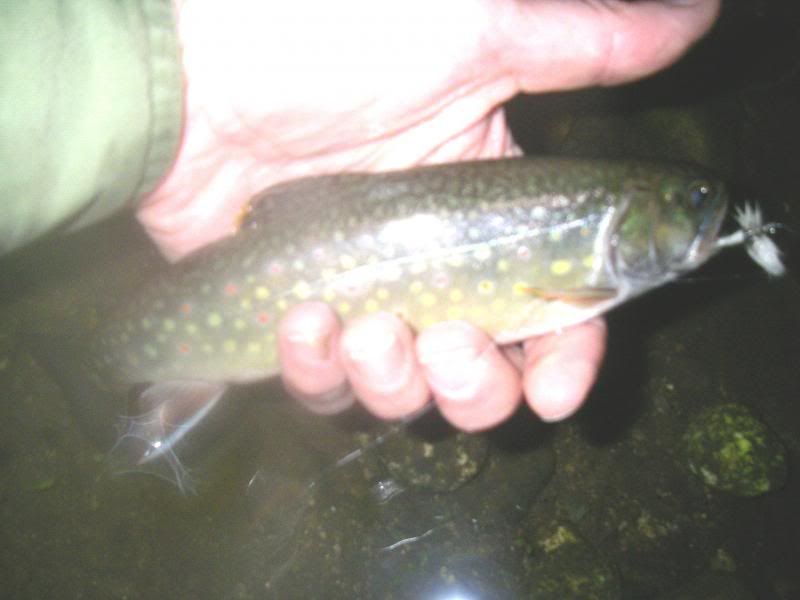
Anyway, I fished from 4pm to about 845pm. Some bugs about, but nothing that might be called a hatch- just a scattering of caddis and mayflies. Water temperature 56 degrees. Very few rising fish, all breaking the water to chase caddis. I fished dries all day, had about a half-dozen takes and by dusk I had only taken two fish (the first one pictured above, and another about the same size).
So just as darkness fell, while I could still see to thread the tippet through the hook eye, I tied on a White Wulff and decided to check out one last pool.
A few drifts, and voila

![URL]](http://[URL=http://s79.photobucket.com/user/freestoner/media/FishinPix/Brook%20Trout%20Fishing%20Rapidan%20April%2024%202013/IMGP3795_zps8e336385.jpg.html[/URL])