Pool approach

RH1

Well-known member
Joined
Nov 6, 2025
Messages
355
City
Massillon
So the stream I am fishing is stocked with rainbows and an occasional brown.
There is one pool that is always loaded with fish but ive only managed 1 strike in 2 tries.
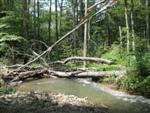
The pool is very clear, maybe 20' across and 25' long. I would guess the deepest portion is maybe 4' with a nice Eddie on the far side.
Im thinking small midges drifted deep would be the answer but I'm unsure of how I should approach and present the fly. Should I be up stream so I can control the drift ? Be down stream so the fish aren't seeing me or approach and present from the side casting up stream for a natural?
Hopefully this makes sense the way I described it
 
99% of the time I approach everything from downstream and cast up, most of the time directly over the fish I am targeting.

My theory is I am more likely to spook fish trying to get clever by fishing from above or the side than sneaking up behind them.

It's worked for me forever....
 
Last edited:
99% of the time I approach everything from downstream and cast up, most of the time directly over the fish fish I am targeting.

My theory is I am more likely to spook fish trying to get clever by fishing from above or the side than sneaking up behind them.

It's worked for me forever....
Thanks, this was actually what I was thinking but wanted some verification.
I'm really trying to avoid asking dumb questions as I learn
 
I don't think it matters. Eddie may be nice but he likely has the fish spooked.

Seriously, though, you got the advice you needed. Approach from downstream.

In a much larger pool, especially if the water has some color, a downstream cast can work well.
 
  • Like
Reactions: RH1
I don't think it matters. Eddie may be nice but he likely has the fish spooked.

Seriously, though, you got the advice you needed. Approach from downstream.

In a much larger pool, especially if the water has some color, a downstream cast can work well.
 
My wording was a little off.
Im not currently fishing i meant that my last 2 trips this is what I saw so im trying to get some advice for next time
 
I usually go with a classic cannonball, or jackknife. I can’t dive.

In all seriousness, this is largely a conditions issue I think. Low and clear conditions makes any approach on a slow flat pool difficult, though downstream is generally still best. Honestly, just about all of us are going to struggle in that situation. The fish can see you from further away than you can cast in this scenario most times. You spook one fish (knowingly or not, many times not), and he shoots up into the deepest part of the pool and spooks everybody else.

Wait for better conditions, higher, off color water a little and try again. You could probably approach the pool however you like then and still have shots at fish without spooking them.
 
I think for the most part I nymph from the downstream side and move upstream. However when dry fly fishing I try to position myself upstream from the fish and cast down and across so that the fly is the first thing the fish sees.

All of this is dependent on flows and wading conditions though.
 
  • Like
Reactions: RH1
Not disagreeing with approaching from downstream but something that has worked for me when fishing tiny flies in a pool with lots of fish, is to just walk up directly across from them, let them spook and dart around for a while, and then just stand there for 15ish minutes and observe. Many of the fish might resume feeding and now you can reach them with super short flick of the wrist casts and keep a short line with great control of the drift of the fly. Only seems to work when lots of fish are in the same pool, when their competitive nature starts to override their fear of the shadowy figure standing near them. If the downstream approach is not working, give this a try before you leave.
 
  • Like
Reactions: RH1
I think for the most part I nymph from the downstream side and move upstream. However when dry fly fishing I try to position myself upstream from the fish and cast down and across so that the fly is the first thing the fish sees.

All of this is dependent on flows and wading conditions though.

I'm not saying that any approach is wrong, but it was either Charlie Fox or Vince Marinaro who professed the worst position to be in in regards to hookset success is upstream of the fish.

Every time I am upstream of a fish and miss...

I am reminded of this statement. 😉
 
Last edited:
  • Like
Reactions: RH1
Probably goes without saying, but I fish the tail out of the pool first, if approaching from downstream. Often a prime holding spot within the pool. May also want to lengthen your leader, as you will be lining the fish as you get to the head of the pool and i would rather have a leader over them than a fly line. Another thing to be aware of, is trying to get a drag free drift. Sounds like the pool may have some complex currents, with the eddies, etc. Getting a good drift may be more challenging than it appears on the surface (no pun intended).
 
  • Like
Reactions: RH1
I'm not saying that any approach is wrong, but it was either Charlie Fox or Vince Marinaro who professed the worst position to be in in regards to hookset success is upstream of the fish.

Every time I am upstream of a fish and miss...

I am reminded of this statement. 😉
Sorry, but that's how I was taught to fish the Delaware. If it's good enough for those fish...
 
Fish normally face upstream, into the current, so if its clear, I'm probably going to at least start from below, out of view. Once I can see more, I will adjust accordingly.
 
  • Like
Reactions: RH1
There are many variables that determine the best approach. In a 20' wide pool with very clear water, working upstream is almost always the answer.

The Delaware, for example, is 150' wide in the narrow spots. Add some color and currents and the approach changes drastically .
 
If there’s browns, upstream starting at the tail out, at least from late spring to the spawn. A dominant brown (12 inches or better) will generally take up a position near the tail out to keep tabs on the full pool. That way they can settle into a feeding spot, but move up if anything injured is washed into the pool.

I’m pretty sure this is a survival trait associated with browns.

I can’t speak to whether rainbows do it out west in places that are cold to their preferred temperature, but in the east rainbows are generally up in the fast water looking for that oxygen.

Browns generally thrive in temperatures up to the mid 60s, so they’re reasonably comfortable in 65 degree water, whereas rainbows prefer it a good deal cooler.

If you hook the brown, try to keep it from running up and spooking the rainbows.

Brook trout are rangers, moving from one feeding spot to another, and avoiding those bigger browns. A 12 inch brown has no trouble eating a 7 inch brook.

Anyhow, my experience is failing to begin by focusing on the tail out usually means spooking that dominant brown, which then spooks the whole pool.
 
If there’s browns, upstream starting at the tail out, at least from late spring to the spawn. A dominant brown (12 inches or better) will generally take up a position near the tail out to keep tabs on the full pool. That way they can settle into a feeding spot, but move up if anything injured is washed into the pool.

I’m pretty sure this is a survival trait associated with browns.

I can’t speak to whether rainbows do it out west in places that are cold to their preferred temperature, but in the east rainbows are generally up in the fast water looking for that oxygen.

Browns generally thrive in temperatures up to the mid 60s, so they’re reasonably comfortable in 65 degree water, whereas rainbows prefer it a good deal cooler.

If you hook the brown, try to keep it from running up and spooking the rainbows.

Brook trout are rangers, moving from one feeding spot to another, and avoiding those bigger browns. A 12 inch brown has no trouble eating a 7 inch brook.

Anyhow, my experience is failing to begin by focusing on the tail out usually means spooking that dominant brown, which then spooks the whole pool.
A 7 inch brook also has no problem eating a 4 inch brook
IMG_4359.jpeg
 
Back
Top