Pickering Creek, Chester County, 12/29/19

sarce

Well-known member
Joined
Feb 16, 2013
Messages
1,664
Despite growing up in chester county and fishing anywhere I could there since I was 12 years old, I had somehow never tried Pickering Creek. I saw that a section was recently added to the natural reproduction list so I decided to check out the lower end of that section reported to hold wild trout (not sure it can be accessed upstream of there).

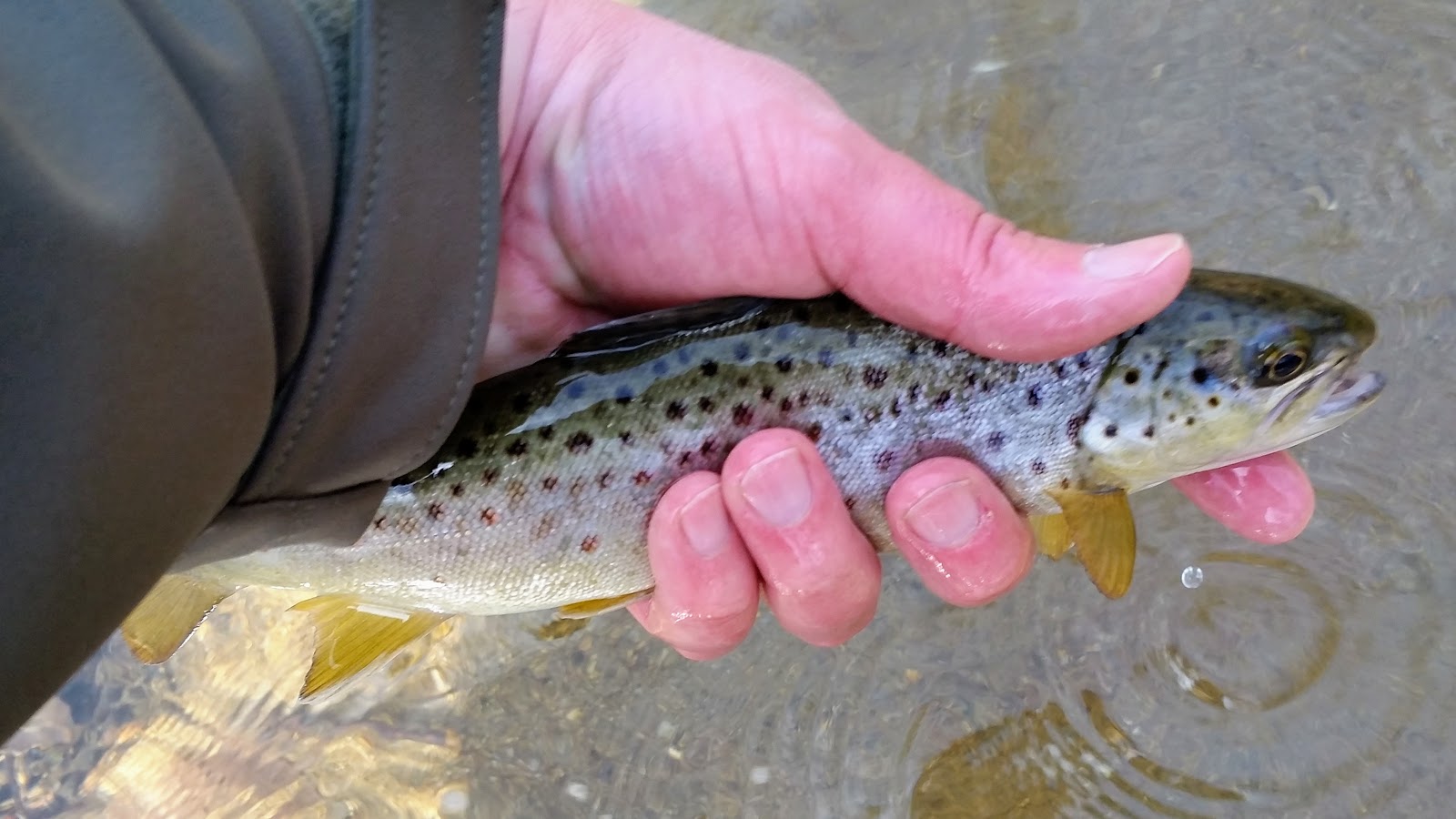
I did not find any wild trout or see too much habitat for them. There were some decent tree root undercut pools and they could well have a few wilds hidden away in there, but I only turned up stocked fish. I fished from 1 pm to 3 pm with a light rain falling at times. I used a size 8 olive woolly bugger (cone head) and caught a stocked rainbow and missed a very large stocked brown.

After that I drove to a small stream in the general area and managed to extract a 12" wild brown from a deep logjam pool in the pouring rain. That was good enough for me and I headed home to watch the Eagles end the Cowboys season. An excellent way to cap off the holiday break!
 
I am sure someone will correct me if I am wrong, but I don't think the creek was ever assessed for real, for real. More likely one of those situations where it gets added because wild fish were found in the tribs. I have caught two likely wild browns in the DHALO section, one about a year ago. Like you noted, it would not be hard to find them if they were there in numbers, but better stocked fish tend to stake out those same limited spots.
 
Nymph-wristed wrote:
I am sure someone will correct me if I am wrong, but I don't think the creek was ever assessed for real, for real. More likely one of those situations where it gets added because wild fish were found in the tribs. I have caught two likely wild browns in the DHALO section, one about a year ago. Like you noted, it would not be hard to find them if they were there in numbers, but better stocked fish tend to stake out those same limited spots.

I live within walking distance of the upper section of Pickering. This upper section was recently added to the Natural Reproduction list for wild trout, and yet I have never seen nor caught one near the headwaters.

I would guess if it had wild trout it would be a Class D population and finding the right habitat, you may possibly find a wild trout. But in the summer, the water temps get so high and flow gets so low I've never found any section where I would believe wild trout would inhabit the stream. But for the fun of it, I'm still searching.
 
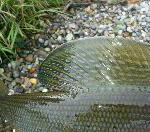
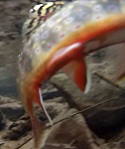
Crappy pic, but from March 2018 on the DHALO stretch.

20180306_111352.jpg
 
Nice fish and clearly wild - I agree with you that any wilds in there are likely tributary fish. I have a hard time seeing them stay in the main stream year round unless there's a trib dumping cold water directly into
a good rocky run or a deep pool. The timing of when you caught that fish supports it - Late Dec to May would be the ideal time to find one before they move back up the tribs. Stockers show up in the same tribs too in June and July. I was hoping to cross paths with one of the wilds this weekend, but knew it was a long shot, so it wasn't too disappointing not to find any.
 
The stream met the criteria for a wild trout stream designation downstream to Pikeland Rd. It is likely that the qualifying sampling site was at Pikeland Rd and a site may also have been run at Pickering Rd just down the road from the Rt 113 intersection. The Pickering Rd site is a site that has been sampled a few times over the past few decades, producing a few wild trout each time, but usually only yearlings as I recall. That’s not good enough to meet minimum requirements for a wild trout stream designation at that location. Multiple year classes and or three fingerlings are required at a bare minimum. We like finding sites where the minimal number of trout required are produced because in that way the greatest amount of stream (and wild trout) gain additional environmental protection upstream. In that respect I would characterize the Pickering survey as being perfect in design as a wild trout stream designation survey.
 
Mike wrote:
The stream met the criteria for a wild trout stream designation downstream to Pikeland Rd. It is likely that the qualifying sampling site was at Pikeland Rd and a site may also have been run at Pickering Rd just down the road from the Rt 113 intersection. The Pickering Rd site is a site that has been sampled a few times over the past few decades, producing a few wild trout each time, but usually only yearlings as I recall. That’s not good enough to meet minimum requirements for a wild trout stream designation at that location. Multiple year classes and or three fingerlings are required at a bare minimum. We like finding sites where the minimal number of trout required are produced because in that way the greatest amount of stream (and wild trout) gain additional environmental protection upstream. In that respect I would characterize the Pickering survey as being perfect in design as a wild trout stream designation survey.

Thanks for the info, Mike.

There are tribs that have small populations of wild trout that likely travel into and out of Pickering depending on the season and conditons.

I would agree that the Pickering survey results reflects the fact that wild trout do inhabit the stream, albeit more on a seasonal basis. And noting that with a wild trout designation offers the stream some protections.

Thanks again.
 
From around 2014 to 2017 my crews intermittently sampled most if not all of the tribs that showed any promise as WT streams. By now I would think that those that qualified should be on the WT list. My recollection is that there were about three that would have qualified....Pine, a trib near Ludwigs Corners, and one other that enters Pickering downstream along the Pickering Ck Rd stretch, but from the opposite side of Pickering Ck. Other streams were sampled to no avail.

Up to this point in time, although change was in the wind when I retired, most streams targeted for unassessed WT stream surveys were those that had never been sampled and tribs to WT streams that entered the receiving WT streams downstream from the lower limit of the WT designated stretch. Tribs entering the WT designated stretches already received protection as WT streams, so sampling them was low priority unless they were thought to have Class A potential.

In my case, we also doubled back throughout my career to the limited number of Area 6 stocked trout streams or formerly stocked streams lost due to posting that had potential to have become wild trout streams or Class A streams due to favorable habitat or riparian land use changes.
 
Mike wrote:
From around 2014 to 2017 my crews intermittently sampled most if not all of the tribs that showed any promise as WT streams. By now I would think that those that qualified should be on the WT list. My recollection is that there were about three that would have qualified....Pine, a trib near Ludwigs Corners, and one other that enters Pickering downstream along the Pickering Ck Rd stretch, but from the opposite side of Pickering Ck. Other streams were sampled to no avail.

Yes, your recollection is correct. And all three of these smaller tribs you mentioned still have a small population of wild trout as the surveys and listings indicate.

As stated above, I believe the trout move back and forth into Pickering on a seasonal basis. Pickering itself likely does not have, or perhaps has a very small and isolated population of wild fish.
 
Amazes me how many places there are in the county where there are short sections of good habitat and cool enough water that wild trout show up. I haven't found many places that could support WT, but don't. Somehow they've found their way into almost all viable places over the years. The streams that don't have wild trout in the county are really far gone IMO.
 
None of these places have much value to fishermen. It is nice that they hold these small numbers of small fish in such populated areas. In the end they won't likely develop into much more than they are now and most likely will eventually die out. Just my take.
 
I actually think wild Trout (especially Brown Trout) populations in areas like this have a good potential of expanding. As long as riparian buffers are maintained. Wild Browns seem to show up in all kinds of places you wouldn't necessarily expect them. They are far more temperature tolerant and adaptive at finding refuge than the literature suggests IMO. It's not like when the water hits 75 (or whatever) they all instantly die...They can sense the warming water and many figure out a way to survive.

Anyway, IMO the biggest issue in this area of PA is simply access. Most of the upper Pickering watershed is on private, heavily posted property. Good to know at least some wild fish are there, but fishing for them (outside of the stocked section of Pickering's main stem) will require some fruit baskets and door knocking, if at all.

I always thought the trib, not sure of the name, originating by the quarry in Devault, and flowing north along Rt. 29 to its confluence with Pickering looked like it should support wild Trout. Again, heavily posted. It doesn't seem like that was one that turned up any though. Mike, can you confirm?
 
Millsertime - I was standing directly above the tree roots it was under and got a good look at the beat up fins. When I set the hook it rolled and I saw the typical dense/smudged spot pattern of a PA stocker and overall gray color. 17-18" range.

Swattie, that trib is on the list (or at least on the map that's based on the list).

Both Swattie and Larkmark are right here. For every chesco stream that gets discovered (most of the time with only a small handful of fish), there's another that was better off 5 years ago than it is today. I know of one that has likely been lost completely in the past couple years and its neighbors are all heading that way. Access is definitely an issue but at the same time it could be protecting some of those tiny populations.
 
sarce wrote:
Swattie, that trib is on the list (or at least on the map that's based on the list).

Must’ve misread or misunderstood, or both. Quarry water and it’s in the woods for most of the run down along 29...had a few things going for it I figured. Good to hear.
 
larkmark,
While it is true that some of these tribs are not very fishable, have low population densities, and/or are posted, it is not so clear that they will “eventually die out.” Their drainage basins are probably as developed as they are going to get, which isn’t very much in some cases because of larger property sizes.

In general, some scientists in Pa believe that climate change will eventually “get” these marginal streams. I’m not so sure about that. The climate has been changing (warming) for decades and all of the while wild trout populations in SE Pa have been maintaining themselves, expanding, or growing, except where stormwater runoff has been the major problem. But even in some cases, stormwater runoff impacts have declined and stream sections have gone from few or no wild trout to Class A.

This maintenance and growth in the face of climate change has in my view occurred because this is Penn’s Woods. Leave the land alone and it reverts to forest. As the climate has warmed the riparian vegetation has grown on its own or because land use has shifted, allowing riparian vegetation to become more dense. The climate is warming, but the shade provided by deciduous vegetation is increasing independently and some would say because of climate change, at least in some cases. Additionally, for the most part in SE Pa, except in northern Berks and parts of Schuylkill Co, the shade is not provided by hemlocks, which are losing needles and dying due to wooly adelgid infestations. This may create greater vulnerabilities to climate change in other physiographic regions of the state if the hemlocks are not replaced by deciduous vegetation, other evergreens, or rhododendron.

Note: In general, I would expect as scientists predict that there will be shifts from wild brook trout to wild brown trout in some streams or stream sections across the state as temps warm.
 
Mike, one other thing I would expect to see: some brook trout only streams lose their populations and therefore cease to be wild trout streams. There are some places where browns are not poised to fill the void that will be left by disappearing brookies because the downstream waterway is not capable of supporting browns. It has happened to some MD streams already (best example I can think of is Little Gunpowder Falls drainage - Note this is not the same stream as "Little Falls").
 
Mike wrote:

In general, some scientists in Pa believe that climate change will eventually “get” these marginal streams. I’m not so sure about that. The climate has been changing (warming) for decades and all of the while wild trout populations in SE Pa have been maintaining themselves, expanding, or growing, except where stormwater runoff has been the major problem. But even in some cases, stormwater runoff impacts have declined and stream sections have gone from few or no wild trout to Class A.

In cases "where stormwater runoff impacts have declined," what caused that to happen?
 
example: Take a 50 or more acre farm field that is cultivated nearly to the edge of a stream and change it into a housing development, but with the houses removed from the riparian area by a couple of hundred feet or more. Allow the land between the rear of the homes and the stream, except for small yards, to become fallow fields and allow shrubs/small trees to grow along the stream banks. Do this on both sides of the creek.
 
Back
Top