Muddy Creek FFO, York County, 10/13/10

If you fish alot and dont help out on a clean up, an improvement or donate some coin.

I say to you- Look in the mirror and say HI DUMMY.
 
Jack Wrote:

In any event, if you are a secret stream guy, why try to convince the reading public that he is wrong?

Jack I know we argued over having a secret stream on some spot burning thread a while back. I am not that guy, I'm not secret stream guy, and Muddy Creek is not that stream. I promote the watershed because of it's good quality, good access and large size.

I know you got a secret one somewhere. Most of the streams I fish I am willing to share some info about. However everyone has a stream they don't talk much about, everyone, and don't lie Jack M. Crazyfish.

I am hoping Mike was sprinkling on some sarcasm, which I noted previously, I sure hope so.

Mo, I think my TU membership ran out, what do I do now.
 
That comment was not directed at any particular person. More of an indefinite pronoun type reference, meaning that if you are such a person, then why argue about it.

The only stream I try not to talk about openly is one I am planning to fish in the immediate future. I have too many people I am trying to ditch to post my expected whereabouts online for the world to see. 😎
 
Jack, your bold print is offensively staring me in the face, I had an imaginative moment where the "We want you" Uncle Sam figure popped out from the bold print and pointed at me.

Is it that obvious? :lol:

Jack M. Crazyfish, LOL. It's actually a character on SpongeBob Squaredpants, I laughed so hard when I heard Jack M Crazyfish.
 

Attachments

  • We are talking about you..jpg
    We are talking about you..jpg
    54.8 KB · Views: 2
1wt just likes to stir the pot
StirringPortPot.jpg
 
I don't know anything about 1 wt's history with respect to this Board or Muddy Creek. I asked the same questions of 1 wt that I would have asked of any angler who came on this Board (or called me on the phone at the office) and made comments about the habitat in a special reg area that I cover having gone downhill. My questions were also designed to elicit comments from other Board members who are familiar with the stream so that I could gather enough info to determine whether or not there really is a problem with degraded stream habitat. It is not unusual for streams to deteriorate over time due to erosion and sedimentation, there certainly is that potential in the Muddy Creek drainage basin, and 1 wt's comments suggested to me that just such a problem might be occurring. By the responses, I believe that you would have to agree that my approach was successful. I read some good responses to the contrary, some of which were even sprinkled with pictures, and can only conclude from those comments that the habitat has not deteriorated to a great extent, except perhaps in some isolated areas. Had there been enough comments about declining habitat the next step would have been a call to the local WCO to confirm and/or a personal visit to the stream.
 
Well, Mike, I liked it better when I thought you were employing irony. May I re-direct your attention to Maurice's initial reaction to your post, then?
 
Jack,

Perhaps the last sentence that I added, apparently while you were submitting your response, will satisfy you.

Mike
 
Ok, but I would feel better if you recognized by now that some folks will complain about things with no basis in fact, and until a concensus of concern arises from anglers with some aura of credibility you shouldn't make allusions to modifying successful SR areas such as Muddy Creek when you know how important those small set-asides can be for recruiting friends of the streams. Or maybe your experience is different and the assistance the PFBC receives from the angling public actually comes from "traditional" anglers and bridge fisherman.
 
So what Mike is saying is he honestly does not know the condition or characteristics of the creek first hand and needed a little input from more than one source.

I think I can buy that.

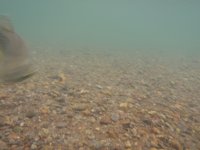
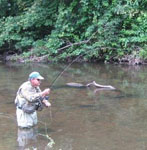
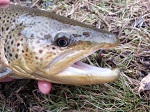
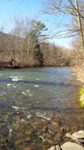
Well the pictures speak for themselves. It is a good quality stream with lots of holding water and many deep holes, runs and a clean bottom of gravel and bedrock with several natural reproductive tributaries including some which are class A.

Note the clear water and clean gravel in these pictures from the CARFFO area of Muddy Creek.
 

Attachments

  • 7502.JPG
    7502.JPG
    208.5 KB · Views: 5
  • Looking into Big Rock Hole.JPG
    Looking into Big Rock Hole.JPG
    193.4 KB · Views: 4
  • Big Rock Hole Rocks.JPG
    Big Rock Hole Rocks.JPG
    210.5 KB · Views: 5
  • Regs section.JPG
    Regs section.JPG
    309.9 KB · Views: 4
  • Brownie Clean Gravel Bottom.JPG
    Brownie Clean Gravel Bottom.JPG
    241.6 KB · Views: 2
Jake:

Your first sentence above certainly reflects the theme of my post: " So what Mike is saying is he honestly does not know the condition or characteristics of the creek first hand and needed a little input from more than one source." The only modification that I would make to your comment is that I don't know the RECENT condition of the creek.

We had a cool, wet summer last year and some substantial storms associated with a tropical system just a week or so ago. Stream habitat can be degraded in a hurry, especially with all of the erosion and sedimentation problems and potential problems in the Muddy Creek basin. To some extent, even the photo that you took of the "clean gravel bottom" is indicative of the problems that the stream faces. Also note tons of that same material temporarily high and dry along the stream margin in some of your previous photos in this thread. By the way, I want to thank you for including the photos.

Given my experience in the drainage basin, I would bet that the gravel is not as clean as you think. It is clean on the surface, but the interstices are probably filled with sand and the gravel/sand deposits are unconsolidated, meaning that they will move with each storm. Check it out next time you are there. Dig down and see what you find. As I have described it, this would not be good macroinvertebrate habitat or ideal brown trout spawning substrate. Furthermore, this is the material that fills in the pools on many of York County's streams. You'll often find that much of the gravel is not rounded, but has sharp to somewhat sharp edges, meaning that it is a relatively recent deposit, not aged natural stream gravel. Sometimes a big storm clears the material out of the pools and sometimes the deposits just get deeper, eventually creating "flat-water" where a decent hole used to be. This is probably what 1wt was describing in more general terms and is what caught my attention. His catch was immaterial with respect to my comments and his observation of habitat degradation seemed credible, given the potential for the exact degradation he described to occur in Muddy Creek. I wanted to know if this was the general situation on the stream and the additional responses from others indicated that it was not. Case closed.

And in response to another writer's comment, credibility depends upon context in my view. In general, even the least credible anglers that I have met sometimes get it right. I consider anglers' comments based on my personal experiences with the anglers, their responses to my sometimes probing questions about the topic at hand, and the plausibility of what they have said given my education, training, and experience. I have learned some fascinating things when I have given some anglers the benefit of the doubt and their concerns or observations have turned out to be right on!

Mike

 
Thanks to Maurice and the reat of the TU people for all the work they've done on this stream, they've done a great job!

Thanks to Maurice I have fished muddy a good many times, and have enjoyed it. I recommend to people to start at the top of the special reg area and fish down to the end( at the Hemlocks) and you will see what a beautiful stream this is, great fishing water and the beauty of this place is hard to believe. Im not able to make the trip anymore, just to far and to hard for me, but if I could I'd be there.

I do recommend fishing with a buddy and parking a car at each end, save you a long walk back to your car!

PaulG
 
Mike wrote:

Given my experience in the drainage basin, I would bet that the gravel is not as clean as you think. It is clean on the surface, but the interstices are probably filled with sand and the gravel/sand deposits are unconsolidated, meaning that they will move with each storm. Check it out next time you are there. Dig down and see what you find. As I have described it, this would not be good macroinvertebrate habitat or ideal brown trout spawning substrate. Furthermore, this is the material that fills in the pools on many of York County's streams. You'll often find that much of the gravel is not rounded, but has sharp to somewhat sharp edges, meaning that it is a relatively recent deposit, not aged natural stream gravel.

Mike

I'm interested in these substrate topics and they don't get discussed much.

You described unconsolidated substrates here. What would be some examples of streams that have the opposite, i.e. consolidated substrates, and what would that look like?

And is it really the norm for stream substrates to be consolidated and that unconsolidated substrates indicate an abnormal condition? Isn't it true that streams are dynamic systems and that it is normal for substrate to move with every high flow?

When you find a lot of gravel that has sharp edges, rather than rounded, where is that gravel typically coming from, and what does it indicate about the stream system?

In many urban/suburban streams I've seen enormous amounts of gravelly substrate that does not seem to be normal stream gravel, but have been puzzled where it's coming from. But my theory is that it is coming off roads and driveways. Paved roads often have gravel berms along the sides. And they spread gravel on the roads when it snows. And many people have gravel driveways and that washes away, onto the paved streets, then to the storm drains, and from there to the creeks.

BTW, I think asking anglers questions is a good thing for PFBC employees to do, and I'm glad that you take the time to do it. Sometimes you have to seperate the wheat from the chaff, but you can often learn interesting things from people who spend time on the streams.
 
Mike wrote:
And in response to another writer's comment, credibility depends upon context in my view. In general, even the least credible anglers that I have met sometimes get it right. I consider anglers' comments based on my personal experiences with the anglers, their responses to my sometimes probing questions about the topic at hand, and the plausibility of what they have said given my education, training, and experience. I have learned some fascinating things when I have given some anglers the benefit of the doubt and their concerns or observations have turned out to be right on!

Mike

This other writer doesn't disagree with Mike's comments quoted above, but it doesn't explain why he would gratuitously respond to such a post with a suggestion that special regs on this stream should be reconsidered because a single somewhat anonymous poster had a complaint about the most accessible stream section in the area. This is particularly odd given the fact that Mike knows that there are others, Maurice in particular, that not only know the stream like the back of their hand, but have also worked tirelessly and sometimes thanklessly to preserve and enhance the stream and to assure continued access over private lands, whom he could have consulted to get a truer picture of the matter at hand.
 
Well anyway, this could go on forever, the pics are still there, how much cleaner can it actually get. most of the chunky sharp pieces of gravel are quartz by the way, which does not wear into a rounded shape.

Anyway, I'd like to thank Maurice for all the work he's put into this wonderful stream, which has been one of my favorite York Co. Streams to visit.

I always have a good time here and never have to deal with crowds and all the spot mongering associated with some other streams I fish.
 
Quartz definitely DOES erode into rounded pebbles; walk along a beach and look for the white pebbles or find some basal conglomerates - most of the time, they are quartz pebble conglomerates.

I was fishing a stream with similar bedrock as Muddy Creek, yesterday, and observed that the two major water events we've had in the past three weeks cleared out a bunch of the silt and mud that was there, leaving a nice, relatively clean, angular substrate. Lot's more places for adult fish to hid again.. Then, I read Mike's post, about things maybe not looking as good as they might appear, in a "clean" gravel. It then got me thinking, in a bigger sense, what kind of bedrock makes for optimal spawning gravel? The past two streams I've fished have had sandstone/quartzite and schist as the bedrock. The former weathers to a fine sand, and the latter to a bunch of angular fragments. Each stream had wild fish in it. Sand, I would think, is less than optimal, as would be an angular schist. But despite, or in spite of, those bedrocks, they still produce fish.

I'd second troutbert's question, and wonder what others would have to say about a stream's substrate, either scientific opinions or fishing opinions, as well as how that may affect the biomass of a stream.

JakesLeakyWaders wrote:
Well anyway, this could go on forever, the pics are still there, how much cleaner can it actually get. most of the chunky sharp pieces of gravel are quartz by the way, which does not wear into a rounded shape.

Anyway, I'd like to thank Maurice for all the work he's put into this wonderful stream, which has been one of my favorite York Co. Streams to visit.

I always have a good time here and never have to deal with crowds and all the spot mongering associated with some other streams I fish.
 
I'd like to point out that streams are not stagnate systems but dynamic systems that change sometimes with the next major storm. I could be 7 inches of rain or 2 inches of rain, but streams do change over time and what was once a nice pool may become filled with sediment, and what was once a riffle becomes a pool. Now a year later the pool can be dug out again by another storm if the conditions are right.
This is why we do stream bank restorations and tree planting. we want the trees to shade the streams and evenutally to fall in the streams creating new habitat. We want the banks to be stabilized until the trees get large enough to hold the banks together. Much of the sediment in streams comes from the banks along sections that are un-shaded and have no protection or from areas where the stream inundates the flood plain and washes sediment into streams. Without getting into a long explanation of how this works suffice it to say, ALL of our trout streams need attention. Particularly in developed areas.
 
Some thoughts on spawning gravel. My sense is that any loose, clean gravel of any shape would be appropriate spawning material provided it is located in a portion of the stream which also has the other beneficial spawning attributes, viz: impinging flow and hydraulic upwelling. The glide at the tail of a pool makes a better spawning area than the riffle at the head or within the depths of the pool proper. This is because, in the glide area, the bottom of the stream is rising and the force of the water is impinging the gravel, that is, pushing against the gravel and holding it down, rather than sweeping it and lifting it up (a condition found in the head of the pool). Eggs laid in the glide are more likely to stay put and, in addition, the impinging flow bathes the eggs in a constant flow of oxygenated water. If the glide is also located in an area of up-welling, where groundwater is forced back up into the stream bed, so much the better, as the eggs will experience the constant and moderated temperature of that groundwater.
 
Back
Top