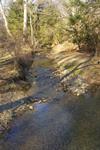
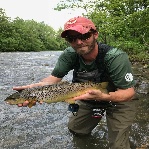
Manada Creek, Dauphin County, 10/22/22 afternoon (final for the year?)

6xAdams(Jones)

Well-known member
Joined
Apr 22, 2022
Messages
1,780
City
Maryland
Managed to fit in a couple hours in the middle of college drop-off (after fall break).
Creek is as low as it was last month but a lot colder (50ish). I typically fish this creek with upstream casts. I was still able to float an 18 Adams in three of the four holes I usually go to above Furnace Road.
First fish was a beautiful, fall-color wild brown with one of the widest tails I've ever seen on a 7-8 inch fish.
The rest of the fish were all chubs - a couple were as big as my only trout for the day.
The youngest son (the one going back to college) only used nymphs but had his leader in the brush more than in the water - no fish.
There were some 18-16 gray-body flies coming off but nothing to write home about. Any fish I hooked were rising already - probably to tiny BWO that my older eyes can't see.
Another recent report talks about all the trees blocking Clarks. Manada is really bad as well and it's a treat every spring to find out where last year's holes have relocated to after the flooding. My son gets to the other area streams more than I do. He tells me it isn't worth the extra driving time to get to Clarks since it has more trees in it than Manada.
 
Is this another place the browns have taken over? I remember a while ago catching nice brookies above the delayed harvest area. I remember stirring my dry fly in one of those pockets with dirty bubbles in it and a nice one blasted out of it.
 
Is this another place the browns have taken over? I remember a while ago catching nice brookies above the delayed harvest area. I remember stirring my dry fly in one of those pockets with dirty bubbles in it and a nice one blasted out of it.
I have only fished it a few times. I have talked to alot of people who said years ago they caught Brookies high up in there. Wild invasive browns can obviously displace brookies on their own but i think manada is also on stocking list too, not sure if they are getting hatchery brown trout reinforcements bi annually or not which has been demonstrated to speed up eradication in other streams. I hope there are still some holding on in there despite the invasion. Maybe I will go up there this spring with a fly rod and find out. I think access once you get to the military base stops? Wonder if any remaining brookies could be up there.
 
It’s mostly (or all?) Browns at this point. So is Indiantown Run.

May be some Brookies in the tiny trickle tribs, but I haven’t caught a wild Brookie in either in years. Stocked Brookies, yes.
 
I have only fished it a few times. I have talked to alot of people who said years ago they caught Brookies high up in there. Wild invasive browns can obviously displace brookies on their own but i think manada is also on stocking list too, not sure if they are getting hatchery brown trout reinforcements bi annually or not which has been demonstrated to speed up eradication in other streams. I hope there are still some holding on in there despite the invasion. Maybe I will go up there this spring with a fly rod and find out. I think access once you get to the military base stops? Wonder if any remaining brookies could be up there.
It’s mostly (or all?) Browns at this point. So is Indiantown Run.

May be some Brookies in the tiny trickle tribs, but I haven’t caught a wild Brookie in either in years. Stocked Brookies, yes.
Yea I will add the last brookie i caught on Indian town was 4 years ago. Thats a stream above a dam I always wondered if would be a good candidate for native brook trout reclamation because of the high amount of ground water and downstream barrier. However obviously thats not in the cards any time soon because it still has a harchery on it with a ton of stocked adults. We know what that does to a population of native brook trout. Their are fingerling rainbow escapees everywhere in addition to the lots of stocked adults. Theres still one side tributary near the road thats wayyyyy to small to fish but has some tiny YOY in there I saw 3 years ago. Sad
 
All the little trout we catch in Manada are browns. Bigger fish have all been stocked rainbows, browns, and an occasional brook trout.
My son may have caught wild brookies since he fishes there more often than I do (about once/week during the spring-summer) both in and below the DHALO section. No idea when a "brown takeover" would have started since we've only fished there for three years. Also, we haven't ever gone above the deep hole at the gated bridge upstream of PA 443 - no idea how the fishing is closer to the Fort property.
 
If you've never done it, I'd encourage anyone to go take the butterfly tour on the Gap, led by the on-staff naturalists at the fort. It's usually the weekend around July 4th and they restarted post-covid this past year. Much of the area they walk through is in the headwaters of Manada creek and the naturalists will tell you there are still native brookies there. Now, it is in the middle of a hand grenade range, so fishing is not on the table. But the same things that make it suitable butterfly habitat probably also protect the brookies.

My experience fishing the DHALO section is solely stockers and wild browns. It's one of the few places I've caught smallmouth, chubs, stocked fish, and small wild browns on the same trip. I used to own a spot with creek access downstream and seldom caught anything but a stray rainbow or really nice fallfish.
 
If you've never done it, I'd encourage anyone to go take the butterfly tour on the Gap, led by the on-staff naturalists at the fort. It's usually the weekend around July 4th and they restarted post-covid this past year. Much of the area they walk through is in the headwaters of Manada creek and the naturalists will tell you there are still native brookies there. Now, it is in the middle of a hand grenade range, so fishing is not on the table. But the same things that make it suitable butterfly habitat probably also protect the brookies.

My experience fishing the DHALO section is solely stockers and wild browns. It's one of the few places I've caught smallmouth, chubs, stocked fish, and small wild browns on the same trip. I used to own a spot with creek access downstream and seldom caught anything but a stray rainbow or really nice fallfish.
Its awesome there are still native brook trout at the top, good to know. Despite the impairments invasive trout are a large reason why their likely restricted to extreme headwater environment there which puts them at higher risk of blinking out. Same with fort indiantown gap most likely as well.
 
An abundance of creek chubs is an indication of a cool water environment at best and not a coldwater environment. Given the creek chubs, even the wild browns in the area where you fished would have been in the general geographic location where the stream is somewhere in the longitudinal process of shifting from a coldwater stream to a coolwater stream and perhaps close to shifting to a warmwater stream environment. The chubs were an indication that the stretch that you fished is not a good thermal environment for brook trout permanent residency, as was the portion of the fish community described by you that you have experienced when fishing there for a few years.
 
Last edited:
That
An abundance of creek chubs is an indication of a cool water environment at best and not a coldwater environment. Given the creek chubs, even the wild browns in the area where you fished would have been in the general geographic location where the stream has already shifted from a coldwater stream to a coolwater stream and was on the longitudinal path of shifting to a warmwater stream environment. The chubs were an indication that the stretch that you fished is not a good environment for brook trout, as was the fish community described by your son.
We are obsessed with summer time temperatures. We just had a discussion in another thread about how browns i. The juniata likely dont move because t sit in thermal refuge and are often times not “migratory” as many think. Well there are chubs and fall fish in those places too. Thermal refuge is present in focal areas quite frequently as one travels down stream into valleys in pa due to change in geology or just coming out of alluvial fans/hyporrheic exchange zone ect. Brook trout can use these just like brown trout if they are it displaced. Not to mention 8 months a year that minow rich area would plenty cold for brook trout and more forage rich than the extreme headwaters. Access to bigger water =bigger fish longer life span in most cases for brook trout. So yes the brown trout are displacing them from suitable habiat in manada based on nathaniel hitts 2017 study, corey tregos snorkel surveys on shavers fork 2019, and huntsman’s joint species distribution model study on shavers this past march and then if you what to see what could potentially happen with removal of invasive trout look at doug deitermans coolidge creek removal of brown trout where brook trout moved downstream and reclaimed lower reaches and grew in size.
 
Last edited:
An abundance of creek chubs is an indication of a cool water environment at best and not a coldwater environment. Given the creek chubs, even the wild browns in the area where you fished would have been in the general geographic location where the stream is somewhere in the longitudinal process of shifting from a coldwater stream to a coolwater stream and perhaps close to shifting to a warmwater stream environment. The chubs were an indication that the stretch that you fished is not a good thermal environment for brook trout permanent residency, as was the portion of the fish community described by you that you have experienced when fishing there for a few years.
We don’t stock in summer, we stock when the brook trout would normally be traveling down stream to larger water ways to replace caloric deficit from spawning. Here a study for that too.

 
I was referencing fisheries communities in areas of permanent brook trout POPULATION residency with the features that serve all life stages year around. I was not speaking about the occasional minor groundwater upwelling where 1-2, for example,individual ST might find refuge.

Upwelling refuges are not widespread in Pa., at least in the five regions of the state where I have done wild and stocked trout population surveys in summer months. It is rare at best to find such refuges in Pa for browns or brooks by a combination of biologists, WCO’s, and anglers (and I am not speaking about congregations of trout at mouths of tribs or swimming into tribs, which are more common, especially since many times those congregations occur in trout stocked naturally warm water streams, such as Pine Ck and occasionally in wild trout water in Penns). Even in this forum only Afish was able to report one upwelling refuge and I was able to report two others where trout had been observed. I also had an additional one reported to me once in the Tully DH Area. Of the ones that I have been aware of, only one had what I would call a significant number of wild trout (browns) within it.

There are many seeps exiting stream and river banks in limestone country that could potentially serve as refugia for single fish, but they are almost always unoccupied, save for the few that I know of and visited annually for decades along Delaware in Northampton Co. About every fifth year we would see a trout there in July…that’s a single trout, not an abundance of trout. If you have ever been around such refugia in Pa summers, the fish are not willing to move or if they do they go a foot out into the warm water and immediately, and I mean immediately, return. The same is true when observing trout in a man-created pH refuge in coal country.
 
Last edited:
I was referencing fisheries communities in areas of permanent brook trout POPULATION residency with the features that serve all life stages year around. I was not speaking about the occasional minor groundwater upwelling where 1-2, for example,individual ST might find refuge. You seem to think that these upwelling refuges are widespread in Pa. They aren’t, at least in the five regions of the state where I have done wild and stocked trout population surveys in summer months. It is rare at best to find such refuges in Pa (and I am not speaking about congregations of trout at mouths of tribs, which are more common, especially since many times those congregations occur in trout stocked naturally warm water streams, such as Pine Ck and occasionally in wild trout water in Penns). Even in this forum only Afish was able to report one upwelling refuge and I was able to report two others where trout had been observed. I also had an additional one reported to me once in the Tully DH Area. There are many seeps exiting stream and river banks in limestone country that could potentially serve as refugia for single fish, but they are almost always unoccupied, save for the few that I know of and visited annually for decades along Delaware in Northampton Co. About every fifth year we would see a trout there in July…that’s a single trout, not an abundance of trout. If you have ever been around such refugia in Pa summers, the fish are not willing to move or if they do they go a foot out into the warm water and immediately, and I mean immediately, return.
I never said they are numerous enough to support all lifestages of a population. That doesn’t have to be the case for brook trout to benefit from a different life history strategy of using downstream waters. I am saying that there is a less than 1 degree Celsius difference in the 7 day upper in incipient lethal temps for brown and brook trout and manada creeks browns are likely taking up what ever refuge there is lower down in the summer that could be used by brook trout. I think its misleading to suggest an area that would not support all age classes of brook trout would support all age classes of invasive brown trout, like i said less than one degree celcius for 7 dwy lethal temps. The differencehas been so over blown like its the difference between smallmouth and trout or something. If brown trout can live there in most cases brook trout can too. So if we are stocking brown trout its an intentional choice to displace brook trout and decrease any possible density based biotic resistance a population of brookies may have against wild invasive brown trout. You gotta remember the crushing amount of research proving each brown trout equals less habitat brook trout can use and like you pointed out with habitat, it is a finite resource no matter if its thermal refuge, feeding position, resting/shelter ect. It’s scientifically indefensible anymore to pretend Native brook trout choose to be in or only need extreme headwaters 12 months a year
 
That

We are obsessed with summer time temperatures. We just had a discussion in another thread about how browns i. The juniata likely dont move because t sit in thermal refuge and are often times not “migratory” as many think.
Which thread is that?
 
Back
Top