Local stream Redds

Foxgap239

Active member
Joined
Jun 29, 2011
Messages
2,101
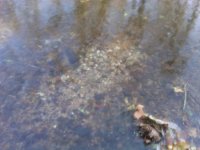
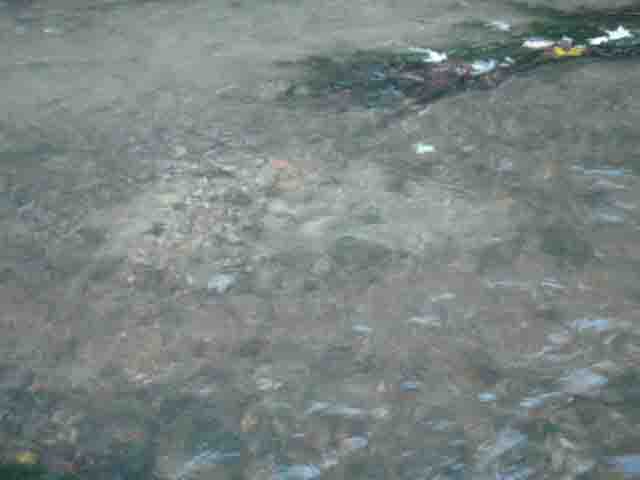
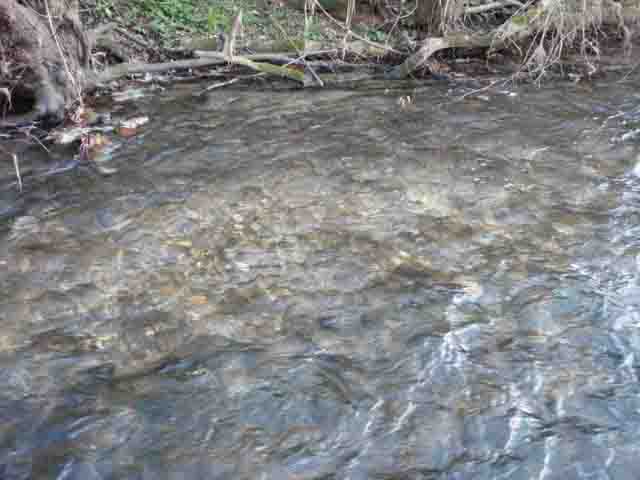
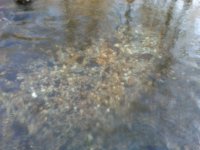
I was out and about today and found some very nice Redds. No fish were on them while I was there but I think it will give those of you who have never seen a Redd an idea of what not to step on when you are out fishing this time of year. The big Redd was about 4 ft long and 2 ft wide, must have been a nice pair. The other redd was about 2 ft long and a foot wide. Enjoy and be careful where you walk this time of year.
 

Attachments

  • Big Redd.jpg
    Big Redd.jpg
    98.9 KB · Views: 14
  • Redd.jpg
    Redd.jpg
    98.4 KB · Views: 6
Fish spawning grounds. Eggs are laid there.
 
Spawning is starting slowly here. I was last out on Wed, and there were still only few redds opened. Usually, things are going big time by now.
 
Ive seen a few redds on the little lehigh below the fly shop. Some nice looking fish on them.
 
I got curious like gaeronf about the definition and to my surprise, the top definition was local dialect meaning to clean up. "redd up the room" There's some good old PA dialect from way back.
 
willscreek wrote:
I got curious like gaeronf about the definition and to my surprise, the top definition was local dialect meaning to clean up. "redd up the room" There's some good old PA dialect from way back.
That is part of the local dialect in my area.
 
It is important to understand that the redd is designed to trap the eggs from dispersing downstream and to hold the eggs in oxygenated water within the loose pile of gravel. Stepping on or into a red can crush eggs, compact gravel, reducing water and oxygen ciculation and may also dislodge eggs to drift aimlessly until eaten or re-lodged.

Avoid areas where there should be redds, and avoid any clean gravel areas. If you have stepped in a redd accidentally, back out or pass through quickly without grinding the gravel or compressing it too much and you will limit any damage that might have occured.
 
As I saw last week on a brookie stream, redds aren't always where you think they'll be. A Pocono Stream I fished last week had a lot of redds, none of which were in the typical places, like the tails of pools and the runs below tails. They were instead mostly along the banks where there was available gravel. This was an unsorted cobbled stream where everything seemed to be mixed together, gravel cobble small stones to large. There were very few gravel beds per se. I even saw a few brookies over the beds.
 
I was on the Saucon yesterday and saw quite a few Redds. One had a nice female on it with a couple of smaller males near by. I have to say, all the redds I saw were exactly where I thought they'd be but as Chaz and Jack mention, watch where you are walking. We need all the eggs that we can to hatch and give our streams a fighting chance to stay well populated.
 
While fishing on Spring Cr (Centre Co) last week noticed quite a few redds in alot of sections of the stream. Was there the week before and none were present. Lots located in ankle deep water with a moderate flow. Looks like the spawn is in full swing there. Careful where you walk.

211_PA240073.jpg


219_PB090099.jpg
 
Do the redds stay that clean looking through the incubation period? Just wondering if I should take note of where they are to avoid them during winter fishing, or if I will be able to spot them even after they are done spanwing
 
surveyor06 wrote:
Do the redds stay that clean looking through the incubation period? Just wondering if I should take note of where they are to avoid them during winter fishing, or if I will be able to spot them even after they are done spanwing

It depends on the amount of rainfall and turbidity experienced after they are cut. For instance, if the eggs are laid and covered and this is the condition and the water remains clear through incubation they are likely to remain the same contrast to the surrounding area of streambottom.

However, if there are storm events that muddy the water the resulting fines will settle out on top and reduce the contrast to the point it may be indistinguishable. Or perhaps a huge event (flood) may sweep the bedload away that they are resting in.

Be careful at the tails of pools and soft glides and you should be fine.

Cross in riffles to avoid them all together.
 
I would just avoid wading as much as possible anyway. It sure cuts down on scaring the trout.
 
How long does it typically take for the fish to hatch (i.e. how long is the incubation period)? Is it close / the same for browns and brooks?
 
Maurice wrote:
Cross in riffles to avoid them all together.

Riffles are one of the most common places to find redds. If you want to avoid walking over redds, cross only in the middle of deep pools.
 
FrankTroutAngler wrote:
Riffles are one of the most common places to find redds. If you want to avoid walking over redds, cross only in the middle of deep pools.

How readily do fish take to spinners off redds?
 
Back
Top