klingy
Well-known member
- Joined
- Jul 31, 2010
- Messages
- 612
My favorite time of year has come on the large and small spring creeks in the Cumberland Valley. While the conversations of "hanging it up until fall" are happening in many parts of the state, our true spring creeks are coming into prime terrestrial season. Ants, beetles, hoppers, and my favorite, crickets! Rarely do I get big fish consistently willing to take a dry fly as I do during these hot months when they seem to be on a mission to crush any buggy resemblance that passes by.
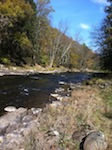
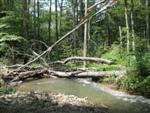
Today I fished the Letort from about 10:00 am - 2:30 pm. It was HOT and Sunny. Perfect. Immediately after reaching the stream, I heard several splashy rises. As I advanced upstream I heard what sounded like someone dropping a hammer in the stream. Then a shotput. Then a stapler. As I inched closer, the big fish continued to smash the surface at regular intervals. The only thing that stood between me and him was a honeysuckle bush that seemed to have every possible casting lane obstructed. Some days it seems like even the plants are plotting against you.
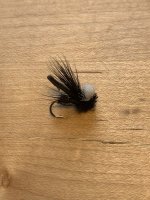
My first cast went into said bush, and it did not relinquish it. I slowly pulled back on my rod until the audible "snap!" and my tippet falling limp into the stream-side grass. As I tied on a new cricket I thought through a different approach. Gathering my line, I started the cast. I had just enough space behind me that I could do a roll cast as my back cast. After two false casts, I snapped the fly forward with a sidearm motion and stopped the rod tip abruptly. This caused the last 10 feet or so of leader to kick to the left and shoot the fly around the bush while the rest of the line fell quietly on the surface of the water.
I crouched down and stared at the small tuft of poly yarn poking out of the top of the cricket as it slowly drifted downstream. Drifting. Drifting. Drifting. Something was moving under it, though I couldn't make it out in the shadows of the chalky water. After a three-seconds, there was what I affectionately refer to as a "toilet bowl flush". The fish had opened its mouth and water poured in, along with the bits of hair, wings, and dubbing that it mistook for an easy meal. I waited until the take was complete, then set to the side. Connected.
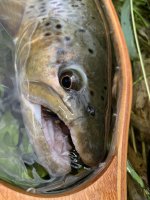
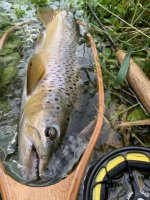
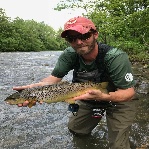
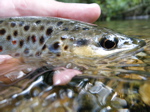
The next sequence of events blurs. If getting a nice Letort brown to take your fly is difficult, getting them into the net is easily twice as hard. My list of fooled Letort fish disappearing into a weed bed and never returning is long. This one could have easily been next on the list. There was the log jam that it initially tried to return to. The undercut banks were the next tempting spot. After keeping on pressure and maneuvering against several runs and head shakes, the fish came to the net.
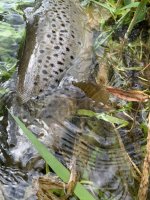
The honeysuckle trout was the first of a few landed, though it was the biggest. I stalked another of about the same size for about an hour and a half. I managed to hook it only for it to break my tippet on its first dive into a trio of large rocks. Just add it to the list!
Today I fished the Letort from about 10:00 am - 2:30 pm. It was HOT and Sunny. Perfect. Immediately after reaching the stream, I heard several splashy rises. As I advanced upstream I heard what sounded like someone dropping a hammer in the stream. Then a shotput. Then a stapler. As I inched closer, the big fish continued to smash the surface at regular intervals. The only thing that stood between me and him was a honeysuckle bush that seemed to have every possible casting lane obstructed. Some days it seems like even the plants are plotting against you.
My first cast went into said bush, and it did not relinquish it. I slowly pulled back on my rod until the audible "snap!" and my tippet falling limp into the stream-side grass. As I tied on a new cricket I thought through a different approach. Gathering my line, I started the cast. I had just enough space behind me that I could do a roll cast as my back cast. After two false casts, I snapped the fly forward with a sidearm motion and stopped the rod tip abruptly. This caused the last 10 feet or so of leader to kick to the left and shoot the fly around the bush while the rest of the line fell quietly on the surface of the water.
I crouched down and stared at the small tuft of poly yarn poking out of the top of the cricket as it slowly drifted downstream. Drifting. Drifting. Drifting. Something was moving under it, though I couldn't make it out in the shadows of the chalky water. After a three-seconds, there was what I affectionately refer to as a "toilet bowl flush". The fish had opened its mouth and water poured in, along with the bits of hair, wings, and dubbing that it mistook for an easy meal. I waited until the take was complete, then set to the side. Connected.
The next sequence of events blurs. If getting a nice Letort brown to take your fly is difficult, getting them into the net is easily twice as hard. My list of fooled Letort fish disappearing into a weed bed and never returning is long. This one could have easily been next on the list. There was the log jam that it initially tried to return to. The undercut banks were the next tempting spot. After keeping on pressure and maneuvering against several runs and head shakes, the fish came to the net.
The honeysuckle trout was the first of a few landed, though it was the biggest. I stalked another of about the same size for about an hour and a half. I managed to hook it only for it to break my tippet on its first dive into a trio of large rocks. Just add it to the list!