Juniata River, Mifflin Co., 8/11/14

Fishidiot

Active member
Joined
Sep 9, 2006
Messages
9,921
Managed about three hours on the Juniata today upriver from Lewistown. Weather: overcast with approaching frontal system and temps probably in the low 80s. Water: slight stain with temp of 75 degrees. Some white mayflies were around but sparse and no significant surface activity.

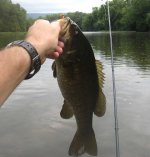
Started out with poppers but gave this up after about ten minutes with no action. A Clouser fished low and slow did well however and took several bass, all good sized fish in the mid teens. Brown over orange seemed to be the color they wanted. The action wasn't fast and furious but a steady pick. I was wading and covered about a quarter mile of river. The bass were in predictable summer patterns - roaming and dispersed mainly in the mid river channel in front of chunk rock or along the edges where the deeper channel merges unto shallower shoal areas. Don't pass up bridge pilings this of time of year either. By 7:15 I switched back to top water and had steady action with the typically smaller class of fish that turn on to poppers in the evening. As usual, I jumped three or four fish to every one that actually came to hand. Saw no other fishermen or boaters. With the approaching frontal system, I had hoped for one of those fast action days I've often had under these weather conditions... but it didn't break loose. Probably would have done better if I'd stuck around till dusk, but had to quit at about 7:45. Nice afternoon.
 

Attachments

  • SMB6.jpg
    SMB6.jpg
    72.5 KB · Views: 12
Nice report, Dave. Sounds like a real nice afternoon of wade fishing. Glad to hear you got a chance to get into some decent fish.
 
Nice, Dave. Good to see some reports about decent fish and decent numbers of smallies caught on a fly....and on top yet! Good stuff.
 
Great report Dave!!! Looks like a fun couple of hours. I will have to tie up a couple of clousers in that color combo.
 
Yes fishidiot this was a very enjoyable report and I do have a follow up question:

One thing I'm really trying to learn, specifically in regards to larger rivers and streams, is how to read the water. You mentioned you targeted the section of the river where the channel met the shallow water. Do you read something in particular on the water to identify that the water is dropping off at that spot? or do you just know this stretch of water well enough to say "ok, i know where the channel is and i know where to look"
 
Bearski wrote:
One thing I'm really trying to learn, specifically in regards to larger rivers and streams, is how to read the water. You mentioned you targeted the section of the river where the channel met the shallow water. Do you read something in particular on the water to identify that the water is dropping off at that spot? or do you just know this stretch of water well enough to say "ok, i know where the channel is and i know where to look"

Good question.
Oftentimes a river like this one has very subtle structure and it often isn't immediately obvious where or what these characteristics actually are or how to identify them ("structure" is the term bass guys use to describe the bottom shape and contour of a lake or river - not to be confused with "cover" which means things like weeds and fallen trees etc).

The best advice I can suggest if you're new to rivers of this size is to look first for the bubble line on the surface. This bubble line usually goes over the main channel and is where current is strongest. This is what you want to take note of when first you assess an otherwise featureless pool. In the particular river I fished in this report, the structure was not pronounced: the average depth was about 1-2' with a deeper channel that was 2-3 feet. Very subtle. However, once I noticed the bubble line - which was closer to one bank - I noticed that there was a subtle shelf just under it where the deeper pool met the shallow area bordering shore. This shelf was only about a foot or so in elevation but the bass were sitting right on it and watching the current for food (I have seen this many times in summer on shallow rivers). This subtle change in structure, combined with the main channel current under the bubble line... proved to be where many of the bass were.

The other thing I would suggest when you arrive at a bass river is to look for the largest rocks that are submerged. I don't know why this is but bass really like big, flat rocks that are under water. Oftentimes these rocks are visible from a distance due to lighter color. Bass lay in front of the rock or the side that is shaded. Even in shallow water, say a foot or so, bass just love big slab rocks. If those rocks are along a change in depth and under the bubble line, better yet.

Finally, when you arrive at a new, fairly shallow river - if it is safe to do so - go out on a bridge with polarized glasses on a sunny day and just spend some time studying the bottom. You'll see all kinds of fish from this elevated perch. You will notice where bass are laying and you will also note that bass are moving around a lot: summer bass are very active and move from rock to rock. Some are swimming upstream and some down - but they are moving. They will stop from time to time at different types of structure (muskies usually don't move - they're motionless on the bottom and you have to look much harder to see 'em even though they're bigger). Pay attention to what you see from the bridge and identify the spots and structure where the bass are stationed. But also remember that bass move around and often just random casts will draw strikes too.
 
Agree with Dave. Find structure....you'll find fish. I floated with my nephew and we were only a few yards apart. I hooked up at least 5 times for every take he had. The young man was using the same gear / lure. I asked him why I was catching more and he simply said "you are casting where fish live and I'm not". That pretty much sums it up. I looked for sudden changes in the bottom contour (drop offs, shelves, deep pockets or likely ambush spots). That's where all my fish came from. If I cast over a shallow spots and retrieved back through some deep pockets, you could see the ambush or fish chase it into the shallow water trying to catch the bait. If you saw minnows jumping / running for cover....cast there and it was an immediate strike. Fished unfamiliar water just read it better than the little guy did.
 
Really good thread.

I'll add some other tips for finding fish. Be sure to fish varied types of water with respect to flow and depth. Faster riffled water to slower deeper water and everything in between. When and if you find fish, target the same water type.

Always keep in mind, things often change throughout the day. For instance, fish many be found in deeper areas in the afternoon and move to the shallows in the evening to feed.

Try targeting the shady areas during the day and work the shady bank later in the afternoon.

You may chose to cover a lot of water with your fly to find fish. An example making long cast with a bugger or streamer and allowing it to sweep across the current to cover the area. Move downstream a few feet and repeat. I often make a short, medium and long cast and move down and repeat to cover the maximum amount of water. When doing this, I often try different presentations such as dead drifting, swinging in the current and actively retrieving to try to find what the fish are looking for at the time.

If I can visibly see some structure, cover, a current seam or trough, I try to focus casting to it and pitching it from different angles and drifts to fish it out. And yes, if I can actually spot fish, I'll also do all of the aforementioned.

Good stuff!
 
Tons and tons of great thoughts in the last 3 posts, I'm glad I spoke up and asked the question.

I will say it can be funny when i'll be wading and struggling to find the fish. Sooner or later I'll accidentally wander into a hole and say to myself, gee, no wonder i can catch fish because i'm standing in their spot!
 
Good advice, This time of year I tend to find smallmouth in water 3' water or deeper either in the braided water just below riffles or at the head of holes/deeper water. The bubble line mentioned is often an area of laminar flow- a current edge where smallmouth hang in ambush areas around rock and boulders. Another good area is the deeper boulder strewn sections of tail out areas, however you will generally find smaller fish there until low light when the bigger fish will push up into shallower areas to hunt crayfish and ambush minnows. 3' or deeper seems to be the magic number when it comes to finding larger Summer smallmouth during the day. Combine that with good flow, boulders and a current seem and you have an excellent chance of finding what you are looking for.

Wading gives you and excellent perspective and I often see smallmouths hanging on top, along side, and behind boulders surfing the current seams in deeper water waiting for the current conveyor to bring them something to eat. When the light is low they will often actively hunt, either stalking around boulders and rocks looking for crayfish or making forays into the shallows to ambush minnows and crayfish along edges and structure.

Swinging a crayfish imitation like a bugger or minnow imitator like a streamer along a current seam will often draw explosive strikes. Letting the fly hang in the current at the end of the swing for 30 seconds or more will often tempt larger fish to move out of their holding areas to clobber your offering as well. For some reason this almost motionless presentation seems to be more than they can stand. It is simply to easy for them to pass up, but you have to be able to hold you fly line right in the seam from an upstream position.
 
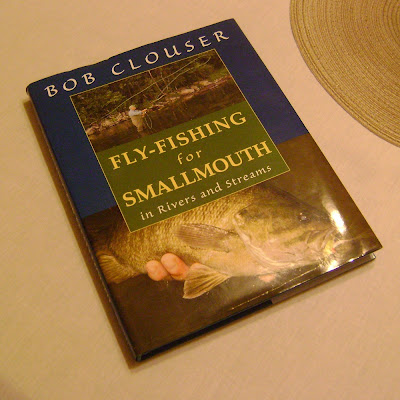
The book below is an invaluable resource if you're serious about smallie fishing on the fly. My g/f has a small "river shack" along the Juniata in Mount Union and I love getting out with the fly rod and exploring. The info above is solid and if you get out when the river is in its "summer flow", much of what has been said will make sense. The seams where the channel meets the shallow water, rock structure, etc., will all be that much clearer in the lower flow.

DSC04856.JPG
 
One of the reasons that smallmouths love certain boulders is due to the fact that they create vortexes that allow them to hang on current seams with very little effort. Not all boulders create the right vortexes or right size of vortex so if you find some that hold big fish you will find big fish there through out the season . The larger more dominant fish protect and hog these spots. The other reason is that crayfish, mad toms, hellgies, and juvenile fish hang out around and under boulders and they are prime forage for smallies.
 
Back
Top