Finding limestoners

Smith_pafly

New member
Joined
Nov 6, 2024
Messages
14
City
Collegeville
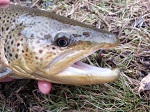
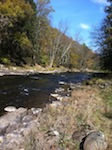
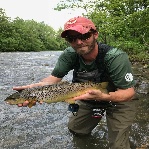
I ended up finding probably the creek of my life. I’m in SEPA and after a long search, I found a beautiful creek that holds consistently large brown trout. Problem is, it’s private.
Anyways, I started a deep dive in PAs limestone and spring influenced creeks that have potential to hold huge trout (in my area). I’m talking about the creeks and small tribs that everyone drives by and says “no way that hold trout” but does.
I’m not asking for spots- just as I won’t give away spots, but I’m more looking for advice on where to start searching for creeks like this. I got the PA limestone map and use trout routes to layer possibilities, but I’m still struggling (I had to of gone to about 10 creeks that ended up being trickles of water or warm water). If any experienced angler has advice on how to start looking, I’d really appreciate it.

PS- I know finding creeks like this is extremely rare, especially on public land. That being said, I encourage the adventurous angler that is hesitant to try a stream because it’s private, to simply ask for permission. You will get turned down a lot, but you may find something special as well.
 
Smith_pafly:

Assuming you are looking for limestone streams with wild trout...

Before I do any reconnoitering (especially in SEPA), I'd be looking at the Pennsylvania Wild Trout Waters (Natural Reproduction) list for the counties you are planning to fish and compare that with maps of areas with limestone and do as much research as possible before hopping in the car.

I'd also keep my eyes open...

I fished the south central PA limestoners WAY before I ever poked around in Berks, Lehigh or Lancaster counties. I still remember being on a bus in the Lehigh Valley on my way to Hazleton and going over a stream and KNOWING, just by looking at it that it was a limestoner.

I later returned to that stream and sure enough, I was correct.

You also may want to get a copy of "Fishing Limestone Streams," by Charlie Meck. It lists quite a few, and also will give you some insight on finding new streams.

If you have have assumption about a stream, you should also contact the PFBC Area Fisheries Manager (AFM) for the region where the stream is located and ask them about the stream. I've spoken to several AFM's in different regions over the years and always found them extremely helpful and interested in talking to folks that are interested in what they do.

Finally, do you know the origin of the "consistently large brown trout" that inhabit the "creek of your life?"

I ask because as someone that grew up in SEPA, I'd be suprised to find an unkown limestoner with wild fish in that region. Unless it is a posted tributary to well known limestone stream with wild fish, my initial thought might be the fish were stocked by the landowner.

Good luck in your searches!!
 
You can use existing resources, as noted above. You can take what is written in books as the truth or drive all over the state to verify it. The status of trout streams does change, sometimes for the better, sometimes for the worse, so because someone printed it somewhere as a dud (or a success) doesn't necessarily mean it is still the case. The fun is in the exploring and confirming or denying what others say.

Trout Unlimited's Guide to Pennsylvania Limestone Streams, by A. Joseph Armstrong, is another print resource you could use; I was surprised at some of the trickles mentioned in that book.

Using a PA Geologic map, you can fairly easy identify limestone units, and where those units interface with other non-limestone rocks, realize there may still be limestone influence nearby; for instance, if you have folds in the crust. For instance, in the Ridge and Valley province, you may have sandstone on a ridge, covering limestone, which is exposed at the base of the ridge and which makes up the valley floor. Lookup anticline/syncline and how ridges and valleys form from them to understand how what you see on a map or that is exposed on a surface might be underlain by limestone.

Or there may be a stream that flows out of a limestone source and then over a non-limestone bedrock for a distance. Keep in mind, as well, that sometimes non-limestone bedrock units have more calcareous units mixed in - maybe a thin layer here or there, and you'll also see that listed in the unit description. Lookup a description of the Needmore Formation/Shale as an example of a non-limestone rock (limy shale). Or the Loyalhanna Formation, which is a calcareous sandstone. And, even in some isolated cases, glacial till may have a higher calcium carbonate content, depending on where the origin of the deposit was from.

You can get plenty of clues by looking at maps, looking at vegetation in the stream, and from water temps but if you want to be 100% sure, you'd have to measure total alkalinity. Depending on how much of a water science nerd you are (or want to be) you can buy handheld meters that will do just that.
 
Smith_pafly:

Assuming you are looking for limestone streams with wild trout...

Before I do any reconnoitering (especially in SEPA), I'd be looking at the Pennsylvania Wild Trout Waters (Natural Reproduction) list for the counties you are planning to fish and compare that with maps of areas with limestone and do as much research as possible before hopping in the car.

I'd also keep my eyes open...

I fished the south central PA limestoners WAY before I ever poked around in Berks, Lehigh or Lancaster counties. I still remember being on a bus in the Lehigh Valley on my way to Hazleton and going over a stream and KNOWING, just by looking at it that it was a limestoner.

I later returned to that stream and sure enough, I was correct.

You also may want to get a copy of "Fishing Limestone Streams," by Charlie Meck. It lists quite a few, and also will give you some insight on finding new streams.

If you have have assumption about a stream, you should also contact the PFBC Area Fisheries Manager (AFM) for the region where the stream is located and ask them about the stream. I've spoken to several AFM's in different regions over the years and always found them extremely helpful and interested in talking to folks that are interested in what they do.

Finally, do you know the origin of the "consistently large brown trout" that inhabit the "creek of your life?"

I ask because as someone that grew up in SEPA, I'd be suprised to find an unkown limestoner with wild fish in that region. Unless it is a posted tributary to well known limestone stream with wild fish, my initial thought might be the fish were stocked by the landowner.

Good luck in your searches!!
As the former AFM for SE Pa, I would certainly like to know of the stream or its receiving stream is on the wild trout list. Don’t need any more info than that in this public forum….no stream name, no county name…just did we miss it? If it is a trib to an existing wild trout stream section or a trib located farther upstream than the wild trout section, then it doesn’t count as having missed it since the protocol was to not sample those tribs.

The other thing is that some streams continue to improve in the SE. Some streams where we didn’t find wild trout ten to 15 yrs ago now have or are reported to have wild fish. In the past I saw Conowingo Creek, Lanc Co go from no wild trout within the stocked stretch as it existed at that time to Class A in somewhere between 5-8 yrs.
 
Last edited:
Bamboozle,

Thank you for the helpful info. Definitely going to look into that book and use resources such as the AFM from now on.
This small trib has its unique wild trout history, but it’s hard to find the info online (no note of stocking from what I found). Unfortunately, it’s almost all posted now. It’s funny because as a somewhat a beginner fly fisherman, I would never guess these small, hidden, and clear creeks would produce great size fish. Now it’s all I can think about.
At the same time, it’s a shame that these tributaries are often posted. There’s so many blue lines that run all throughout berks and surrounding co that I want to explore, but maybe it’s best to calm down and stick to what I known has natural reproduction (PWTW list).
 
Bamboozle,

Thank you for the helpful info. Definitely going to look into that book and use resources such as the AFM from now on.
This small trib has its unique wild trout history, but it’s hard to find the info online (no note of stocking from what I found). Unfortunately, it’s almost all posted now. It’s funny because as a somewhat a beginner fly fisherman, I would never guess these small, hidden, and clear creeks would produce great size fish. Now it’s all I can think about.
At the same time, it’s a shame that these tributaries are often posted. There’s so many blue lines that run all throughout berks and surrounding co that I want to explore, but maybe it’s best to calm down and stick to what I known has natural reproduction (PWTW list).
You may also be able to find the book written on Pa limestoners. Guide to Pennsylvania Limestone Streams by A Joseph Armstrong.
 
Last edited:
As mentioned by two previous posters, the Armstrong book is a good resource. Not all information is correct or accurate, but that book was published in the 80's I believe. Regardless, I say just explore. Once you know how to visually ID a limestone influenced stream, it's easy most of the time. And just because one section of a stream is a dud doesn't mean all sections are duds.
 
Guess this poor guy is stuck at Valley Creek then. But hey, I read on someone's best list of PA streams its one of the 30 best!
Ah the home creek. I wish I could say I’m disappointed by this creek, but it’s taught me how to fly fish. Valley holds a special place in my heart. Just not necessarily where I’ll be going in search of my big browns😂
 
  • Like
Reactions: Kms
As mentioned by two previous posters, the Armstrong book is a good resource. Not all information is correct or accurate, but that book was published in the 80's I believe. Regardless, I say just explore. Once you know how to visually ID a limestone influenced stream, it's easy most of the time. And just because one section of a stream is a dud doesn't mean all sections are duds.
Just bought it. Only $7. Worth a look, but I’ll definitely be doing some Hail Mary searches throughout the couples weeks
 
As the former AFM for SE Pa, I would certainly like to know of the stream or its receiving stream is on the wild trout list. Don’t need any more info than that in this public forum….no stream name, no county name…just did we miss it? If it is a trib to an existing wild trout stream section or a trib located farther upstream than the wild trout section, then it doesn’t count as having missed it since the protocol was to not sample those tribs.

The other thing is that some streams continue to improve in the SE. Some streams where we didn’t find wild trout ten to 15 yrs ago now have or are reported to have wild fish. In the past I saw Conowingo Creek, Lanc Co go from no wild trout within the stocked stretch as it existed at that time to Class A in somewhere between 5-8 yrs.
What I can say is that you didn’t miss it. Just completely overlooked by most anglers.
Also, I find it fascinating how wild trout populations can fluctuate in just the course of a couple years. It makes you wonder if what your fishing was once good, is good, or will be good- is there no way of knowing?
 
You can use existing resources, as noted above. You can take what is written in books as the truth or drive all over the state to verify it. The status of trout streams does change, sometimes for the better, sometimes for the worse, so because someone printed it somewhere as a dud (or a success) doesn't necessarily mean it is still the case. The fun is in the exploring and confirming or denying what others say.

Trout Unlimited's Guide to Pennsylvania Limestone Streams, by A. Joseph Armstrong, is another print resource you could use; I was surprised at some of the trickles mentioned in that book.

Using a PA Geologic map, you can fairly easy identify limestone units, and where those units interface with other non-limestone rocks, realize there may still be limestone influence nearby; for instance, if you have folds in the crust. For instance, in the Ridge and Valley province, you may have sandstone on a ridge, covering limestone, which is exposed at the base of the ridge and which makes up the valley floor. Lookup anticline/syncline and how ridges and valleys form from them to understand how what you see on a map or that is exposed on a surface might be underlain by limestone.

Or there may be a stream that flows out of a limestone source and then over a non-limestone bedrock for a distance. Keep in mind, as well, that sometimes non-limestone bedrock units have more calcareous units mixed in - maybe a thin layer here or there, and you'll also see that listed in the unit description. Lookup a description of the Needmore Formation/Shale as an example of a non-limestone rock (limy shale). Or the Loyalhanna Formation, which is a calcareous sandstone. And, even in some isolated cases, glacial till may have a higher calcium carbonate content, depending on where the origin of the deposit was from.

You can get plenty of clues by looking at maps, looking at vegetation in the stream, and from water temps but if you want to be 100% sure, you'd have to measure total alkalinity. Depending on how much of a water science nerd you are (or want to be) you can buy handheld meters that will do just that.
I need to get a hang of the maps. It’s all so much as a beginner angler. I bought the book and I’m excited to do some research, but I’m also wary on how accurate the information is for today. Hopefully I can have some luck. Thanks for the info though! I’ll start looking into the water science aswell😂
 
I need to get a hang of the maps. It’s all so much as a beginner angler. I bought the book and I’m excited to do some research, but I’m also wary on how accurate the information is for today. Hopefully I can have some luck. Thanks for the info though! I’ll start looking into the water science aswell😂
Give my map a look. Nearly all information is loaded directly from state resources, and so is as current as can be.
 
All of Lancaster County streams are degraded by agriculture. Come for the good smoked meat products but leave your fishing pole at home...
Or bring your rod and fish for smallmouth, carp, rock bass, sunnies and fallfish because thats what we got around these parts.
 
No fish in the Lehigh Valley. Stay home. Lancaster's got the Amish, good smoked meat products. Go there.
I can vouch for their applewood smoked bacon: we have it imported in bulk to Iowa.

Better yet, spend a day driving and come to southwest Wisconsin. Pretty much all limestoners; fine artisanal cheeses, some great off the radar micro-brews, quite a few friendly Amish folks, too.

Joe
 
I can vouch for their applewood smoked bacon: we have it imported in bulk to Iowa.

Better yet, spend a day driving and come to southwest Wisconsin. Pretty much all limestoners; fine artisanal cheeses, some great off the radar micro-brews, quite a few friendly Amish folks, too.

Joe
I'm very much looking forward to my trip there in a few days.
 
Looking forward to your fishing report on the driftless area. Take a few stream pix too!

Smith PAFly, enjoy your exploring of those limestoners. Sounds like fun!
 
Back
Top