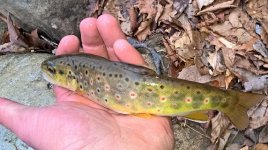
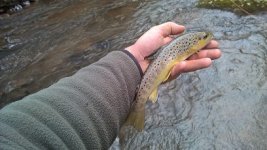
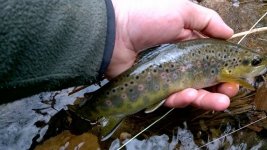
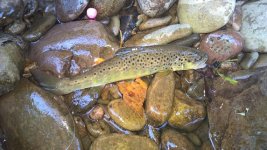
For the sake of argument, how do you tell a wild brookie from a native brookie? Some water I fish surely has both.
Bonk it & grill it....the one with sweet pink flesh is wild, the pale mushy one is stocked.

For the sake of argument, how do you tell a wild brookie from a native brookie? Some water I fish surely has both.

For the sake of argument, how do you tell a wild brookie from a native brookie? Some water I fish surely has both.
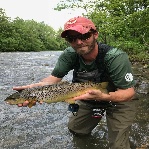
tomitrout wrote:
For the sake of argument, how do you tell a wild brookie from a native brookie? Some water I fish surely has both.
Bonk it & grill it....the one with sweet pink flesh is wild, the pale mushy one is stocked.
wildtrout2 wrote:
Those look like holdovers that have been in that stream for some time. They'll get color over time. I was referring to freshly stocked trout.
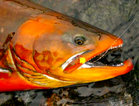
pcray1231 wrote:
Suggest, yes, prove, no.
If it's a temperature tweener, it may stay cold enough in some years to have fish holdover through a summer. But not in others, hence, no wild population will establish if it gets wiped out every couple of years when we get a warm, dry summer.
A more common situation is a stream that has everything a fish needs, but not everything an egg needs. i.e. lacks spawning gravel. These are often the places fingerling stockings make sense.
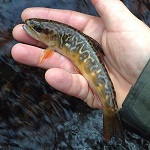
Char_Master wrote:
That's been my experience on my local creek.
steveo27 wrote:
Char_Master wrote:
That's been my experience on my local creek.
Mind sharing the stream name? I was out last night on a local PGH stream and it was just a hair lower than it normally is and the water was still very cold.

Reeder wrote:
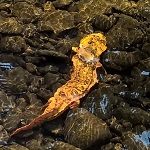
Go on up to Slate run the next time they stock big browns. You will find plenty of red on stocked fish, in the bucket, before they even hit the water. I have seen orange on wild trout as well. It is fairly common on a couple of the smaller streams I fish. I have even caught a few that have orange and red. Imagine that. Genetics and diet affect color. Bias towards location of birth...not so much.
pcray1231 wrote:
Agreed.
The author had that one backwards. It's not that browns inhabit waters that brookies can't thrive in.
The other way around. Brookies dominate waters in which browns can't thrive in. The most common situation being pH/alkalinity dependent, as brookies handle acidic water better than browns. Hence, the major holdout for brookies is headwater sections where it's typically on the more acidic side.