craneflies success

nymphingmaniac

Well-known member
Joined
Sep 1, 2010
Messages
2,042
City
State College
has anyone out there have consistent productivity with a dry cranefly pattern? Something beyond what blind casting an EHC or other attractor would achieve? I've seen fish take them at times-even keying in on them when the water is low and clear. It appears to me that these are sporadic, opportunity slashes by trout at bugs skimming the water.
if you do, what pattern?

 
I’ve never seen a Trout attempt to eat one of those. (Not necessarily doubting that they do, I just haven’t seen it.) They’re common on small freestoners, but my experience is any reasonable attractor dry will work in this situation. So I just toss a Wulff/Humpy/Adams/EHC or whatever as normal.
 
I’ve never seen a Trout attempt to eat one of those. (Not necessarily doubting that they do, I just haven’t seen it.) They’re common on small freestoners, but my experience is any reasonable attractor dry will work in this situation. So I just toss a Wulff/Humpy/Adams/EHC or whatever as normal.
Some disagree, but I also believe from my experience on the water, craneflies are the "brussel sprouts" of insects to trout. While they may eat them when no other insects are available to feed on, they not are a preferred food source.
 
Spring Creek (and some of the other limestoners) used to have a fishable hatch of small (size 18) craneflies with yellow bodies and pale dun wings and legs. The trout rose for the naturals and for imitations.

The hatch occurred around the same time as the sulphurs. The hatch does not seem common on Spring Creek anymore, unless I'm just missing them.

The imitations most people used were simple. A thin body of yellow dubbing and/or thread and few wraps of pale dun hen hackle, tied wet fly style, but fished as a dry fly.

This was real match-the-hatch fishing, but the same pattern is also a very good choice when trout are sipping and you don't know what they are taking.

Regarding the larger, brown craneflies, I've only seen scattered ones, never a significant hatch with trout feeding steadily on them.
 
  • Like
Reactions: Kms
I found a situation once on Coplay Ck, Lehigh Co during a first week of trout season during which perhaps size 14 craneflies were steadily present and trout were rising to them. By luck I had a close dry fly imitation with an orangish abdomen and thorax plus a ginger hackle and tail. It worked quite well. I carried some of those flies around with me ever since and have never stumbled into that situation again.

As for the nymphs/ larvae, these are what bait fishing trout anglers refer to as water worms. There are a number of species and sizes. Commonly they are quite large and about the thickness of a night crawler. Some anglers swear by them for big browns.
 
I found a situation once on Coplay Ck, Lehigh Co during a first week of trout season during which perhaps size 14 craneflies were steadily present and trout were rising to them. By luck I had a close dry fly imitation with an orangish abdomen and thorax plus a ginger hackle and tail. It worked quite well. I carried some of those flies around with me ever since and have never stumbled into that situation again.

As for the nymphs/ larvae, these are what bait fishing trout anglers refer to as water worms. There are a number of species and sizes. Commonly they are quite large and about the thickness of a night crawler. Some anglers swear by them for big browns.

I do think fish eat the larvae regularly. Have found harvested stockies full of them. I think mop flies are a decent representation of these.
 
I’ve never seen a Trout attempt to eat one of those. (Not necessarily doubting that they do, I just haven’t seen it.) They’re common on small freestoners, but my experience is any reasonable attractor dry will work in this situation. So I just toss a Wulff/Humpy/Adams/EHC or whatever as normal.
I saw a fish right in front of me come out of the water to try and take a cranefly that was hovering a few inches above the water. I was close enough to get splashed. The fish missed.
 
Spring Creek (and some of the other limestoners) used to have a fishable hatch of small (size 18) craneflies with yellow bodies and pale dun wings and legs. The trout rose for the naturals and for imitations.

The hatch occurred around the same time as the sulphurs. The hatch does not seem common on Spring Creek anymore, unless I'm just missing them.

The imitations most people used were simple. A thin body of yellow dubbing and/or thread and few wraps of pale dun hen hackle, tied wet fly style, but fished as a dry fly.

This was real match-the-hatch fishing, but the same pattern is also a very good choice when trout are sipping and you don't know what they are taking.

Regarding the larger, brown craneflies, I've only seen scattered ones, never a significant hatch with trout feeding steadily on them.

The late great Chauncy Lively’s article on tying the Little Yellow Cranefly is on p. 20 of the Sept 1982 PA Angler issue. Includes a story of fishing the pattern on Spring Creek with a promising young fellow named Scott (that’s me). You would think after all these years I would be a better fisherman, but I can say I still feel the same joy I did that warm May evening on Spring Creek every time I am on the water. And I still love tying that pattern.

Here is a link:
 
Spring Creek (and some of the other limestoners) used to have a fishable hatch of small (size 18) craneflies with yellow bodies and pale dun wings and legs. The trout rose for the naturals and for imitations.

The hatch occurred around the same time as the sulphurs. The hatch does not seem common on Spring Creek anymore, unless I'm just missing them.

The imitations most people used were simple. A thin body of yellow dubbing and/or thread and few wraps of pale dun hen hackle, tied wet fly style, but fished as a dry fly.

This was real match-the-hatch fishing, but the same pattern is also a very good choice when trout are sipping and you don't know what they are taking...

I encountered the same thing on Lehigh Valley limestoners and use an identical pattern in the same color combo with the exception the body is just thread and I prefer stiffer c0ck hackle.

I make my bodies from yellow Coats & Clark sewing thread like Andy Kim uses on his Yong Special midge pattern. I twist my Coats & Clark like Andy, but I only do a single layer with touching wraps to create a thin body with a segmented effect. Add ONE or TWO wraps of OVERSIZED hackle swept backwards collar style and that is it...

Greasing the tippet helps a lot to keep these files on the surface since there isn't much in the way of dubbing or hackle to aid buoyancy.

I also tie an all black version that is about impossible to see, but with a greased leader, I just watch the leader to approximate the position of the fly and set the hook if I see a rise.
 
Once in a while I encounter trout rising to the adults. I carry some specific net-veined style patterns but found a catskill style sulphur dry fly to work well. Heavily treated, along with a greased leader so I can move the fly. I think it's the movement that gets the trouts attention. I've also seen trout taking the emerging insect. Craneflies tend to take a long getting all six legs to completely break free of the meniscus and fly away.
 
The late great Chauncy Lively’s article on tying the Little Yellow Cranefly is on p. 20 of the Sept 1982 PA Angler issue. Includes a story of fishing the pattern on Spring Creek with a promising young fellow named Scott (that’s me). You would think after all these years I would be a better fisherman, but I can say I still feel the same joy I did that warm May evening on Spring Creek every time I am on the water. And I still love tying that pattern.

Here is a link:

That's awesome!!

Chauncey Lively was a hero of sorts to me as a beginning fly fisherman!!

I've subscribed to the PA Angler (now PA Angler & Boater) Magazine since the days of that article and I still have his regular contributions, cut from the magazines in sheet protectors and binders above my fly tying desk. I also have an inscribed 1st edition and 2nd edition of his book, "Chauncy Lively's Flybox."

MANY of Chauncy's patterns and ideas regarding fly construction still adorn my fly boxes.

Coincidentally, one of my favorite Chauncy patterns was featured in November of that same year, his Gypsy Moth Caterpillar.

Thanks for the memories!!
 
Spring Creek (and some of the other limestoners) used to have a fishable hatch of small (size 18) craneflies with yellow bodies and pale dun wings and legs. The trout rose for the naturals and for imitations.

The hatch occurred around the same time as the sulphurs. The hatch does not seem common on Spring Creek anymore, unless I'm just missing them.

The imitations most people used were simple. A thin body of yellow dubbing and/or thread and few wraps of pale dun hen hackle, tied wet fly style, but fished as a dry fly.

This was real match-the-hatch fishing, but the same pattern is also a very good choice when trout are sipping and you don't know what they are taking.

Regarding the larger, brown craneflies, I've only seen scattered ones, never a significant hatch with trout feeding steadily on them.
they are quite prevalent on some section of the LJ and parts of the lower bald eagle. I am talking about the yellow/orange bodied ones. sz 14-18
 
I encountered the same thing on Lehigh Valley limestoners and use an identical pattern in the same color combo with the exception the body is just thread and I prefer stiffer c0ck hackle.

I make my bodies from yellow Coats & Clark sewing thread like Andy Kim uses on his Yong Special midge pattern. I twist my Coats & Clark like Andy, but I only do a single layer with touching wraps to create a thin body with a segmented effect. Add ONE or TWO wraps of OVERSIZED hackle swept backwards collar style and that is it...

Greasing the tippet helps a lot to keep these files on the surface since there isn't much in the way of dubbing or hackle to aid buoyancy.

I also tie an all black version that is about impossible to see, but with a greased leader, I just watch the leader to approximate the position of the fly and set the hook if I see a rise.
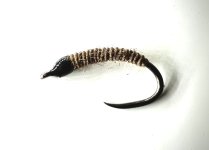
Hooray for the Yong Special! Tied in the C&C “Summer Brown” color of course! This one is tied on a ridiculous heavy wire/huge gap hook and does NOT out fish the original #22 Mustad 94840 type hook …
 

Attachments

  • IMG_3494.jpeg
    IMG_3494.jpeg
    93 KB · Views: 5
Crane fly Larvae are directly addressed in Schweibert’s “Nymphs” book and highlight the effectiveness of heavily dressed Muskrat Nymph/Walts Worm/Killer Bug/Mop fly type flies to imitate the naturals - often with great success - as for the splashy swiping rises to the adult flies, research the Neversink Skater fly and how to fish it!
DSC_1586.jpeg
 
Some disagree, but I also believe from my experience on the water, craneflies are the "brussel sprouts" of insects to trout. While they may eat them when no other insects are available to feed on, they not are a preferred food source.
Dear afish,

And yet, cranefly larva like the Walt's Worm are the literal hot buttered white sweet corn for trout. 😉

Regards,

Tim Murphy 🙂
 
Last year on Penns I watched a pretty good brown (~15 inches) consistently rise to big craneflies as they came off of an hemlock branch over the course of 30 minutes. I tied on the only cranefly pattern I had, waded over, and caught it on the first drift.

They definitely key in on craneflies, I just don’t think it’s super often. This was a few days after the cicada hatch tailed off so it could be that fish was just still in the mood for some big stuff on the surface.
 
Spring Creek (and some of the other limestoners) used to have a fishable hatch of small (size 18) craneflies with yellow bodies and pale dun wings and legs. The trout rose for the naturals and for imitations.

The hatch occurred around the same time as the sulphurs. The hatch does not seem common on Spring Creek anymore, unless I'm just missing them.
I remember those cranefly hatches on Spring Cr. They fished well for me and I had some days where the fish preferred the craneflies to the more numerous tan caddis. This was typically in late April.
 
Hooray for the Yong Special! Tied in the C&C “Summer Brown” color of course! This one is tied on a ridiculous heavy wire/huge gap hook and does NOT out fish the original #22 Mustad 94840 type hook …

I like my Yong Specials in sizes 24 - 26 on a Daiichi 1110. Red, grey and a light insect green color are good producers for me.
 
Back
Top