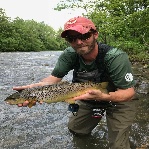
Clarks Creek, Dauphin County, 8/20

riverwhy

Well-known member
Joined
Jan 5, 2007
Messages
1,250
Fished from about 2PM-5PM. A few cars in the usual spots on the Special Regs areas so I parked at the rifle range and fished upstream. Picked up 5- four wild browns and a stocked brookie. Only the first wild brown and brookie were about 8 inches. The other fish were very small wild browns. Disappointed I caught no native brooks. Got one on a black woolly bugger the other four were on an elk hair caddis. Missed three that I am sure were trout. Saw 2 nice fish that I spooked. Seemed to be lots of small fish which appeared to be mainly small fallfish of which I caught a few.

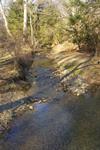
I worked up a good sweat and covered a decent amount of water since some is not worth fishing. Passed maybe two areas of substantial downed hemlocks. I am actually surprised at the number of hemlocks back there that seem unaffected at least at this point. That said, there is more streambed exposed to sunlight than I remember. The water seemed about mid-60's but I did not measure. Saw some small stands of beech and pines developing. Lots of wildflowers, some pretty red ones around spring seeps that attracted some butterflies.

I hope there is some plan if place for reforesting once the hemlocks are gone. I wonder why none of the numerous pines seem to reach any size? Is there still too much shade in there for them to grow? It would be nice if there was a way to help them along.
 
It may just be too early for the pines to get tall. The wooly adelgids taking out the hemlocks is still a recent thing.

But the fact that you are seeing new trees coming in where the hemlocks have died is a promising thing.

In the mid-state area and NC PA, I've seen some places where the hemlocks have been killed, other places where you see wooly adelgids but the hemlocks are still alive, and other places where the hemlocks are still healthy.

It seems temperature related. Further north and at higher elevations, where it's colder, the hemlocks are less affected than further south and at lower elevations where it's warmer.
 
I have a row of hemlocks at the edge of my yard in Hershey. You can see the white stuff all over them. Two are looking really rough. I read that lack of rainfall makes them more vulnerable. Watered the heck out of them at the end of June and they seem to be hanging in there. I have had a tree company spray with horticultural oil that can only be done in the fall. I tried to do it only every other year but I guess it will need to be a yearly thing especially since it seems like our cooler and wetter pattern is generally over. I am already starting to think about what will replace them. Really sad since they seem to attract so many birds and are just gorgeous trees.
 
I have one Hemlock that always has wooly adelgids on it. It does reasonably well. It has a bit of die off in some mid-level branches. Should I spray it or let it go?
 
I have fished that stretch of Clarks many times but have never landed a wild brook trout. I think you'd have to be above to the reservoir to find wild brookies. I've fished up there a few times, but similar to what you describe, only found smaller wild browns. It's a beautiful area to fish with lots of accessibility and a good amount of pressure, too. I've had days where the fish are easily visible and abundant but I just can't buy a strike. As for the blowdowns, it alters that stream every time I'm on it.
 
@riverwhy

I have a beaut of a hemlock in my front yard. Got the woolies this year. I had two tree companies come out. One suggested the horticultural oil, the other recommended a “bark treatment” and was against the oil.

The bark treatment is basically a painted on systemic insecticide. Two months in and seems to be helping.

A couple hundred bucks, but we’ll worth it to help an irreplaceable (in my lifetime) tree.
 
Flyflicker,
I have heard of the soil drench but not the bark treatment. I like the idea that it is a more targeted approach. I am definitely a last resorts guy when it comes to pesticide use. That said, it seems like it wouldn't affect pollinators much as hemlocks pollinate through the air. I still am concerned about affects on all the birds they attract. I have in the past raked all my leaves under the Hemlocks which does wonders for spring birds who root though the leaves for worms and other goodies.
Did the company you use say why they preferred the bark-applied systemic to the oil?
The oil worked well in the years it was applied. I realize it has impacts also despite the fact it's not a pesticide. Also, I just counted my hemlocks at 14! Now there are not huge, maybe average 25'. That would be expensive at $200. I think I paid $300 buck total for the horticultural oil.
Did they tell you if it needs reapplied every year?
Thanks for your input!
 
I'd be careful with systemic insecticices. They can kill more than the target. And wild brookies can be found down from the dam on Clarks. Not every time, but keep fishing and you'll run into them.
 
Riverwhy (and others interested),

I completely agree with protecting the pollinators, birds, etc. That’s why I chose the bark/trunk treatment. I actually talked to the two companies specifically about damage to the environment/birds/bees.

The oil guy was PowerPoint trained corporate tree service salesman. The other (bark treatment) guy was a certified Arborist who literally hugged the tree and you could tell had actual admiration for her.

Do your research. Maybe I didn’t pick the best option, but I felt this guy knew his stuff and loved the tree as much as I do.

I’m sure part of my cost was mobilization for one tree; I’m sure the cost would be less for multiple trees/one location.

Best of luck, my family and I hiked through the Hemlocks Natural Area of Tuscarora SF last month and were sad by the woolie die off.

Cheers
 
Back
Top